Tell us about the job
Takes about a minute. No obligation.
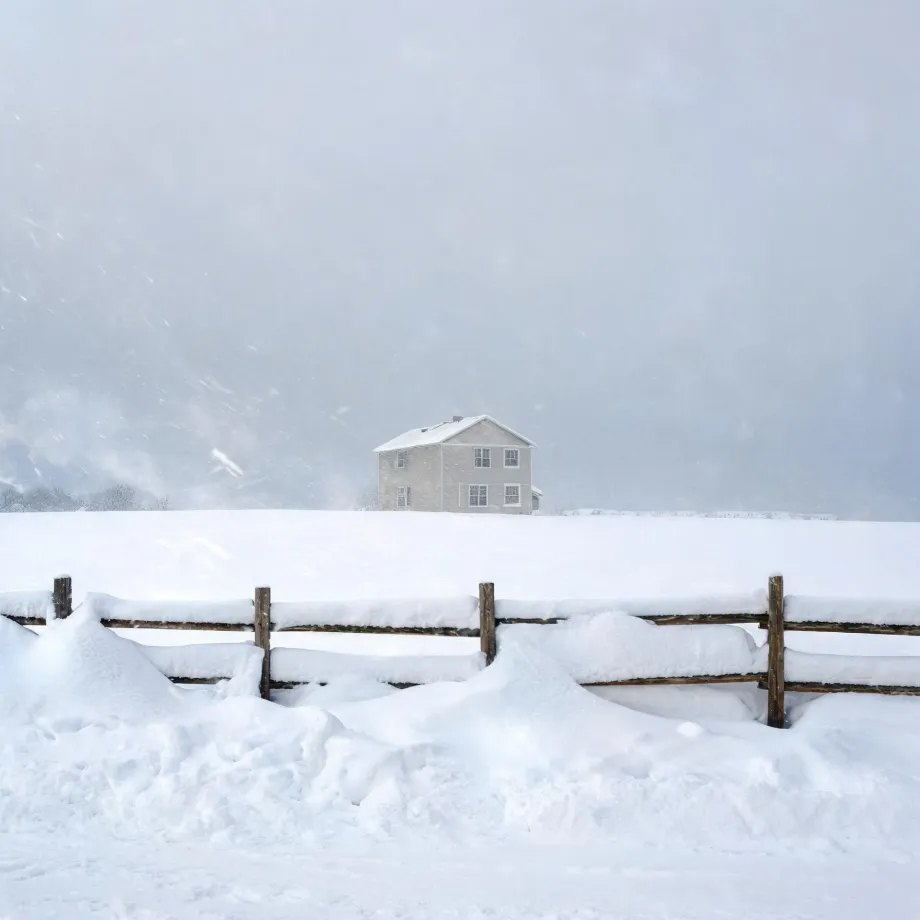
Sizing a furnace for Grant County starts with understanding what the burner, heat exchanger, and ignition system are actually being asked to carry. Homes in Grant County, SD run heat about nine months a year, from September through May. A furnace working through that kind of calendar cycles its ignition system repeatedly, stresses the heat exchanger through hundreds of expansion and contraction cycles, and gives the burner little time off. An undersized unit runs longer per cycle to meet demand, which drives wear faster on every component that fires. A contractor quoting a replacement here has to account for that load before settling on equipment capacity, because an install that looks adequate on paper can leave a household short when the deep cold arrives.
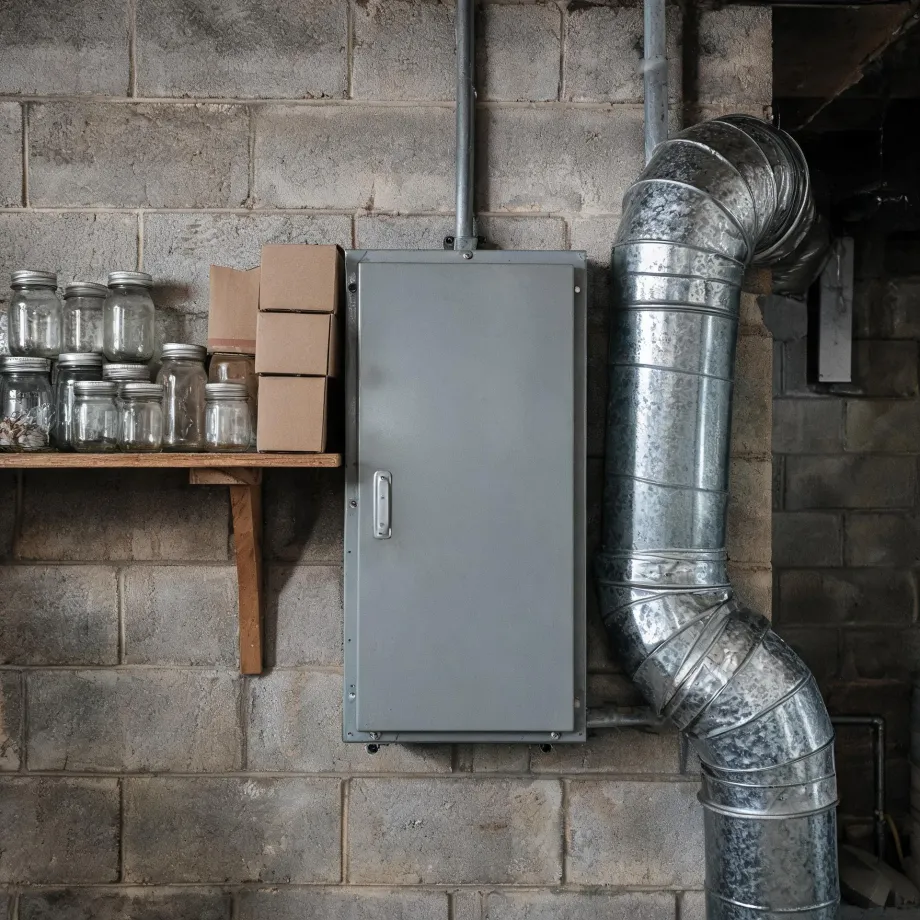
Ductwork laid down for an older generation of heating is what a contractor has to assess before a new furnace can be quoted accurately. Half the homes in Grant County, South Dakota were built in 1972 or earlier (2020-2024 ACS 5-year). That means a significant share of the housing stock here was ducted for equipment with different airflow demands than what gets installed today. If the existing trunk lines and branch runs cannot carry the volume a new furnace moves, the duct system becomes part of the job, not just the unit. Electrical service is a separate check: a new furnace draws on circuits that may have been sized for something smaller.
What Gets Installed With a New Furnace
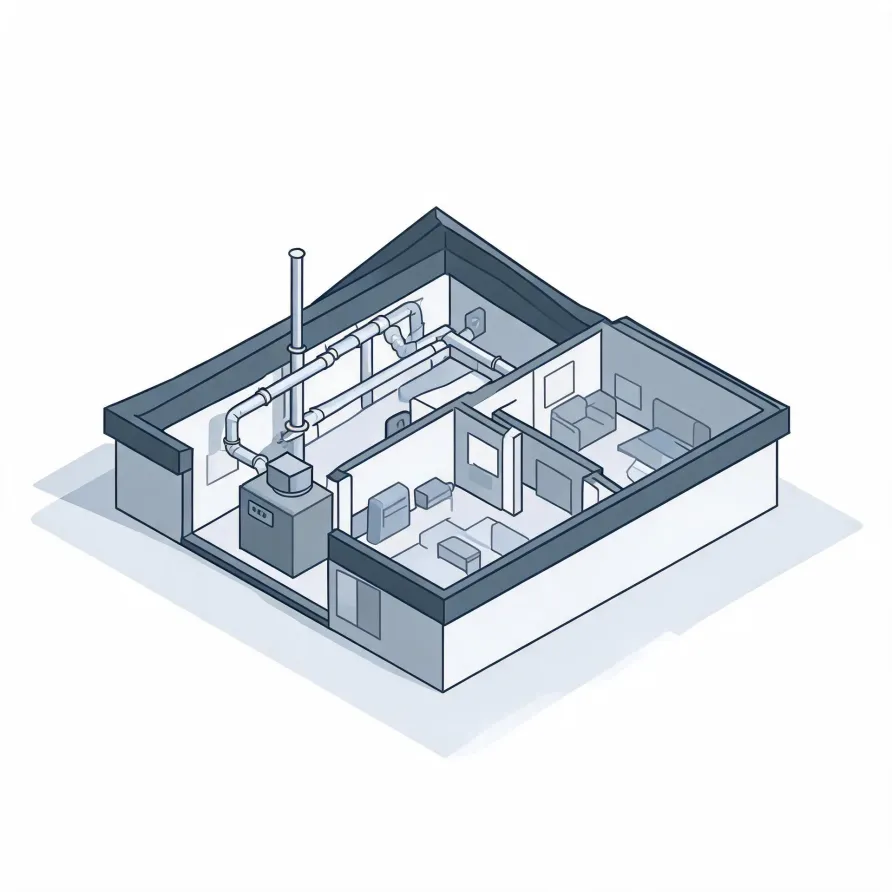
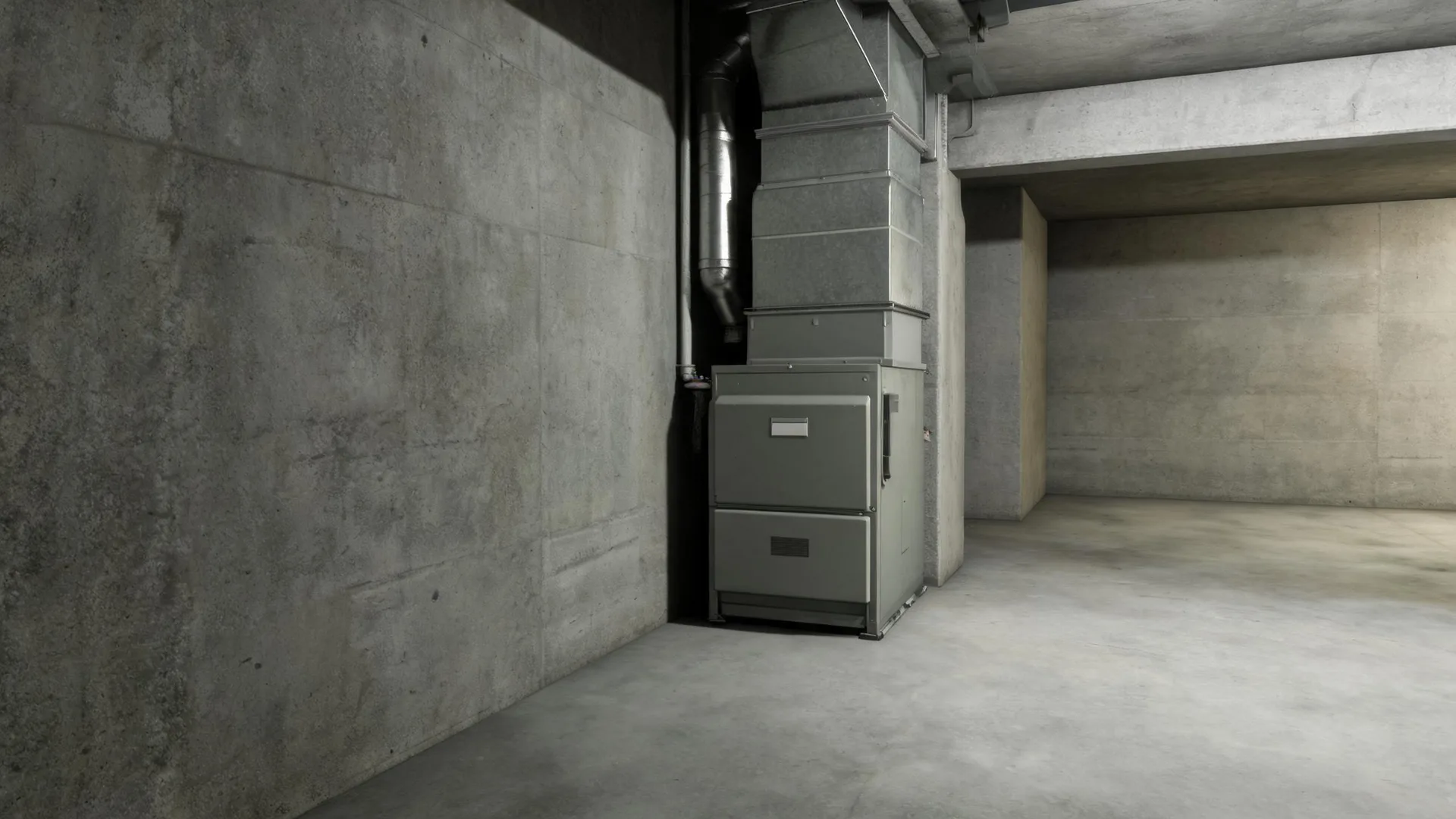
The furnace itself sits in a utility space, a basement, a closet, or a crawlspace, and it is the unit that generates heat. A flue or vent pipe runs from the furnace to an outside wall or through the roof, carrying combustion exhaust out of the house. These are the pieces at the center of the installation.
A thermostat mounts on an interior wall where it reads the temperature of the living space and signals the furnace when to fire. The air handler and blower, which may be built into the furnace cabinet or sit beside it, push conditioned air into the duct system. A filter housing, positioned at the return-air inlet, holds the filter that screens the air before it reaches the unit.
The drawing shows a typical layout, and a licensed contractor determines exactly what applies to your house.
Find a contractor in Grant CountyGrant County by the Numbers
132 severe weather events were recorded in Grant County, South Dakota between 2015 and 2024.
NOAA National Centers for Environmental Information, Storm Events Database, bulk CSV export, events 2015-01-01 through 2024-12-31.Half the homes in Grant County, South Dakota were built in 1972 or earlier (2020-2024 ACS 5-year).
U.S. Census Bureau, 2020-2024 American Community Survey 5-Year EstimatesGrant County, South Dakota holds 3,456 housing units (2020-2024 ACS 5-year).
U.S. Census Bureau, 2020-2024 American Community Survey 5-Year EstimatesOwners occupy 75.6% of the occupied homes in Grant County, South Dakota (2020-2024 ACS 5-year).
U.S. Census Bureau, 2020-2024 American Community Survey 5-Year EstimatesCodes & Standards for Furnace Installation in Grant County, South Dakota4 sourced rules and standards
What HVAC Installation Looks Like in Grant County
Non-weatherized gas furnaces manufactured on or after November 19, 2015 must reach 80.0 percent AFUE.
Non-weatherized oil-fired furnaces manufactured on or after November 19, 2015 must reach 83.0 percent AFUE.
Mobile home gas furnaces manufactured on or after November 19, 2015 must reach 80.0 percent AFUE.
Non-weatherized gas furnaces manufactured on or after December 18, 2028 must reach 95.0 percent AFUE, up from the 80.0 percent minimum that applies to units manufactured before that date.
Severe Weather Events in Grant County
Grant County's weather puts real demands on heating equipment. A furnace that holds up here has to be sized and installed with that load in mind.
132 severe weather events, 2015–2024. Source: NOAA National Centers for Environmental Information, Storm Events Database.