Tell us about the job
Takes about a minute. No obligation.
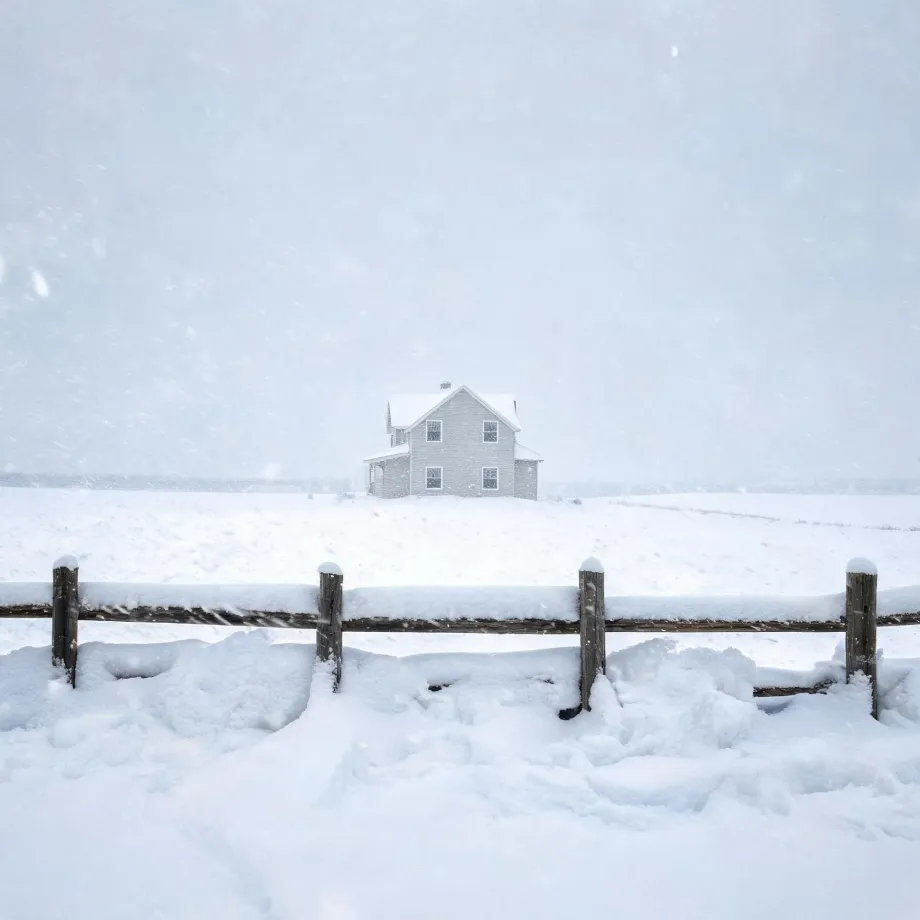
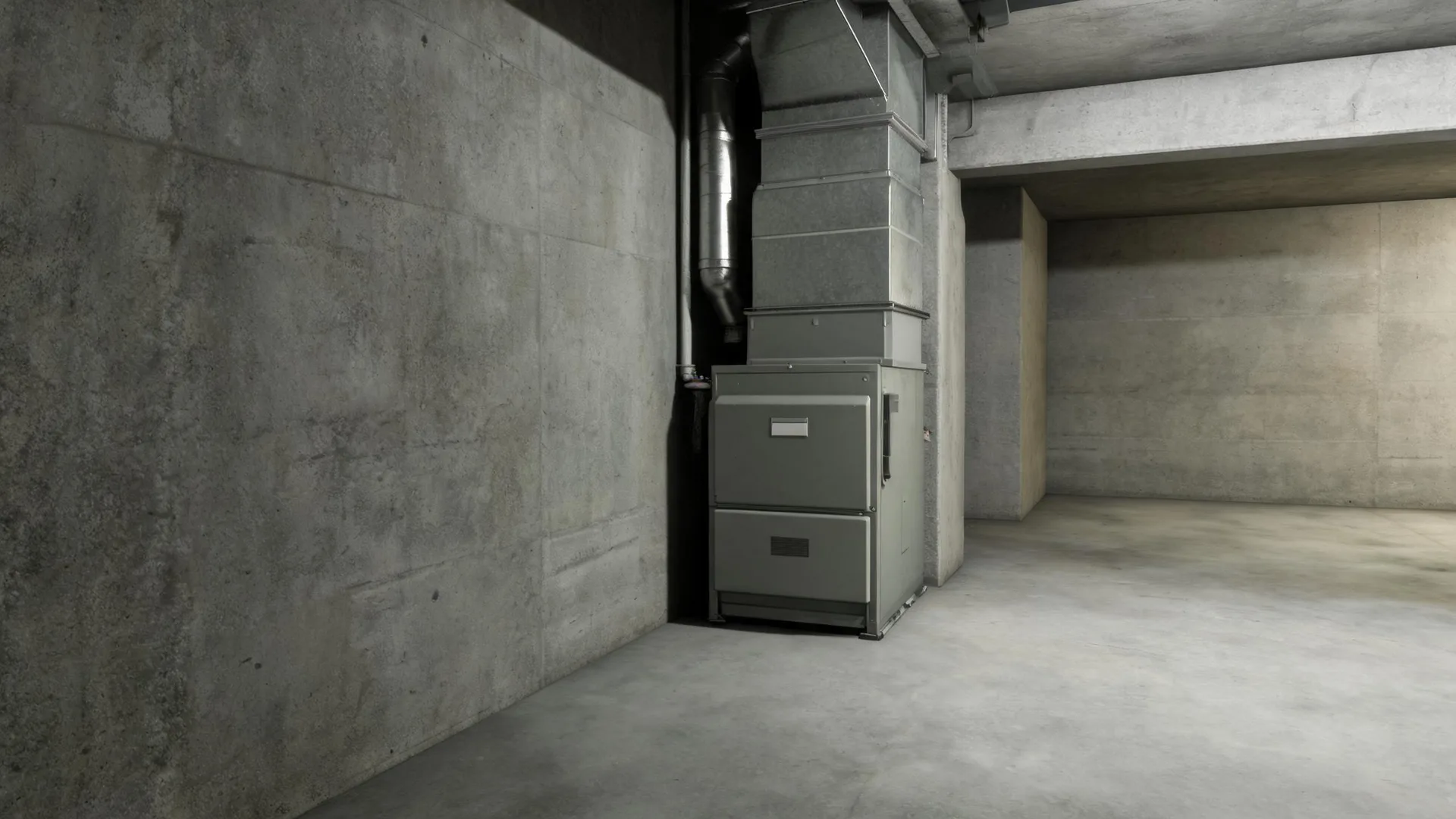
Sizing a furnace for a Tripp County home is not a generic calculation. Homes in Tripp County, SD run heat about eight months a year, from October through May. The burner and heat exchanger cycle through that workload with very little downtime, so a unit that is undersized or sealed with a poor flue connection runs stressed from the first cold week and degrades on a schedule a Sioux Falls installer quoting off square footage alone would not predict. A contractor working this area measures the building envelope and duct system before they commit to a unit size, because an undersized furnace here earns its failures honestly and early.
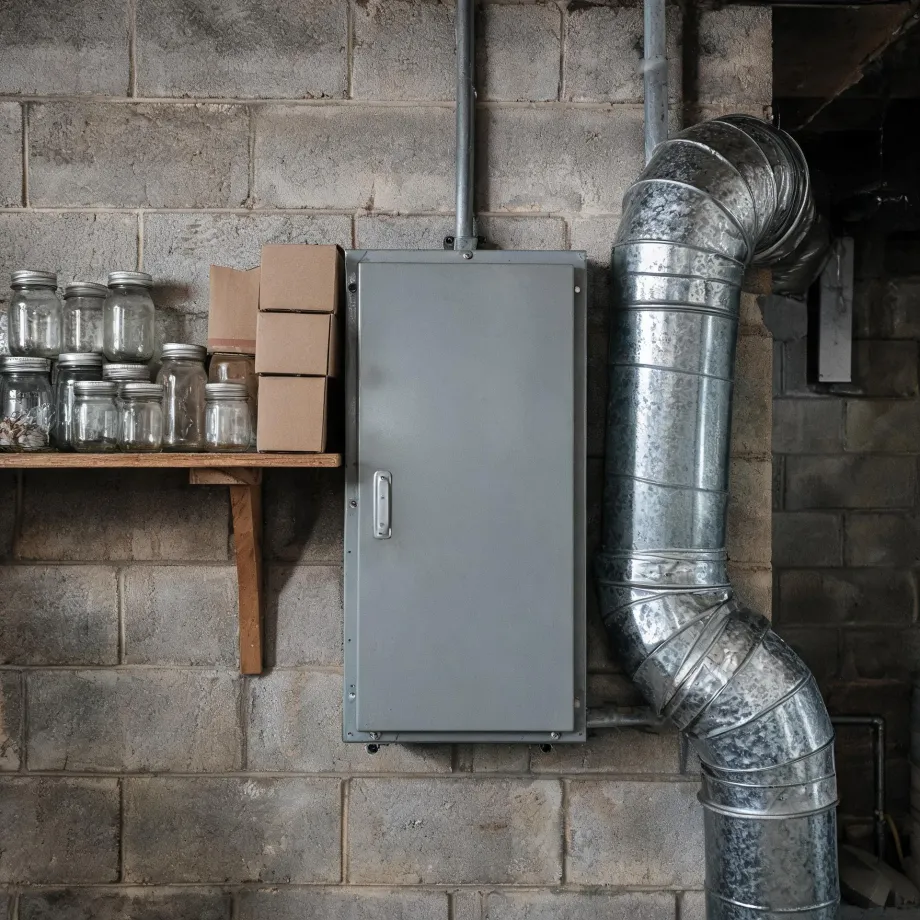
Ductwork sized for older equipment is what a contractor finds behind the walls of a large share of homes here. Half the homes in Tripp County, South Dakota were built in 1969 or earlier (2020-2024 ACS 5-year). When a new furnace goes in, the existing trunk lines, branch runs, and register placements were designed around whatever was running before, and a modern unit's airflow requirements do not automatically align with what is already there. The electrical is a separate check. What the contractor finds in both determines whether the job is a straight swap or a partial re-run.
What Gets Installed With a New Furnace
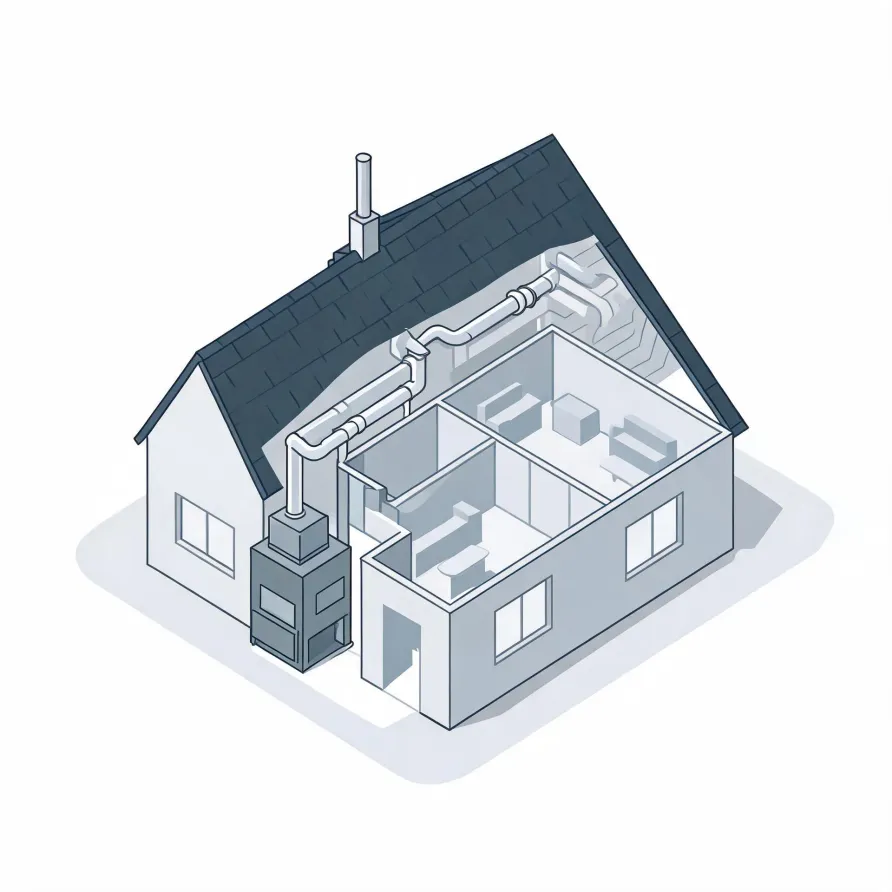
The furnace itself sits in a utility space, a basement, or a mechanical closet and is the unit that produces heat. Attached to it is the air handler, which moves conditioned air through the home. Together these two pieces form the core of what a contractor installs.
A thermostat mounts on an interior wall and is the control point the homeowner uses every day. The flue pipe runs from the furnace to an exterior wall or roof and carries combustion exhaust out of the house. A contractor also connects the system to existing supply and return openings so conditioned air can circulate.
The drawing shows a general layout of these components, and a licensed contractor determines exactly what applies to this house.
Find a contractor in Tripp CountyTripp County by the numbers
232 severe weather events were recorded in Tripp County, South Dakota between 2015 and 2024.
NOAA National Centers for Environmental Information, Storm Events Database, bulk CSV export, events 2015-01-01 through 2024-12-31.Half the homes in Tripp County, South Dakota were built in 1969 or earlier (2020-2024 ACS 5-year).
U.S. Census Bureau, 2020-2024 American Community Survey 5-Year EstimatesTripp County, South Dakota holds 2,762 housing units (2020-2024 ACS 5-year).
U.S. Census Bureau, 2020-2024 American Community Survey 5-Year EstimatesOwners occupy 68.4% of the occupied homes in Tripp County, South Dakota (2020-2024 ACS 5-year).
U.S. Census Bureau, 2020-2024 American Community Survey 5-Year EstimatesCodes & Standards Governing Furnace Installation in Tripp County, South Dakota4 sourced rules & standards
What the installation work looks like
Non-weatherized gas furnaces manufactured on or after November 19, 2015 must reach 80.0 percent AFUE.
Non-weatherized oil-fired furnaces manufactured on or after November 19, 2015 must reach 83.0 percent AFUE.
Mobile home gas furnaces manufactured on or after November 19, 2015 must reach 80.0 percent AFUE.
Non-weatherized gas furnaces manufactured on or after December 18, 2028 must reach 95.0 percent AFUE, up from the 80.0 percent minimum that applies to units manufactured before that date.
Severe Weather Events in Tripp County
Tripp County weather puts real demands on heating equipment. A furnace sized and installed for local conditions holds up differently than one built to a national average.
232 severe weather events, 2015–2024. Source: NOAA National Centers for Environmental Information, Storm Events Database.