Tell us about the job
Takes about a minute. No obligation.
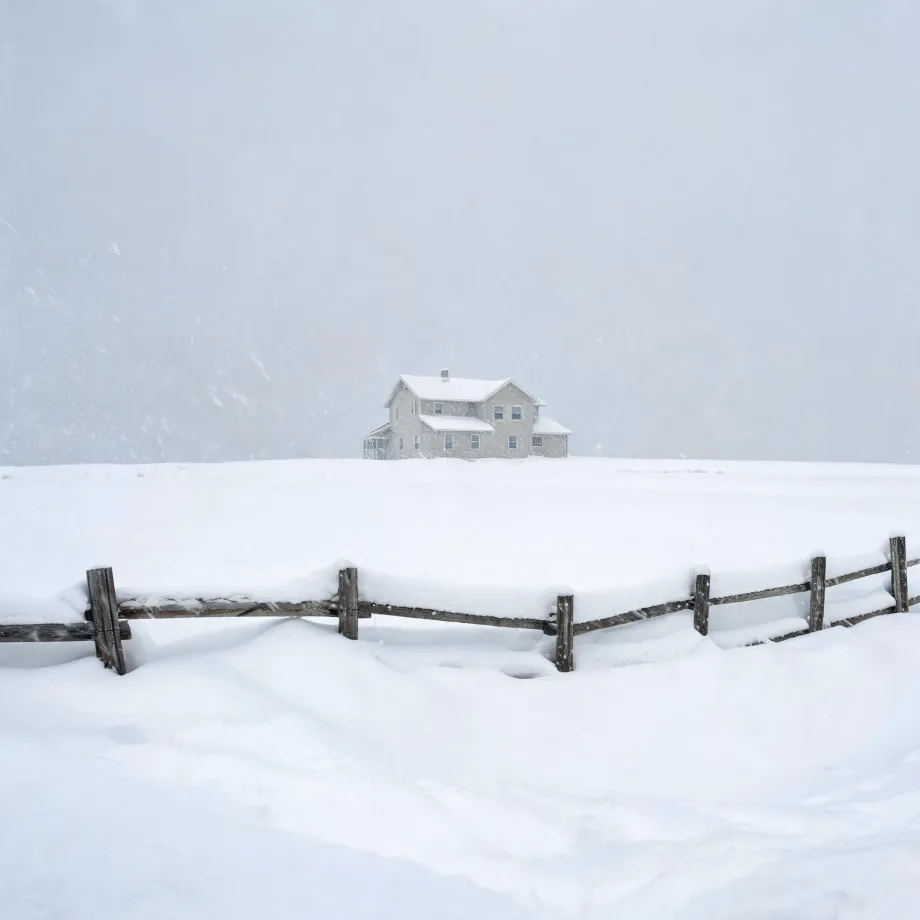
Furnace repair in Potter County starts with the burner assembly and heat exchanger, not because those parts fail dramatically, but because they cycle hard and cycle long. Homes in Potter County, SD run heat about nine months a year, from September through May. A contractor quoting a repair here checks the heat exchanger for stress cracks and the igniter for wear before anything else, because those are the parts that absorbed nearly every demand cycle the house placed on the system. A short summer idle gives a hairline crack no time to announce itself before the next heating season opens and the cycling resumes.
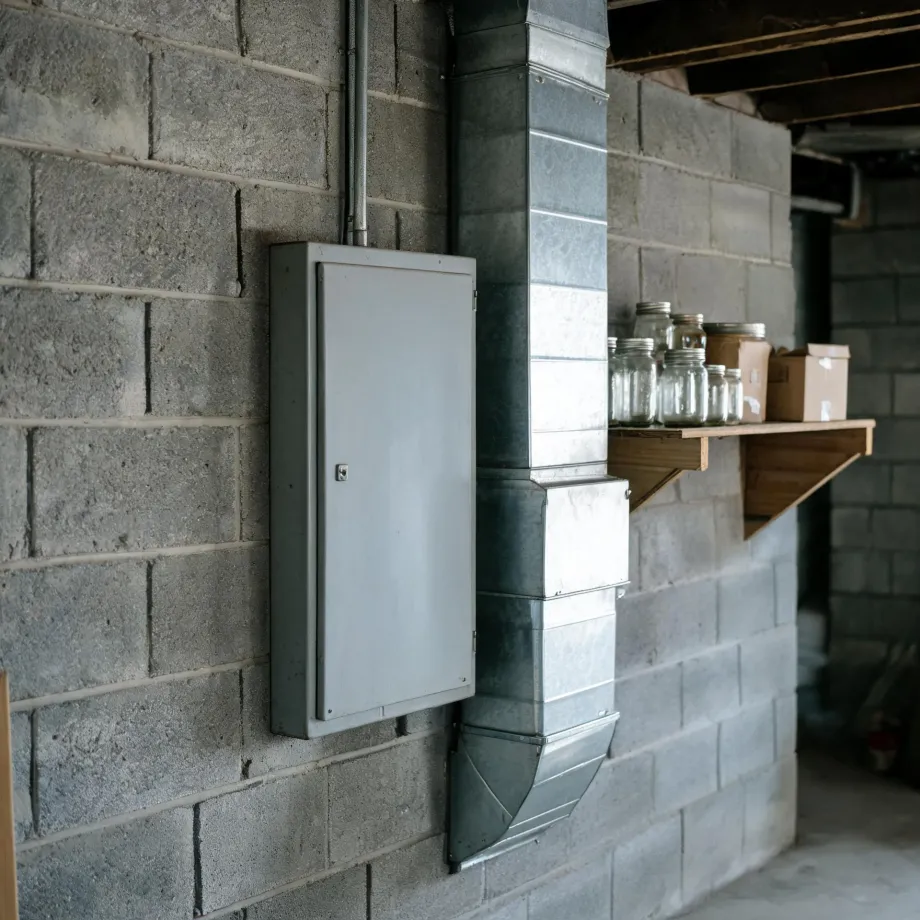
Ductwork laid in for one furnace and patched across several replacements since carries the record of every compromise made along the way. Half the homes in Potter County, South Dakota were built in 1974 or earlier (2020-2024 ACS 5-year). A contractor who opens a failed furnace here is not just looking at the unit. They are looking at what the supply runs, the return configuration, and the connections to the heat exchanger have become over that span. A cracked heat exchanger or a failed inducer motor is a parts question; what sits around it is a scope question, and the two do not always have the same answer.
The Parts of a Furnace a Contractor Checks First
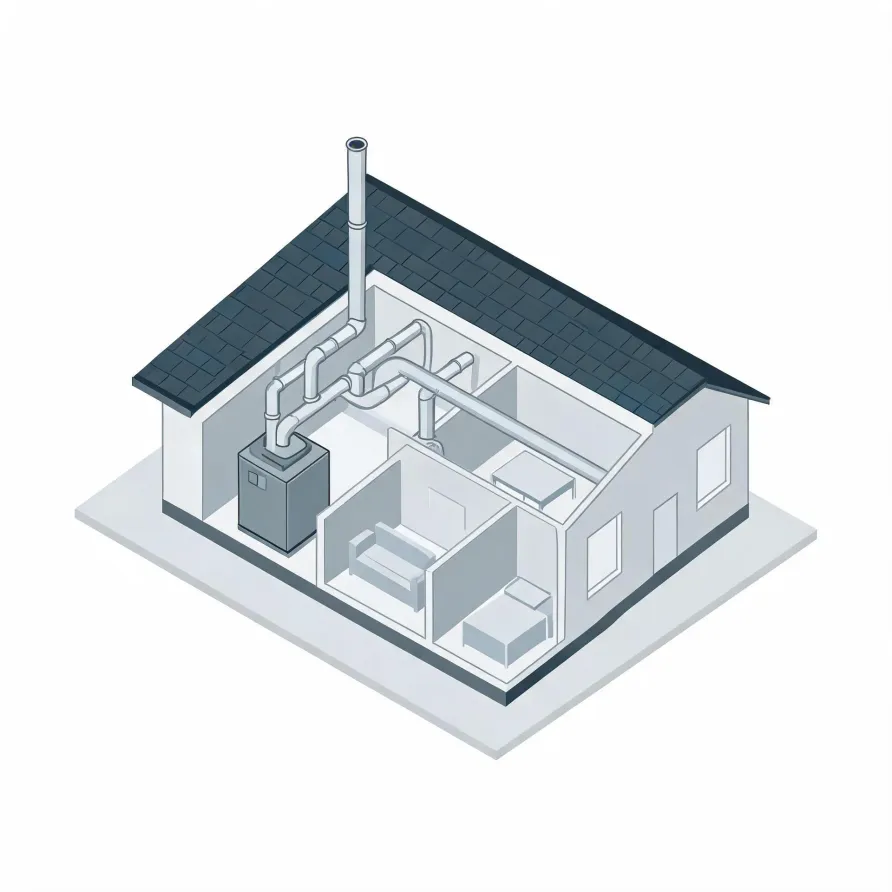
The furnace itself sits in a utility space, basement, or closet and is the piece a contractor goes to first. Inside it, the heat exchanger and burner assembly are the usual suspects when heat is absent or uneven. A cracked heat exchanger or a faulty burner shows up in how the system fires, holds temperature, or shuts itself off.
The blower motor sits inside the furnace cabinet and pushes conditioned air into the supply side of the house. The flue or venting runs from the furnace to an exterior wall or roof and carries combustion gases out. The thermostat, mounted on a main living-area wall, is the control point a contractor checks alongside the mechanical components, because a wiring or sensing fault there can mimic a furnace failure.
The drawing shows a general layout of these components, and a licensed contractor determines what applies to the specific equipment and configuration in your house.
Find a contractor in Potter CountyPotter County by the Numbers
130 severe weather events were recorded in Potter County, South Dakota between 2015 and 2024.
NOAA National Centers for Environmental Information, Storm Events Database, bulk CSV export, events 2015-01-01 through 2024-12-31.Half the homes in Potter County, South Dakota were built in 1974 or earlier (2020-2024 ACS 5-year).
U.S. Census Bureau, 2020-2024 American Community Survey 5-Year EstimatesPotter County, South Dakota holds 1,567 housing units (2020-2024 ACS 5-year).
U.S. Census Bureau, 2020-2024 American Community Survey 5-Year EstimatesOwners occupy 81.5% of the occupied homes in Potter County, South Dakota (2020-2024 ACS 5-year).
U.S. Census Bureau, 2020-2024 American Community Survey 5-Year EstimatesFurnace & HVAC Repair Rules for Potter County, South Dakota4 codes, standards & laws
What HVAC Repair Looks Like in Potter County
Non-weatherized gas furnaces manufactured on or after November 19, 2015 must reach 80.0 percent AFUE.
Non-weatherized oil-fired furnaces manufactured on or after November 19, 2015 must reach 83.0 percent AFUE.
Mobile home gas furnaces manufactured on or after November 19, 2015 must reach 80.0 percent AFUE.
Non-weatherized gas furnaces manufactured on or after December 18, 2028 must reach 95.0 percent AFUE, up from the 80.0 percent minimum that applies to units manufactured before that date.
Severe Weather Events in Potter County
Extreme weather puts real hours on heating equipment. Furnaces that carry heavier loads through hard winters wear faster, and repair needs in Potter County reflect what the weather here actually demands.
130 severe weather events, 2015–2024. Source: NOAA National Centers for Environmental Information, Storm Events Database.