Tell us about the job
Takes about a minute. No obligation.
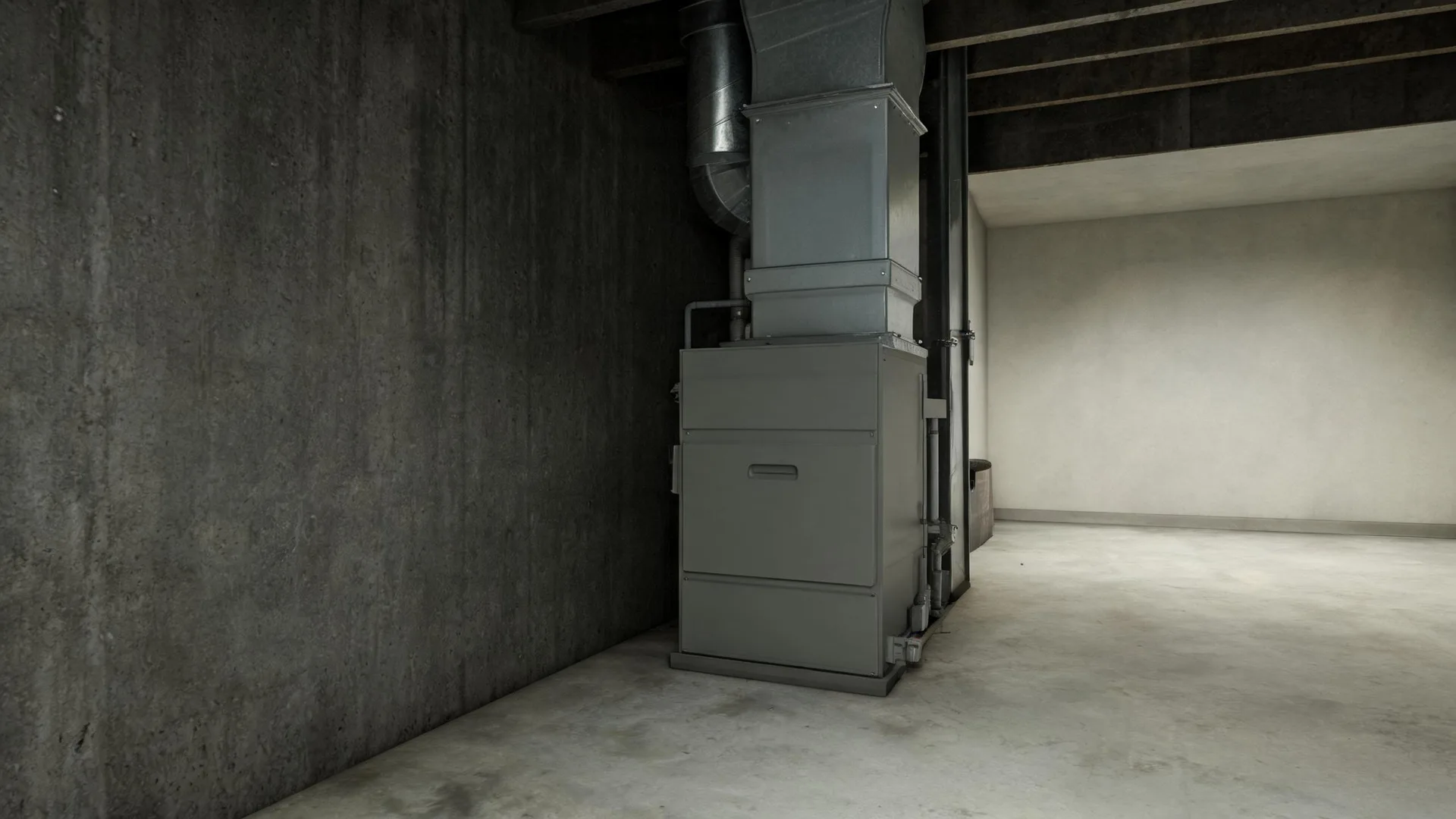
A furnace repair in Miner County starts with the parts that bear the load directly. Homes in Miner County, SD run heat about nine months a year, from September through May. The burner, heat exchanger, and ignition system cycle hard across that season, and those are the components a contractor opens first. Cracks in the heat exchanger or a worn igniter rarely show up as dramatic failures; they show up as short-cycling, delayed ignition, or a unit that trips on high-limit. Accumulated wear on cycling parts explains most of what contractors find here.
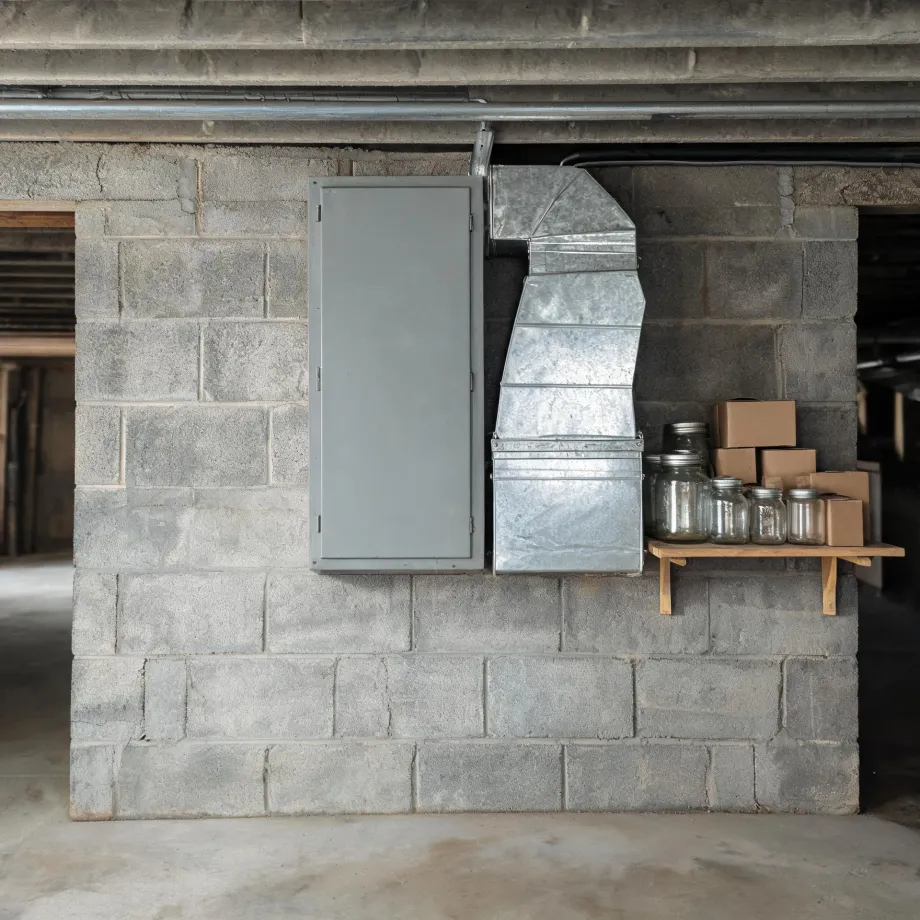
Ductwork in housing this old tends to carry a history that shows up the moment a contractor opens anything up: compacted debris, degraded joints, and remnants of systems that were replaced once or more before this one. Half the homes in Miner County, South Dakota were built in 1954 or earlier (2020-2024 ACS 5-year). That means a furnace repair here often surfaces secondary findings inside the duct runs that would not appear in newer stock, and a contractor has to account for them before the scope of the job is settled. Parts for the furnace itself are a solvable problem. What the ductwork has collected is the variable that changes what the repair actually costs.
The Parts of a Furnace a Contractor Checks First
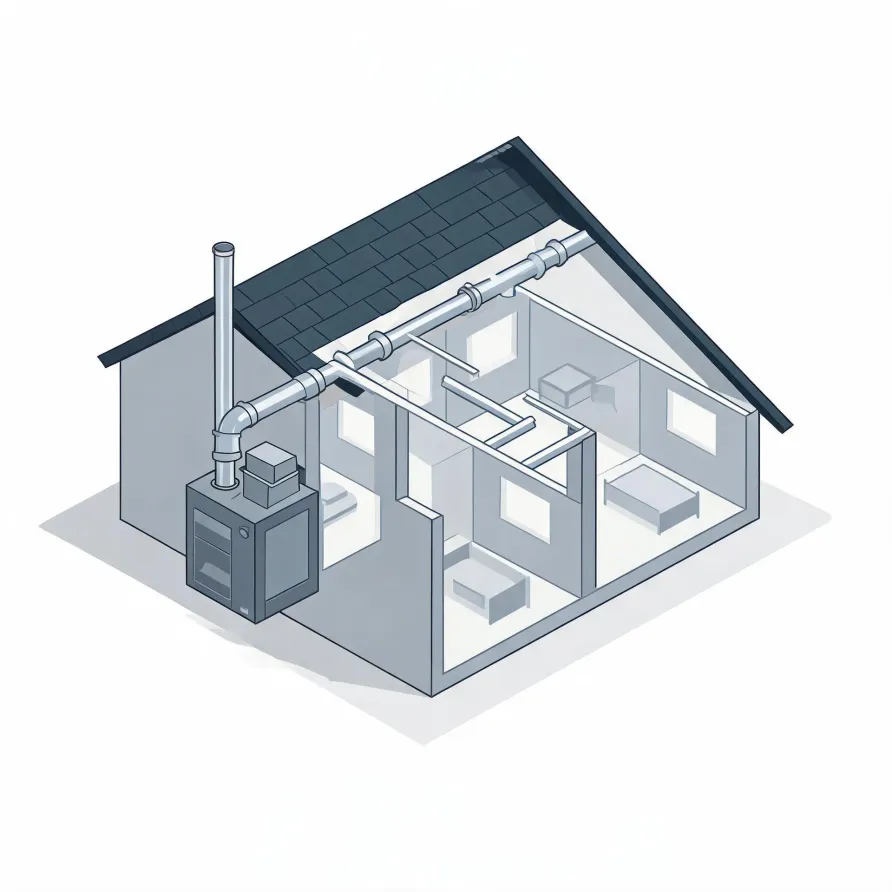
The furnace itself sits in the basement, utility room, or closet and is the piece a contractor goes to first. Inside it, the heat exchanger and burner assembly are the most common sources of trouble. A cracked heat exchanger, a dirty burner, or a failed ignitor will each stop the system in its own way, and a contractor reads the symptoms to know which one is at fault.
The blower motor pushes conditioned air into the supply side of your duct system and sits inside the furnace cabinet. The flue or vent pipe runs from the top of the furnace to the outside and carries combustion gases out of the house. The thermostat on the wall is where a contractor often starts before opening the cabinet at all, since a wiring fault or a failed sensor there can mimic a furnace problem.
The drawing shows a general layout of these components, and a licensed contractor determines what applies to your specific system and home.
Find a contractor in Miner CountyMiner County, by the numbers
70 severe weather events were recorded in Miner County, South Dakota between 2015 and 2024.
NOAA National Centers for Environmental Information, Storm Events Database, bulk CSV export, events 2015-01-01 through 2024-12-31.Half the homes in Miner County, South Dakota were built in 1954 or earlier (2020-2024 ACS 5-year).
U.S. Census Bureau, 2020-2024 American Community Survey 5-Year EstimatesMiner County, South Dakota holds 1,180 housing units (2020-2024 ACS 5-year).
U.S. Census Bureau, 2020-2024 American Community Survey 5-Year EstimatesOwners occupy 84.8% of the occupied homes in Miner County, South Dakota (2020-2024 ACS 5-year).
U.S. Census Bureau, 2020-2024 American Community Survey 5-Year EstimatesCodes & Standards Governing Furnace and HVAC Repair in Miner County, South Dakota4 sourced rules and standards
What happens when a contractor comes out
Non-weatherized gas furnaces manufactured on or after November 19, 2015 must reach 80.0 percent AFUE.
Non-weatherized oil-fired furnaces manufactured on or after November 19, 2015 must reach 83.0 percent AFUE.
Mobile home gas furnaces manufactured on or after November 19, 2015 must reach 80.0 percent AFUE.
Non-weatherized gas furnaces manufactured on or after December 18, 2028 must reach 95.0 percent AFUE, up from the 80.0 percent minimum that applies to units manufactured before that date.
Severe Weather Events in Miner County
Extreme weather puts real stress on furnace systems, and how hard a furnace works over its life is shaped by what the local climate demands of it. Repair needs in Miner County reflect that pressure.
70 severe weather events, 2015–2024. Source: NOAA National Centers for Environmental Information, Storm Events Database.