Tell us about the job
Takes about a minute. No obligation.
The burner, heat exchanger, and ignition system in a Jackson County furnace cycle through a long working season before they get any rest. Homes in Jackson County, SD run heat about eight months a year, from October through May. A contractor coming in on a repair call looks at those parts first, because the cumulative stress on the heat exchanger and the ignition assembly tends to show up well before anything else fails. Cracked heat exchangers and worn igniters are the predictable findings here, and a quote that skips past them in favor of secondary components is skipping past the work the season actually produced.
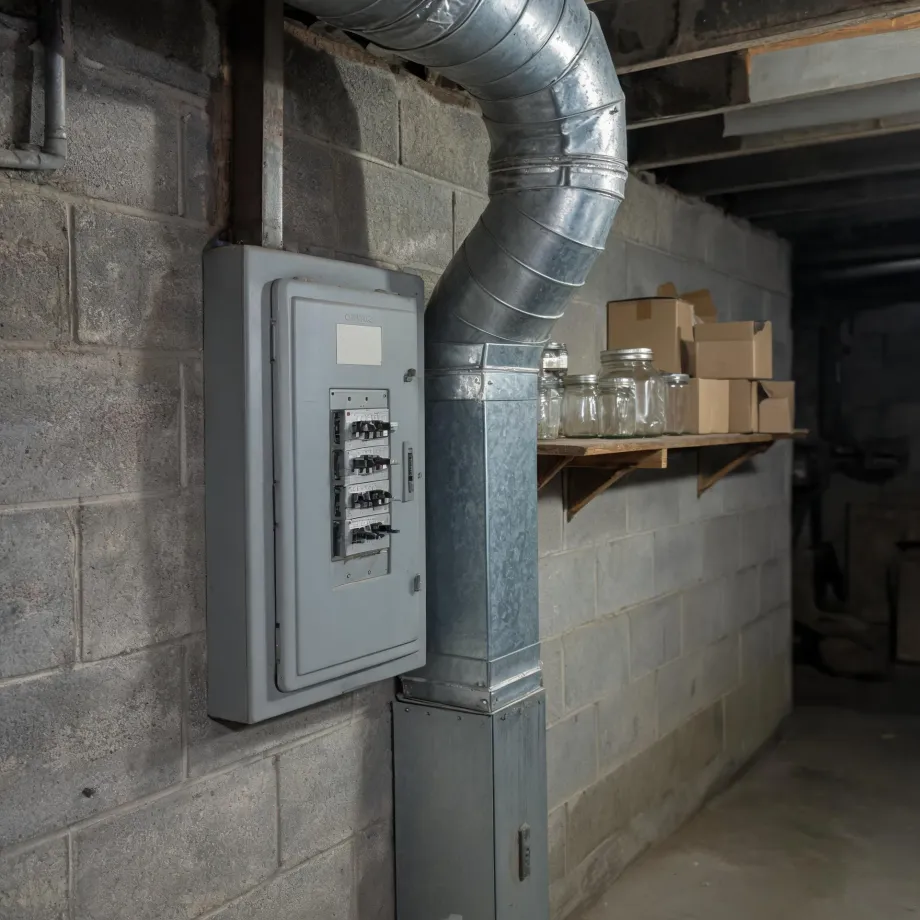
Furnace repair in a county where much of the housing is this old runs into a specific problem once a system is opened: the components inside are often from a generation of equipment whose parts manufacturers stopped producing years ago. Half the homes in Jackson County, South Dakota were built in 1979 or earlier (2020-2024 ACS 5-year). A contractor who pulls a heat exchanger or a control board from a system that old may find the replacement part on backorder indefinitely, or simply unavailable, which changes whether the repair is even viable. That is the variable that decides how a job in this county goes, and it cannot be read from the outside of the unit.
The Parts of a Furnace a Contractor Checks First
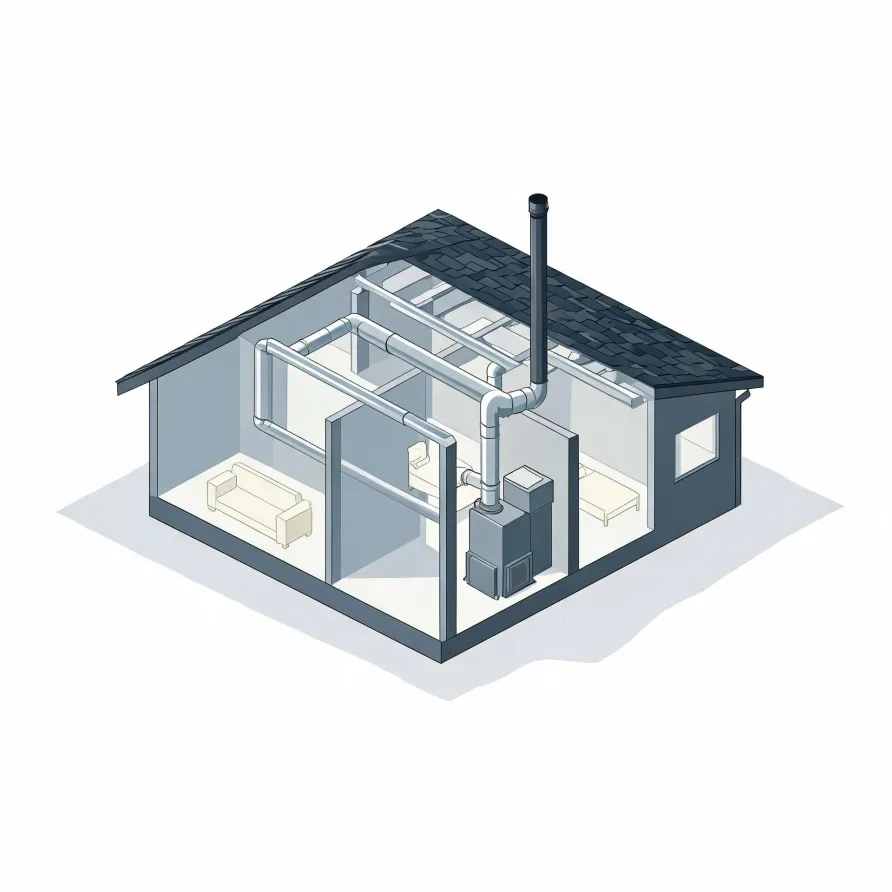
The furnace itself sits in a utility space, basement, or closet and is the piece that generates heat. Inside it, the heat exchanger is what a contractor looks at early: cracks there let combustion gases into living air. The burners, which fire beneath the exchanger, are another common starting point when a furnace runs poorly or not at all.
The blower motor sits at the base of the furnace cabinet and pushes conditioned air out through the house. The flue pipe exits the top or back of the unit and vents combustion gases outside. The control board and thermostat wiring tie the system together, and a fault in either can mimic a failed mechanical part.
The drawing shows the general layout of a furnace system, and a licensed contractor determines what applies to your specific house.
Find a contractor in Jackson CountyJackson County by the numbers
323 severe weather events were recorded in Jackson County, South Dakota between 2015 and 2024.
NOAA National Centers for Environmental Information, Storm Events Database, bulk CSV export, events 2015-01-01 through 2024-12-31.Half the homes in Jackson County, South Dakota were built in 1979 or earlier (2020-2024 ACS 5-year).
U.S. Census Bureau, 2020-2024 American Community Survey 5-Year EstimatesJackson County, South Dakota holds 1,086 housing units (2020-2024 ACS 5-year).
U.S. Census Bureau, 2020-2024 American Community Survey 5-Year EstimatesOwners occupy 67.3% of the occupied homes in Jackson County, South Dakota (2020-2024 ACS 5-year).
U.S. Census Bureau, 2020-2024 American Community Survey 5-Year EstimatesCodes & Standards for Furnace Repair in Jackson County, South Dakota4 sourced rules and standards
What the Repair Visit Actually Looks Like
Non-weatherized gas furnaces manufactured on or after November 19, 2015 must reach 80.0 percent AFUE.
Non-weatherized oil-fired furnaces manufactured on or after November 19, 2015 must reach 83.0 percent AFUE.
Mobile home gas furnaces manufactured on or after November 19, 2015 must reach 80.0 percent AFUE.
Non-weatherized gas furnaces manufactured on or after December 18, 2028 must reach 95.0 percent AFUE, up from the 80.0 percent minimum that applies to units manufactured before that date.
Severe Weather Events in Jackson County
Heating equipment in Jackson County works against whatever the climate throws at it, and that workload shapes how often repair needs come up. Understanding the local weather pattern is part of understanding what a furnace here actually goes through.
323 severe weather events, 2015–2024. Source: NOAA National Centers for Environmental Information, Storm Events Database.