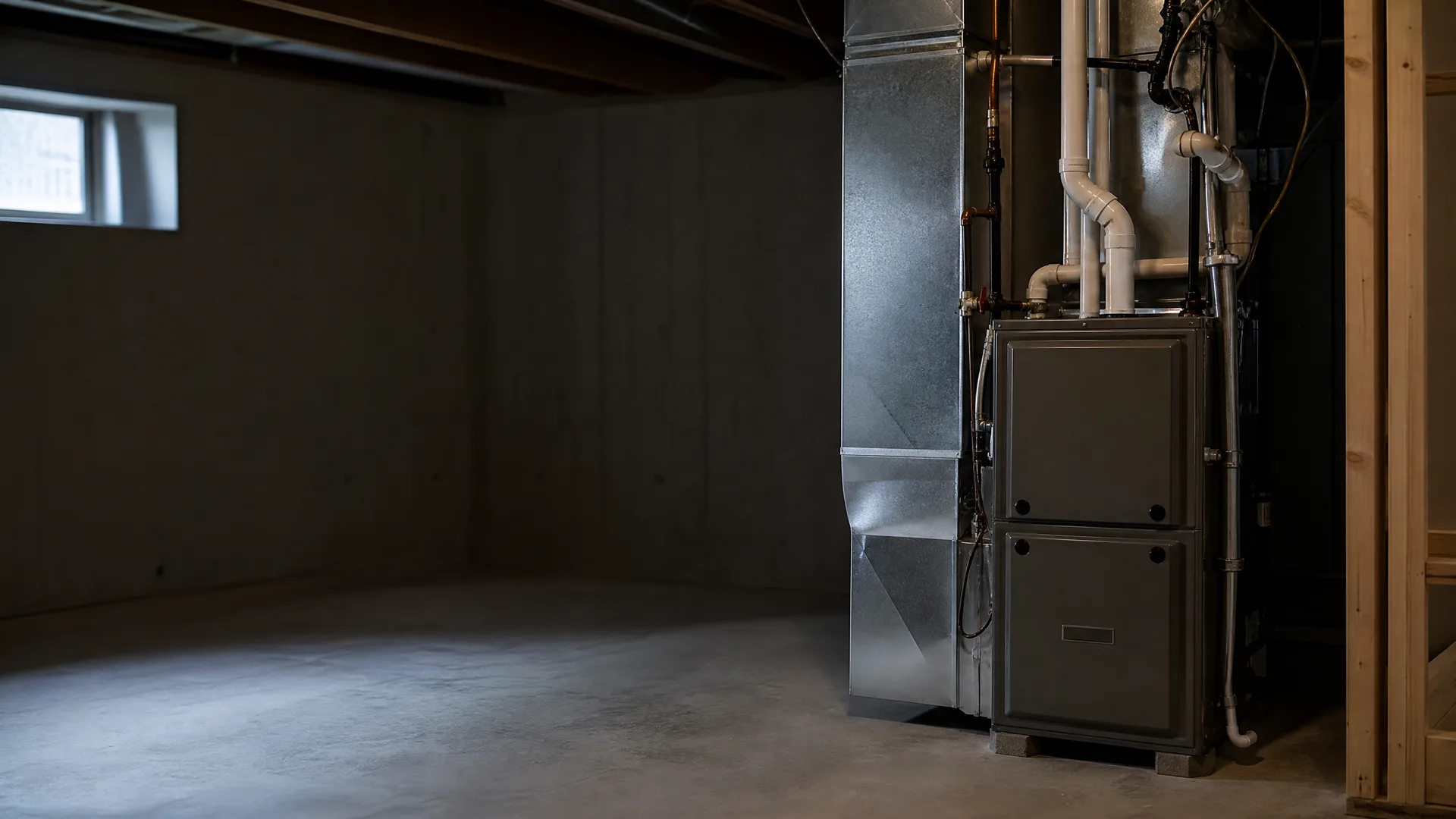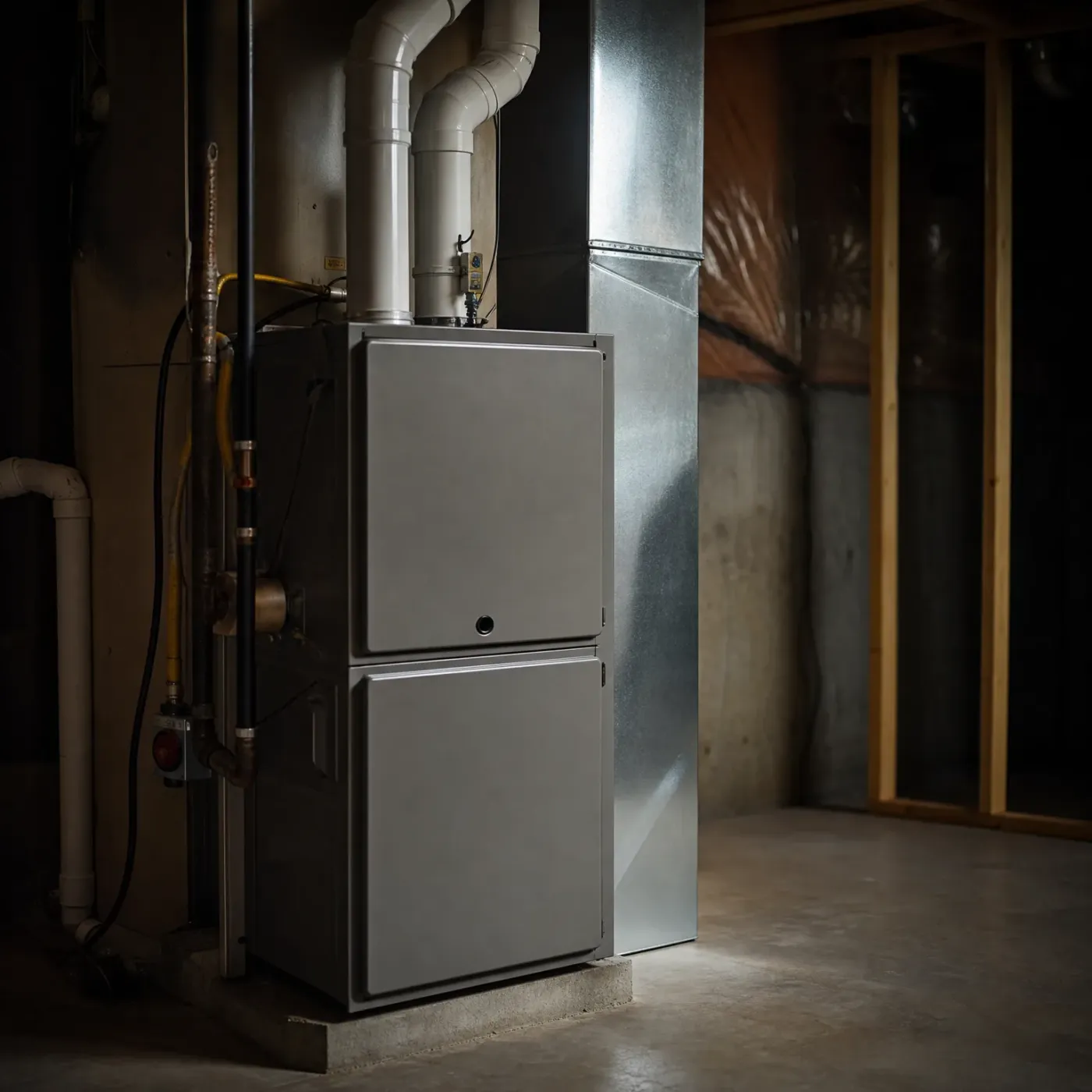
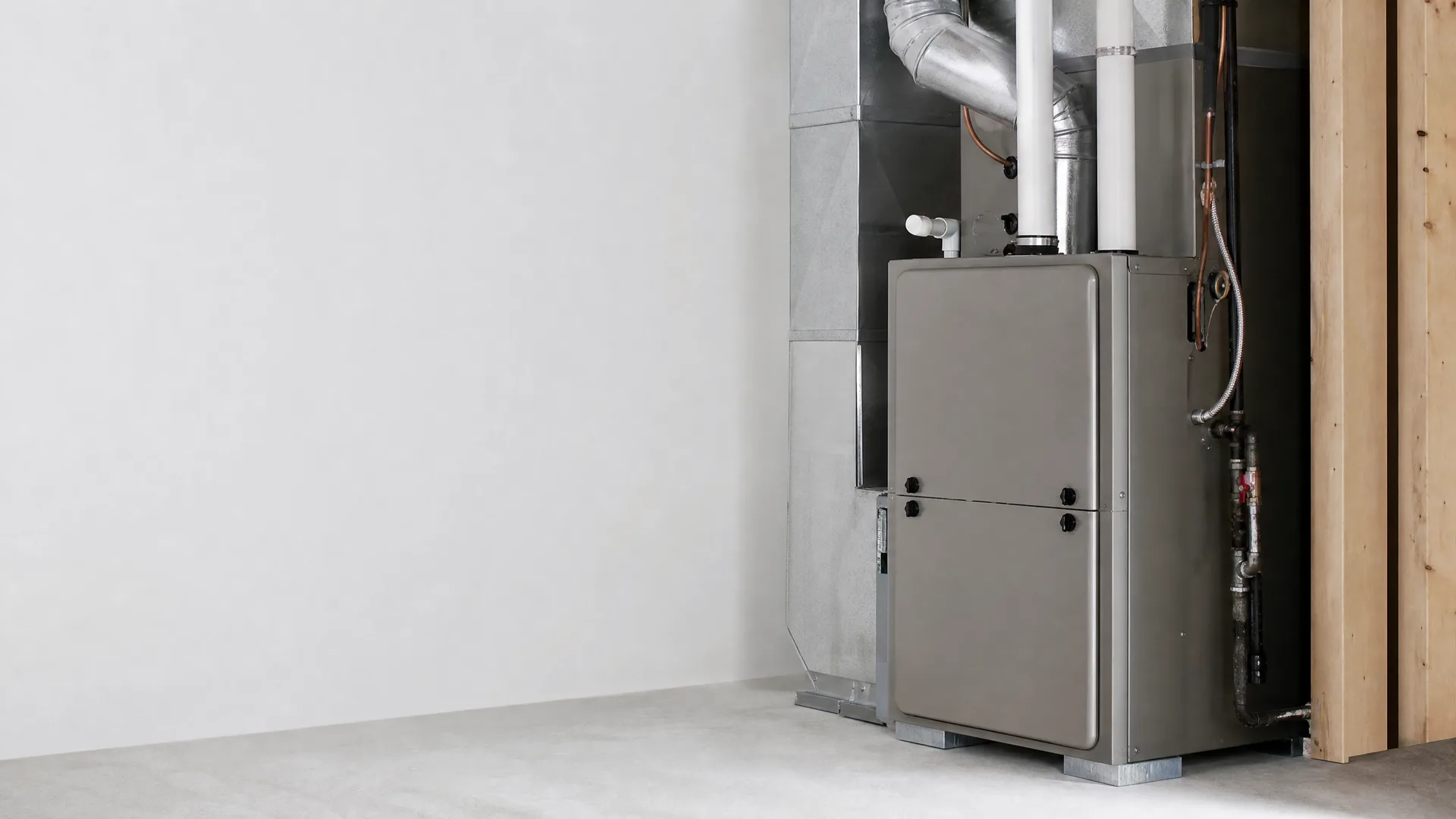








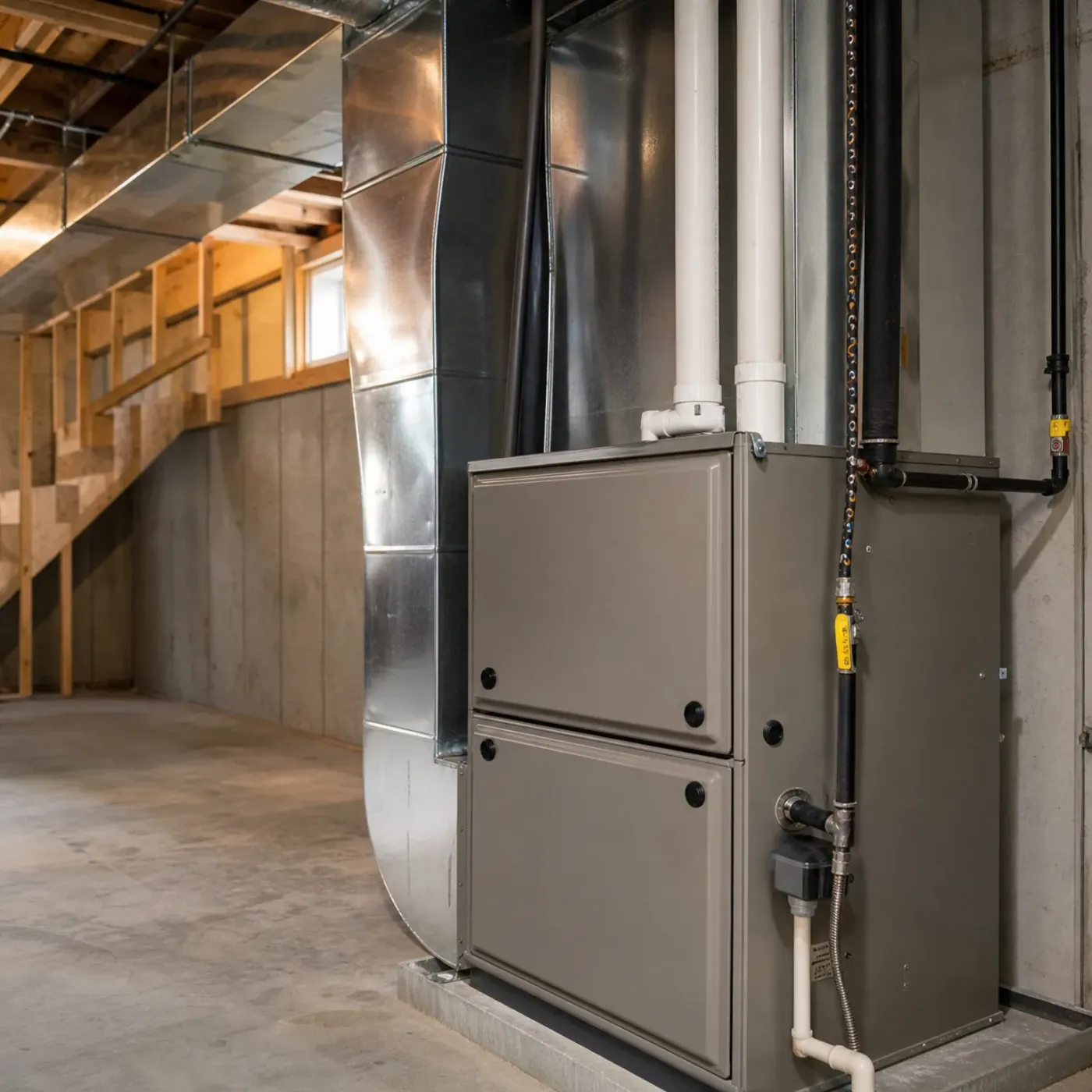

A gas furnace with two gray access panels stands on a concrete pad in a basement, with white PVC vent pipes above, sheet-metal ductwork to the right, and gas and water piping along the wall at left.

A local pro for your furnace repair

Furnace continuously running

A furnace that never shuts off is working too hard at something. Could be a thermostat telling it to keep going, could be heat that isn't reaching the rooms it's meant for, could be a part stuck in the "on" position. This page walks through why it happens and what a contractor checks first when they look at a furnace that won't stop.

Find a furnace pro

A furnace that runs nonstop is usually stuck because something is telling it to keep going, or something is keeping it from ever catching up. A thermostat set wrong or sitting somewhere the air barely reaches can hold the system on well past the point your home is warm enough. A dirty filter can choke airflow until the furnace works overtime trying to push heat through. A flame sensor, limit switch or relay stuck in the wrong position can leave the burners firing with no real signal to stop them. With overnight lows averaging 11°F across South Dakota winters, a furnace that won't cycle off is either overworked trying to keep up with the cold or stuck in a loop it can't get out of on its own. Either way it's worth having someone look at it before the part that's struggling gives out completely.

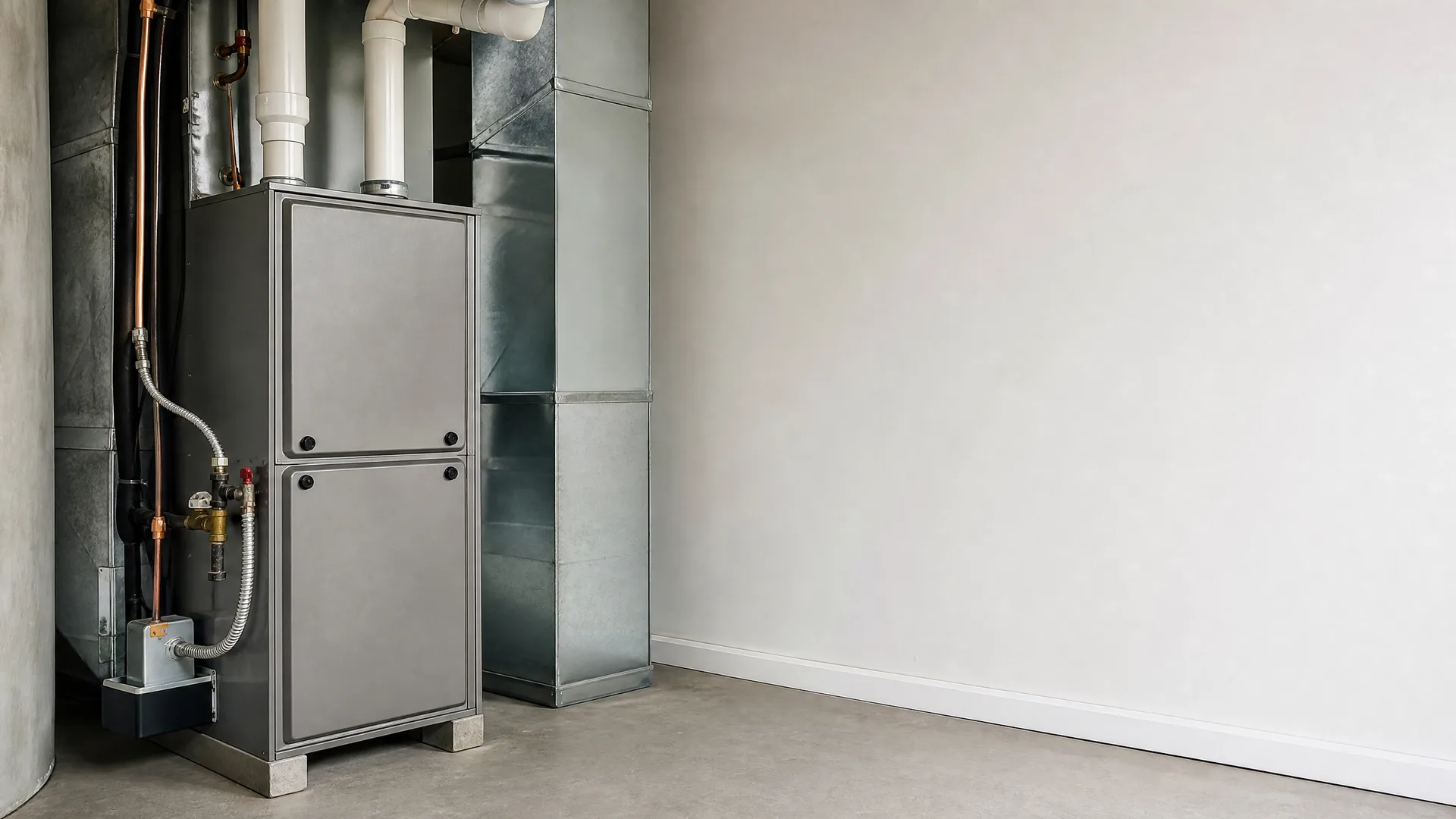
A gray high-efficiency furnace with white PVC vent pipes, copper and flexible piping, and galvanized sheet-metal ductwork stands against a wall in a room with a bare concrete floor and plain light-colored wall.

Why your thermostat matters here

Your thermostat decides when the furnace stops, not the air temperature in the room you're sitting in. If it's mounted near a vent, a drafty window, or a wall that runs cold, it can read the air wrong and keep calling for heat. Check where yours sits. If it's fighting a cold spot instead of the room, that alone can keep the furnace running long after your house feels warm enough.

A gray residential furnace with attached sheet-metal ductwork, white PVC vent pipes and copper lines stands against a plain white wall on a concrete floor, beside exposed wooden framing.

What a South Dakota winter asks of it

Overnight lows here average 11°F across December, January and February, and your furnace is built to answer that without stopping. Utility gas heats more homes in South Dakota than any other fuel, and those systems are sized to run long stretches on the coldest nights. The difference between that and a furnace that never shuts off at all is small, but it's the difference a contractor is trained to find.

Why is my furnace never shutting off?

You're noticing the blower never rests, running through the night and still going when you check it in the morning. Some rooms may feel too warm while others stay cold, which is often a sign the heat isn't reaching where it should. With overnight lows averaging 11°F across South Dakota winters, a furnace stuck running is working against a real load, not an occasional cold snap. Left alone, a part stuck calling for heat tends to wear faster, since it was never built to run without a break.

A woman in a mustard knit sweater sits on a light-colored sofa indoors, looking toward a bright window, with a potted fiddle-leaf fig plant behind her.
A woman with long brown hair in a cream knit turtleneck sweater sits on a light sofa indoors, looking off to the side, with a shelf of plants and pottery blurred behind her.
A woman with long brown hair in a dark red knit sweater sits on a gray couch with cushions, smiling and looking off to the side, with a window and indoor plant behind her.
A woman with long dark hair in a cream knit sweater sits on a sofa indoors, smiling and looking off to the side, with a blurred room, hanging light bulb and window behind her.
A gray high-efficiency furnace with white PVC venting pipes stands on blocks in a basement next to sheet-metal ductwork, with exposed wood framing on the left and a concrete wall and floor.
A furnace cycling normally, kicking on, satisfying the thermostat, then shutting off until the house calls for heat again.
An older gas furnace with two white PVC vent pipes stands on a concrete basement floor beside galvanized sheet-metal ductwork, flexible conduit, and piping along a wall.
A furnace stuck running straight through, never reaching the point where it's allowed to rest, even with South Dakota nights near 11°F.

What's Actually Keeping It Running

  • A thermostat set to "on" instead of "auto" runs the blower nonstop even after the burners shut off.
  • A flame sensor coated with residue can make the burner shut off early, so the furnace relights again and again without ever reaching the set temperature.
  • A blower stuck on high speed moves air constantly instead of cycling with the burner, so the house never feels like it's catching up.
  • A dirty filter restricts airflow across the heat exchanger, which can trip a limit switch and leave the furnace stuck running longer than it should.
  • A furnace sized too small for the house runs long stretches just trying to keep pace, especially on the coldest nights.
  • Dampers or ducts sending too much air to one part of the house can starve another room, so the thermostat never sees the temperature it's waiting for.

A furnace that won't shut off is usually caught between two different problems, and telling them apart matters. One is a signal problem. Something is telling the system to keep going even though the house is warm enough, whether that's a thermostat switch left on "on," a sensor giving the control board bad information, or a blower motor that's lost its ability to cycle down. The other is a supply problem. The furnace is doing what it's told, shutting off when it should, but it never gets there because heat isn't reaching the rooms that need it. A clogged filter, a duct sending too much air to one side of the house, a system that was never sized right for the square footage, all of these leave the thermostat waiting on a temperature that never arrives. A contractor working through this checks both sides: first whether the furnace is getting the right signal to stop, then whether the heat it's making is actually landing where the thermostat can feel it. On a night near 11°F, the difference between a furnace that cycles normally and one that runs straight through can come down to a single part, the flame sensor, the limit switch, or the blower speed setting, and finding which one is the job.

An older gas furnace with a louvered front panel stands on a concrete basement floor beside large sheet-metal ductwork, a metal flue pipe, copper piping and wood framing.
Before you get your furnace repair
A beige high-efficiency furnace stands on a concrete basement floor beside sheet-metal ductwork, with white PVC vent pipes, flexible conduit and copper and steel piping running up a concrete wall to an electrical box.
After you get your furnace repair
A gray high-efficiency furnace in an unfinished basement, connected to large galvanized sheet-metal ductwork, PVC vent pipes, a gas line and flexible conduit, with concrete walls, wood framing and a staircase in the background.

Get the right pro for your furnace

Fill out one short form instead of calling around.

A local pro who knows furnaces gets your details and gets in touch.

Fill out one form

Asking costs nothing, and the choice to hire stays yours.

Why does a stuck relay keep the furnace blower running?

The blower in your furnace is switched on and off by a relay, a small electrical switch that gets a signal from the control board. When the burners shut off, that relay is supposed to drop out and stop the fan a short while later. If the relay sticks closed, the board can send the stop signal and the fan never hears it. The blower just keeps moving air through your ducts long after the heat exchanger has gone cold, which is why you can feel plain room-temperature air coming through the vents instead of warm air.

The relay is stuck closed and can't tell the blower to stop

Contacts inside the relay can fuse together from normal wear or from arcing every time the blower cycles on. Once that happens, the switch stays shut no matter what the control board tells it to do, so the fan keeps running even with the burners cold and the thermostat satisfied. It's a different problem from a thermostat set to "on," which runs the fan on purpose. A stuck relay runs it by mistake, and it won't correct itself. A contractor can test the relay and replace it, which is the kind of repair that stops the nonstop running for good instead of masking it.

A gray high-efficiency furnace with white PVC vent pipes stands in an unfinished basement beside sheet-metal ductwork, gas piping, and insulated stud walls on a concrete floor.

A furnace that shuts off like it should

This is a furnace cycling the way it's built to. It fires, the burners heat the air, the blower pushes it through the ducts, and once the thermostat is satisfied the whole thing rests until the house calls for heat again.


A beige sheet-metal furnace with a louvered upper panel stands on a concrete basement floor, connected to galvanized ductwork, white PVC vent pipes, and a metal gas line with an electrical box.

A furnace that won't stop

This is the same kind of unit stuck mid-cycle. The blower keeps pushing air long after it should have paused, the burners may be cycling on and off fast, and the furnace never gets to the point of rest, even overnight with South Dakota lows near 11°F.

A smiling older woman with gray hair in a loose bun wearing a ribbed beige sweater stands in a dimly lit kitchen beside a window showing darkness outside, with a loaf of crusty bread on a wooden board in the foreground.
A woman with her hair in a bun sits wrapped in a beige knitted blanket on a couch, holding a sleeping child against her chest in a warmly lit room with a lamp and houseplant in the background.

A furnace that cycles off lets the burners rest once the house hits temperature, so parts like the igniter and blower motor aren't under constant strain through a South Dakota winter.

A furnace that never shuts off is pushing those same parts nonstop, and the longer it runs without a break, the more likely something gives out before spring.

Winter nights average 11°F statewide

When overnight lows sit near 11°F across the state, your furnace should still find a point where it's satisfied and rests. A furnace that never gets there is pushing heat into a house that keeps losing it, or running on a signal that never lets go, straining parts that are built to cycle, not grind through the night without a break.

NOAA nClimDiv 1991-2020 county normals weighted by homes

  1. The limit switch stops burners if the plenum runs too hot.

  2. A dirty filter starves airflow, so the limit trips and resets.

  3. The control board times each cycle, it doesn't just react.

  4. A blower set to "on" hides a burner that's already cycling off.

A man in a dark jacket and khaki pants walks through an open gate in a stone wall toward a woman standing in the open front doorway of a single-story white house with a dark shingled roof and river-rock accents.

A furnace stuck running still has a reason behind it

A furnace that never shuts off isn't random. It's a thermostat stuck calling, a part that won't let go, or heat that can't satisfy the house even with South Dakota nights near 11°F. Somewhere in that chain is the actual cause, and it takes someone working on the system directly to find it.

When you're ready, you can be matched with a contractor who serves your needs, and they'll reach out to you. That means no searching around for who handles furnace repair, no calling several places and explaining the same thing each time, no sorting through quotes on your own. The part that's work gets handled. Finding the right help is the part that stops being yours to carry.

A shallow dark wooden bowl and a stack of books rest on a wooden table in front of a beige sofa with linen and green cushions, with a tall ceramic vase of thin branches beside a window in the background.
An unfinished basement with bare concrete walls and floor, a small window at upper left, exposed joists overhead, and a furnace with sheet-metal ductwork and pipes along the right side.

A pro who works on furnaces

Explain the job once and skip repeating it on every call.

Step 1 of 3: Equipment