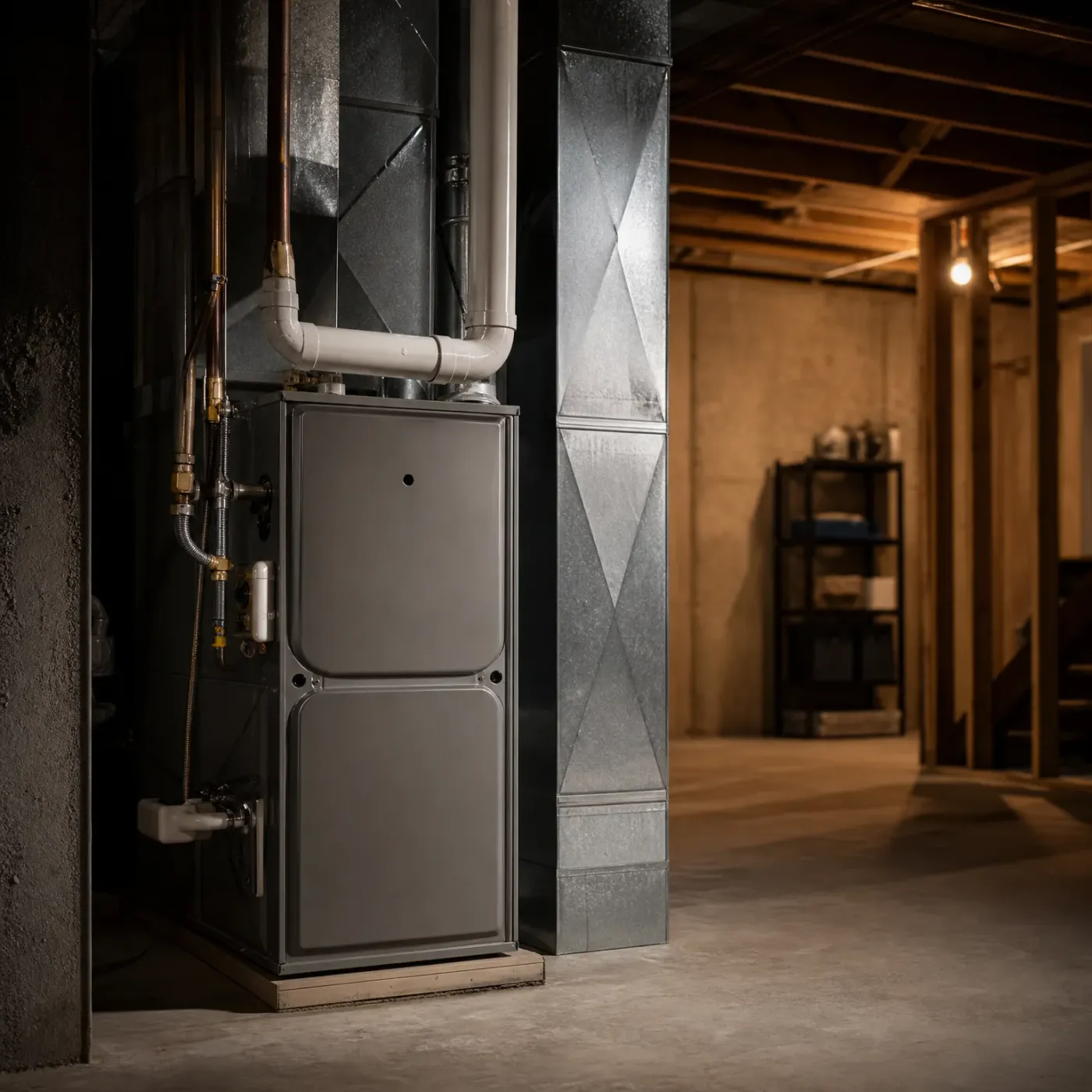








A gray gas furnace with copper and PVC piping stands beside large galvanized sheet-metal ductwork in an unfinished basement with concrete floor, wood framing, and a glowing bare bulb in the background.

Done looking for a furnace pro

Why your furnace keeps turning on and off in South Dakota

A furnace that short cycles clicks on, runs a few minutes, then shuts off before the house warms up, over and over all day. It can be a dirty filter, a bad thermostat, a cracked heat exchanger or a flame sensor losing its signal. This page walks through what causes each one. Skip the calling around and send one form instead, and the search for help is off your plate.

Hand it off

A furnace that keeps turning on and off, usually in short bursts of a few minutes, is almost always shutting itself down early as a safety response. The furnace has sensors built in to stop it from running if something is off, and short cycling means one of them is tripping. A clogged filter is the most common cause, because it starves the furnace of airflow and the heat exchanger overheats, so the limit switch cuts the burner before the house ever gets warm. A flame sensor coated with residue can do the same thing by telling the control board there's no flame when there is one. Less often, it's a cracked heat exchanger or a thermostat sending bad signals. Through a South Dakota winter, a furnace that short cycles is working harder for less heat, and the part causing it tends to get worse, not better, until someone looks at what's actually tripping the shutdown.

An older metal furnace with a louvered front panel stands against a concrete basement wall, connected to sheet-metal ductwork and a flue pipe, with copper and steel pipes running alongside.
Before you get your furnace repair
A beige high-efficiency furnace stands on a concrete basement floor beside sheet-metal ductwork, with white PVC vent pipes and a gas line running along an insulated wood-framed wall.
After you get your furnace repair

The sequence behind every shutdown

  • A cracked or dirty flame sensor tells the control board there's no flame even when there is, so the board cuts gas to the burner.
  • A clogged filter starves the furnace of return air, the heat exchanger overheats, and the limit switch shuts the burners off to protect it.
  • The igniter has to glow hot enough to light the gas within a few seconds, and a weak one can fail that check every cycle.
  • A thermostat set too close to the room's actual temperature can call for heat and then kill it within minutes of reaching it.
  • An oversized furnace heats the air fast enough that it satisfies the thermostat long before a full cycle finishes.
  • A blocked or restricted vent pipe trips a pressure switch that won't let the burners stay lit.

Every part of a furnace's start-up has to pass a check before the next step happens, and short cycling is what you see when one of those checks keeps failing. The sequence starts with the igniter heating up, then the gas valve opens, then the flame sensor confirms a flame is actually burning. If the sensor is coated with soot or corrosion, it can't read the flame correctly, so the control board assumes the worst and cuts gas to the burner even though the furnace lit fine. A dirty filter causes a different kind of failure further into the cycle. With airflow choked off, heat builds up inside the heat exchanger instead of moving into the ductwork, and the limit switch trips to keep the metal from overheating. The furnace shuts down, cools, and tries again a few minutes later. Pressure switches work the same way on the exhaust side. If the vent pipe is blocked by ice, a bird's nest, or debris, the switch won't let the burners stay lit because it reads that as unsafe venting. Sizing causes a cycling pattern that has nothing to do with a failing part. A furnace that's too big for the house heats the air fast enough to satisfy the thermostat in just a few minutes, then shuts off before a normal full cycle would even finish, and that pattern repeats all day whether or not anything is actually wrong.

A smiling man with dark curly hair in a dark green henley shirt sits on a light sofa in a living room with large windows, a lamp, shelving, a stone fireplace, and a bowl of popcorn in the foreground.
A smiling man in a dark long-sleeved henley shirt sits on a beige sofa in a living room, with a bowl of popcorn and a remote on the table in the foreground and shelves, a lamp, and a doorway behind him.
A smiling man with graying hair and stubble in a blue henley shirt sits on a gray sofa with cushions in a living room, with a bowl of popcorn on a wooden table in the foreground.
A smiling man in a dark green long-sleeve shirt reclines on a sofa in a dimly lit living room, with a bowl of popcorn on a side table in the foreground and a bookshelf, lamp, and houseplant behind him.

You'll feel this before you understand it. The furnace kicks on, runs a few minutes, quits, and the house still isn't warm. South Dakota winters don't give that pattern much room to hide. Gas keeps getting used without the payoff of a warm house, and every restart draws a hit of power that a cold snap turns into more restarts than usual. Power is cheap here, but enough short cycles a day still show up on the bill. Meanwhile the room with the thermostat can read fine while the rest of the house lags, since the furnace never runs long enough to move heat down the hall. None of this gets better by waiting. A flame sensor or limit switch already struggling tends to fail more, not less, over the following weeks, and the igniter and blower motor take wear they weren't built to handle from constant restarts. If a cracked heat exchanger is what's cutting the furnace short, that's not a comfort complaint anymore. That's carbon monoxide risk sitting in a system you still rely on every night it drops below freezing.

What Short Cycling Costs Your House

  • A furnace that short cycles all day runs up your gas use without actually getting the house to temperature.
  • Each stop and restart pulls more power at startup, and in a cold snap that adds up on a cheap-power bill you don't expect to move much.
  • The room with the thermostat might read warm while bedrooms down the hall stay cold, because the furnace never runs long enough to push heat through the ductwork.
  • A flame sensor or limit switch that's already failing tends to get worse over a few weeks, not better on its own.
  • If a cracked heat exchanger is behind the shutdowns, that's a safety issue tied to carbon monoxide, not just a comfort problem.
  • Short cycling puts extra wear on the igniter and the blower motor, parts that are built for long steady runs, not constant restarts.
A gray high-efficiency furnace with white PVC vent pipes stands on a concrete pad in a basement, beside sheet-metal ductwork, copper piping and a poured concrete wall with wood framing at left.
A furnace running clean cycles on and off a normal number of times a day and actually warming the house each round.
A beige gas furnace in a basement with a metal flue pipe, galvanized sheet-metal ductwork to its left, and gas and water pipes along the concrete wall to its right.
The same short cycling habit left alone, where the next stop might not be the limit switch catching it in time.
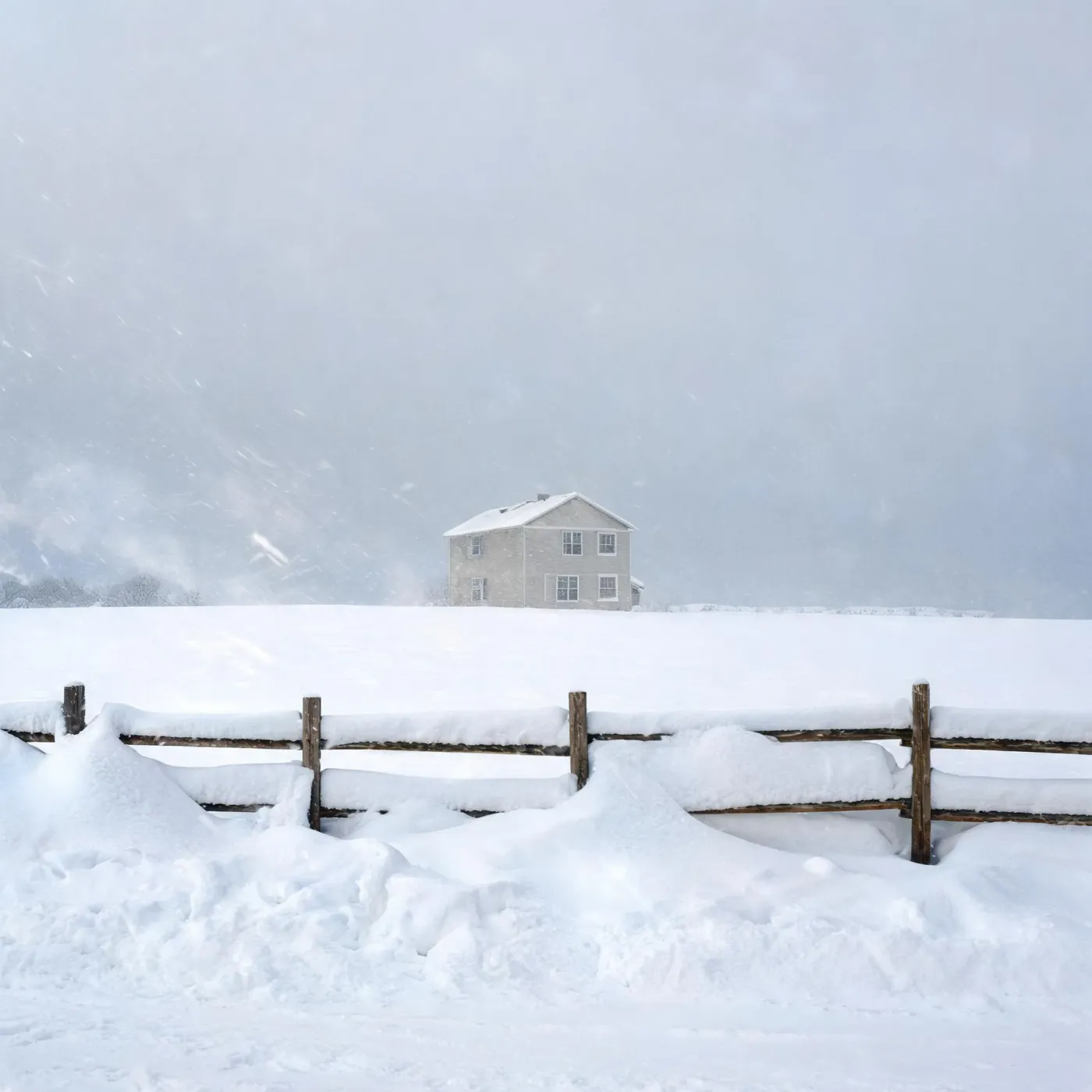
A two-story light-colored house with a snow-covered roof stands on a snowy rise behind a partly buried wooden rail fence during falling snow and low visibility.

The National Weather Service puts the average winter night statewide at 11°F. That kind of cold means your furnace runs long and hard to keep up, and it's working from a near-constant call for heat rather than cycling on occasion. If it's already short cycling, every one of those stops and restarts happens against that cold, so the burners fire more times trying to catch up, and the house still won't hold steady at the temperature you set. You'll notice it most overnight, when the thermostat keeps calling and the furnace keeps quitting early instead of carrying the house through to morning. Once you send the form, you're done chasing down who can fix it. No more calling around or explaining the problem twice. Someone licensed takes it from there.

NOAA nClimDiv 1991-2020 county normals weighted by homes

It's off your list after this

A furnace that keeps shutting off before the house warms up is not going to fix itself, and a South Dakota winter does not give you a lot of room to let it ride. Figuring out whether it is the flame sensor, the filter, or the limit switch means someone has to actually look at it, and finding that someone is usually the part that eats your afternoon. Calling a few shops, explaining the clicking and the short runs to each one, waiting on callbacks, then sorting through quotes that do not say the same thing twice. That work goes away once you send the request. One contractor gets your information and takes it from there, and you stop being the one chasing the answer. With nights running near 11°F, a furnace that is cycling instead of holding a steady call for heat needs someone who can see what the board is doing, not another round of guessing on your own.

Why the filter matters so much

A furnace pulls return air through the filter before it ever reaches the burners. When that filter is packed with dust, the furnace can't pull enough air through to keep the heat exchanger cool. The limit switch is watching for exactly that. Once it sees the exchanger running hotter than it should, it cuts the burners to protect the metal from cracking. The furnace fires back up a few minutes later, heats past the limit again, and shuts off again. A filter that hasn't been changed in a while can cause this on its own, with nothing else wrong in the furnace.


What the flame sensor actually does

The flame sensor sits right in the burner flame and reads it to confirm gas is actually burning. If the sensor is coated in residue or starting to wear out, it can lose that signal even while the flame is still there. The control board trusts the sensor over the flame itself, so it reads no signal as no flame and cuts the gas as a safety call. The burners shut off, the board tries again, and the same misread happens. A furnace can short cycle for days on a bad sensor alone, with the filter and everything else working fine.

Winter nights average 11°F statewide

At 11°F, a furnace that's short cycling has less room to catch up between bursts. Each stop leaves the house a little further behind, and by the next cycle it's starting from colder air than the one before.

NOAA nClimDiv 1991-2020 county normals weighted by homes

Let it keep short cycling and you're looking at a furnace that wears out its own ignition system and heat exchanger faster than it should, on top of the gas it's burning for rooms that never get warm.

Get the cause found and fixed and the furnace runs its normal length each time, actually reaches the thermostat setting, and stops costing you gas for cycles that weren't doing anything.

A woman in a dark gray sweater reclines on a couch with her eyes closed and a knit blanket over her lap, an open book resting face-down in front of her, with a lit table lamp and shelving blurred in the background.
A bearded man in a dark navy sweater over a collared shirt smiles and looks off to the side while seated at a dinner table with a glass of red wine, a lit candle, and a plate of food in the foreground of a dimly lit room.
A wooden table in the foreground holds a closed laptop and a ceramic mug of coffee, with a spindle-back wooden chair behind it, a beige wall with paneled wainscoting, a window at left, and a kitchen counter with a cutting board, bowl of fruit and greenery at right.

Short cycling has a cause, and it's fixable

A furnace that clicks on and off all day is telling you something specific. A dirty filter, a flame sensor losing its signal, a limit switch catching too much heat, a thermostat reading the room wrong. One of those is behind it, and a licensed furnace repair contractor can tell which one by looking at the unit itself, not by guessing from a list.

Finding that contractor is usually the slow part. Searching, calling a few numbers, explaining the same short cycling problem again to each one, then sitting with quotes trying to compare them. Send the form on this page and that part is done. You won't be the one tracking down who's licensed, who answers, and who can actually get to a furnace doing this in the middle of a South Dakota winter. The furnace still needs the same fix either way. You just stop being the one who has to find who does it.

A speckled beige ceramic vase holding thin dried branches sits on a round wooden table near a window with sheer curtains, with a dark upholstered chair and draped blanket blurred in the background.
A single-story stucco house at dusk with a lit paver walkway lined by low path lights, desert plants and boulders in front, and distant mountains under an orange and blue sky.

Furnace Repair

Hand off the search today

Step 1 of 3: Equipment
  • A living room corner with a beige upholstered armchair holding a green pillow and knitted throw, a ceramic table lamp on a side table, white built-in bookshelves, a framed landscape print, a curtained window, and a round wooden table with a lit candle and bowl in the foreground.
    • Tell a local repair pro what your furnace is doing.
    • A local pro who knows furnaces gets your details and gets in touch.
  • A lit table lamp with a tapered beige fabric shade and a speckled rounded ceramic base sits on a wooden surface beside a potted plant, with curtains and a window in the background.
    • After you send the request, you're done searching.
    • Send the request today and stop worrying about who to call.
  • A cream upholstered armchair with a gray pillow and knit throw sits beside a wooden table with a eucalyptus-filled vase, in front of a lit stone fireplace with stacked firewood.
    • Describe your furnace job once, to one pro.
    • Fill out one short form instead of calling around.
  • A gray outdoor air conditioner condenser unit on a concrete pad beside a wood-sided wall, with a horizontal wood slat fence, a cushioned patio chair, a wooden table, and a potted green plant nearby.
    • Your request goes to one pro, not a list of companies.
    • The pro who reaches out is licensed in South Dakota.






