Tell us about the job
Takes about a minute. No obligation.
Sizing a furnace for Lincoln County means accounting for a burner and heat exchanger that cycle hard and rarely rest. Homes in Lincoln County, SD run heat about eight months a year, from October through May. A contractor doing a load calculation here has to treat that sustained demand as the baseline condition, not a worst case, because the ignition system and heat exchanger accumulate wear in direct proportion to how often they fire. A unit that is even modestly undersized will reach those limits ahead of schedule, and a poor installation compounds the problem from day one.
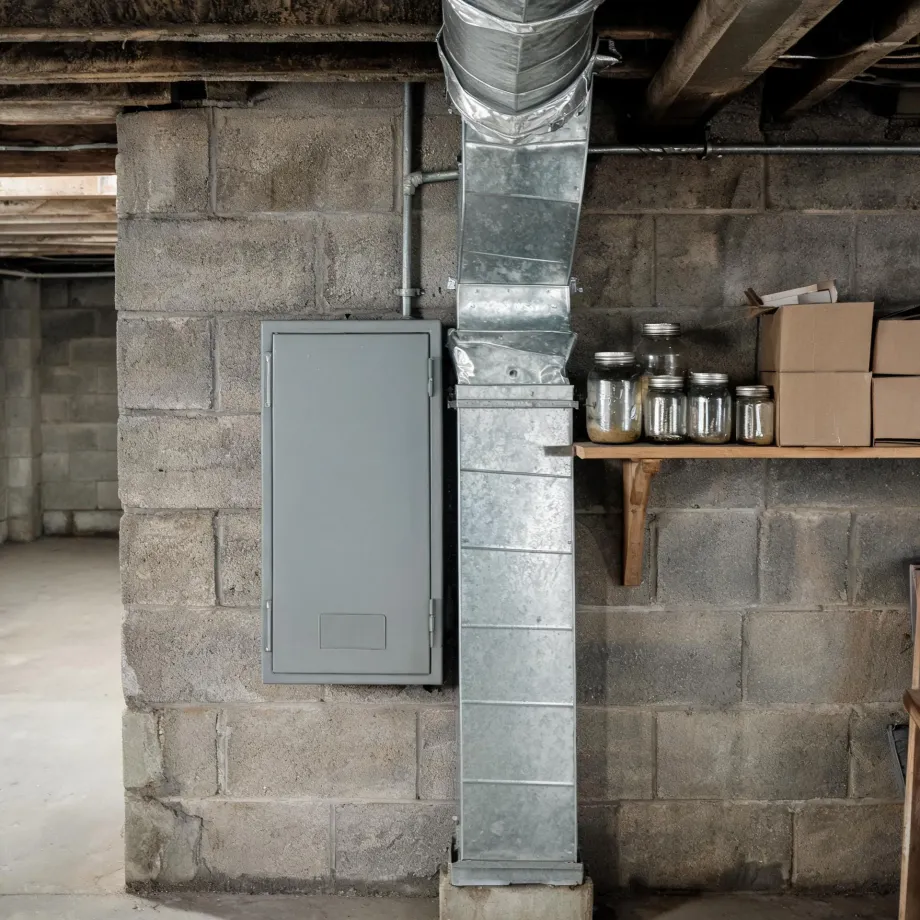
Ductwork routed for one generation of furnace and electrical service sized for a comparable load leaves a contractor with fewer surprises than stock built well before modern equipment existed. Half the homes in Lincoln County, South Dakota were built in 2005 or earlier (2020-2024 ACS 5-year). That recency matters for installation work because the duct runs and service panels in a house like this were not designed for something fundamentally different from what a contractor is putting in now. A contractor who walks into one of these houses and immediately points to the infrastructure as the problem is likely looking in the wrong direction. The more productive questions are equipment selection and fit, not whether the house can carry what gets installed.
What Gets Installed With a New Furnace
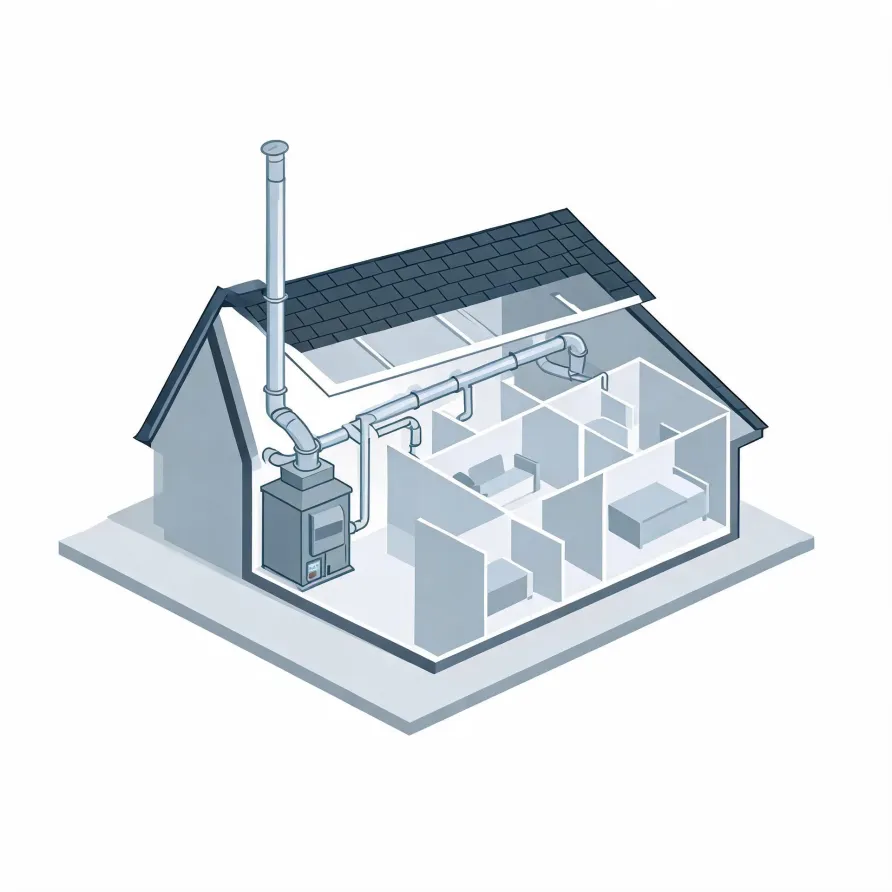
The furnace itself sits in a mechanical room, basement, or utility closet and is the central piece of the installation. A heat exchanger inside it warms the air, and a blower motor pushes that air out into the house. The flue pipe runs from the furnace to an exterior wall or roofline and carries combustion gases out.
The thermostat mounts on an interior wall and is the control point the household interacts with every day. A gas line connects to the furnace's burner assembly, and a contractor ties that connection into the home's existing supply. The filter housing sits at the air intake point, either on the furnace cabinet itself or at a return-air grille nearby.
The drawing shows the general layout of these components, and a licensed contractor assesses what applies to this particular house.
Find a contractor in Lincoln CountyLincoln County, South Dakota, by the numbers
162 severe weather events were recorded in Lincoln County, South Dakota between 2015 and 2024.
NOAA National Centers for Environmental Information, Storm Events Database, bulk CSV export, events 2015-01-01 through 2024-12-31.Half the homes in Lincoln County, South Dakota were built in 2005 or earlier (2020-2024 ACS 5-year).
U.S. Census Bureau, 2020-2024 American Community Survey 5-Year EstimatesLincoln County, South Dakota holds 28,710 housing units (2020-2024 ACS 5-year).
U.S. Census Bureau, 2020-2024 American Community Survey 5-Year EstimatesOwners occupy 71.2% of the occupied homes in Lincoln County, South Dakota (2020-2024 ACS 5-year).
U.S. Census Bureau, 2020-2024 American Community Survey 5-Year EstimatesFurnace Installation Rules & Codes for Lincoln County, South Dakota4 sourced rules and standards
What the Installation Actually Looks Like
Non-weatherized gas furnaces manufactured on or after November 19, 2015 must reach 80.0 percent AFUE.
Non-weatherized oil-fired furnaces manufactured on or after November 19, 2015 must reach 83.0 percent AFUE.
Mobile home gas furnaces manufactured on or after November 19, 2015 must reach 80.0 percent AFUE.
Non-weatherized gas furnaces manufactured on or after December 18, 2028 must reach 95.0 percent AFUE, up from the 80.0 percent minimum that applies to units manufactured before that date.
Severe Weather Events in Lincoln County
Furnaces in Lincoln County work against whatever the local climate puts them through, and that workload shapes how a system should be sized and built. The chart below tracks recorded severe weather events year by year, giving a local frame for what heating equipment here is up against.
162 severe weather events, 2015–2024. Source: NOAA National Centers for Environmental Information, Storm Events Database.