Tell us about the job
Takes about a minute. No obligation.
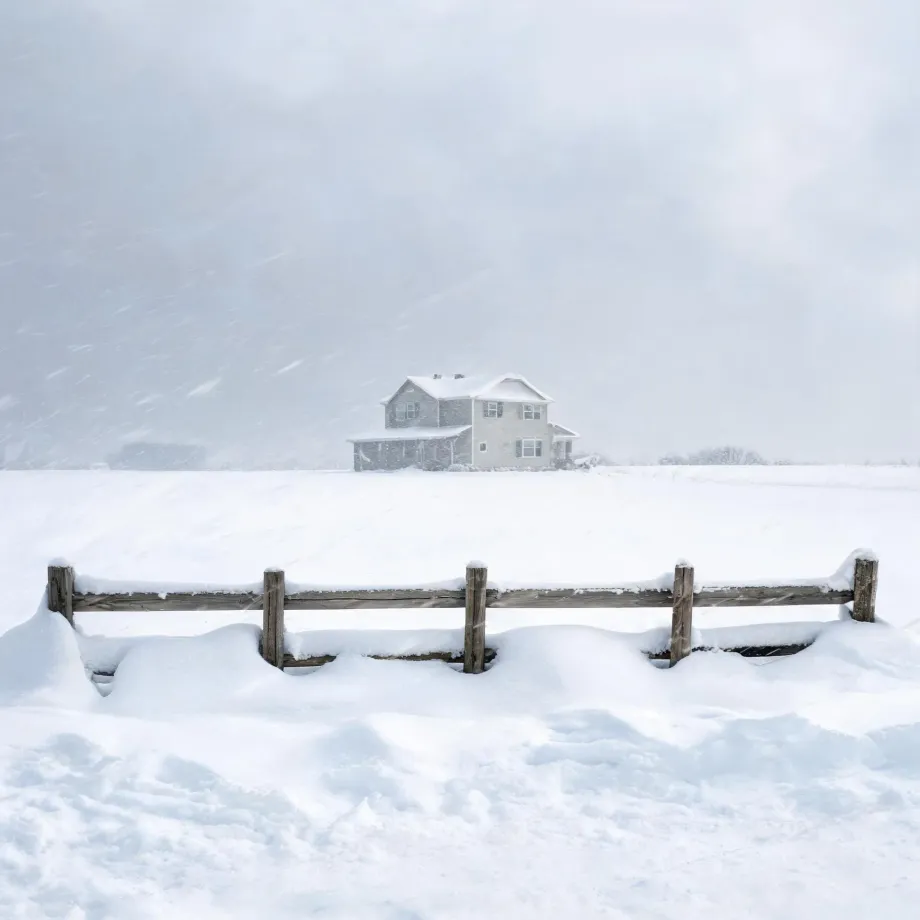
Sizing a furnace for this county starts with understanding the load the burner will carry across a long heating season. Homes in Clay County, SD run heat about eight months a year, from October through May. The heat exchanger and ignition system in a furnace cycle every time the burner fires, and a season that stretches through most of winter, spring, and fall gives those components little rest. A contractor running a proper load calculation here is locking in not just first-year comfort but how those parts hold up over years of hard use. An undersized unit will short-cycle or run continuously, and either pattern puts the heat exchanger under stress it was not built to sustain.
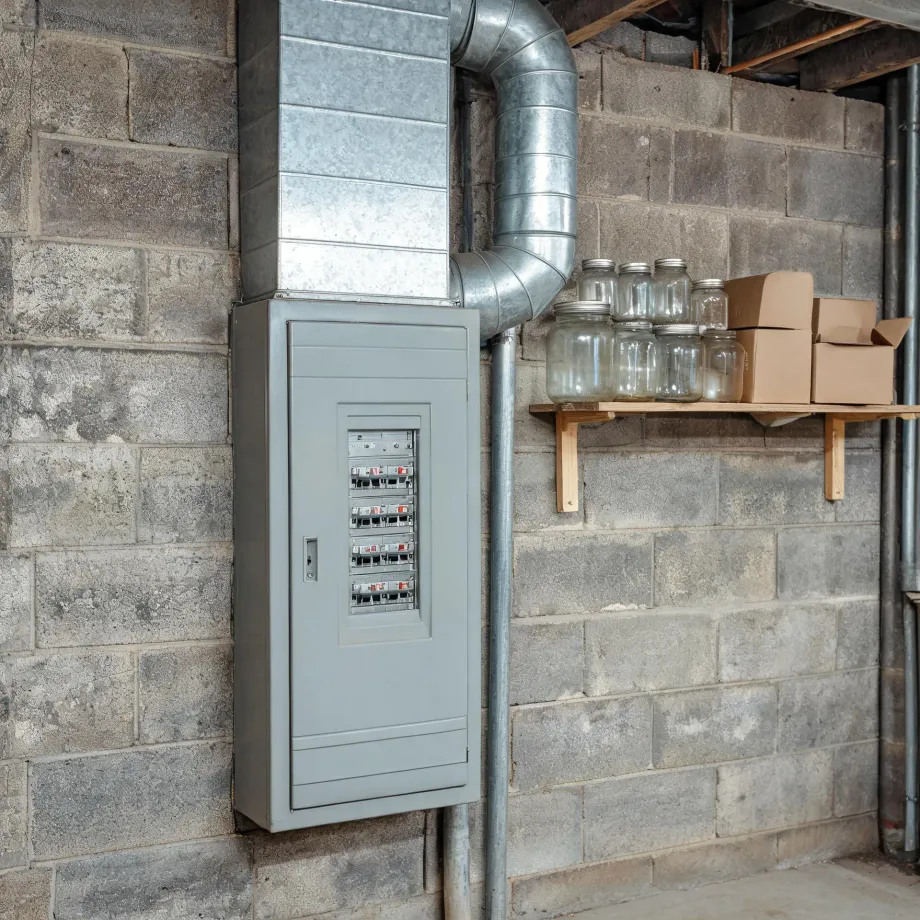
Ductwork in a house carries the system it was built for, and in much of Clay County that was a system a generation of furnace design ago. Half the homes in Clay County, South Dakota were built in 1976 or earlier (2020-2024 ACS 5-year). A contractor scoping a furnace installation here checks the existing duct dimensions and the electrical service before pricing the unit, because both were sized for loads that differ from what modern furnaces draw and distribute. If the ductwork cannot move the new system's air volume without restriction, the install requires modifications beyond swapping equipment. The electrical panel gets the same look.
What Gets Installed With a New Furnace
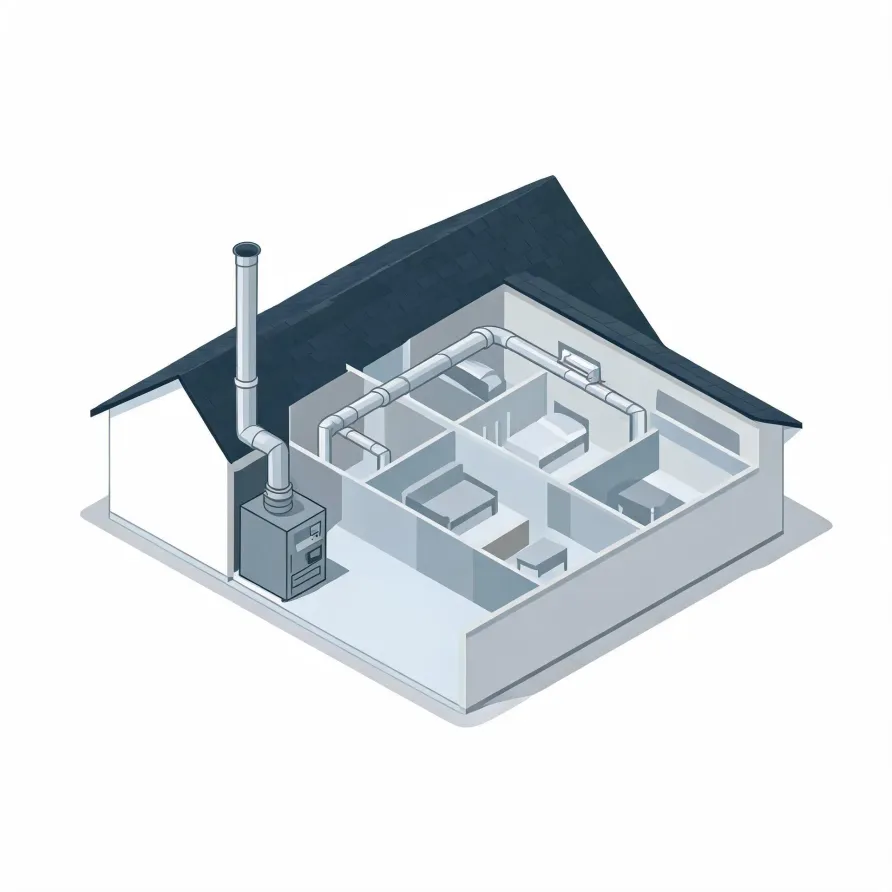
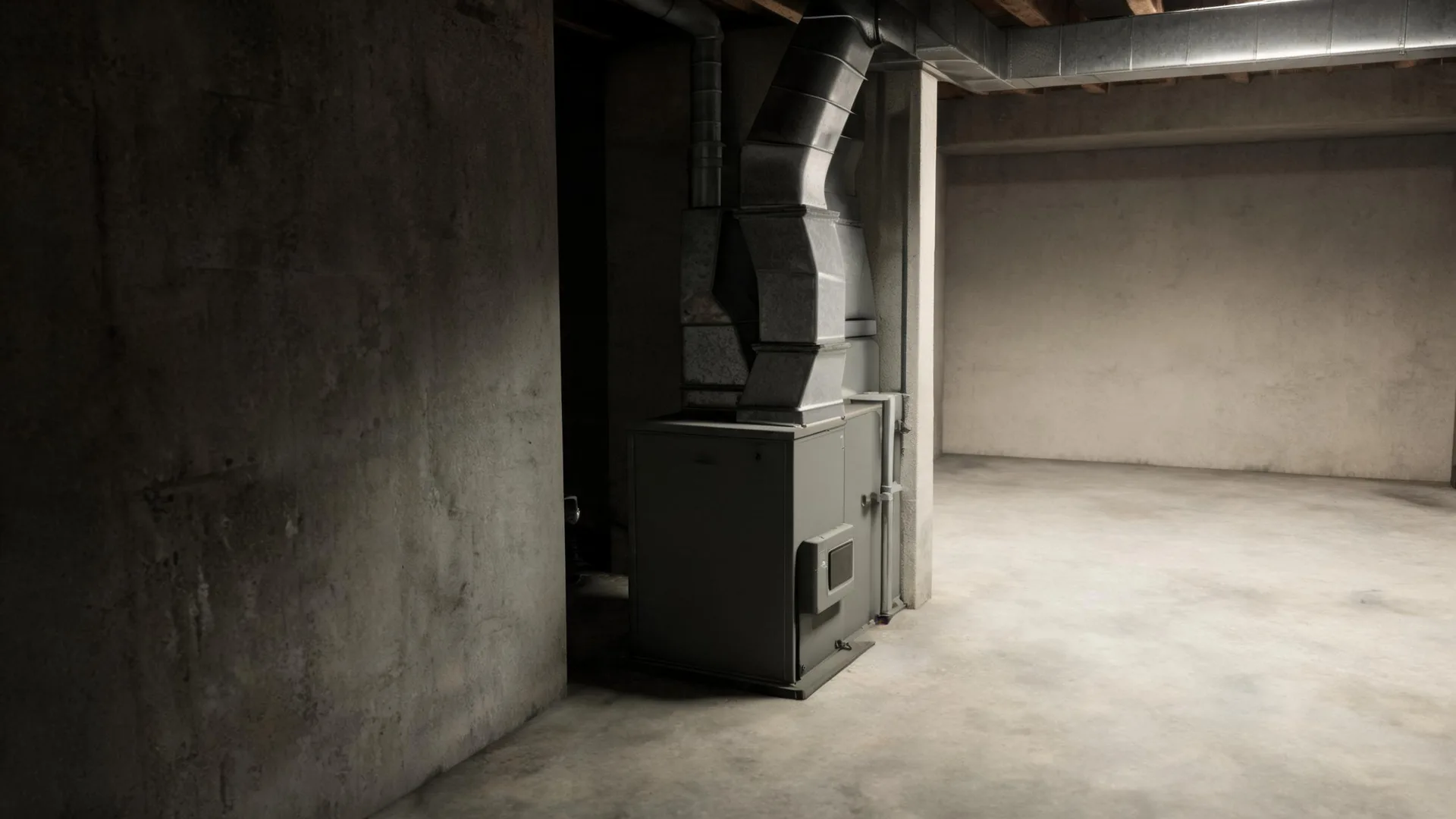
The furnace itself sits in a utility space, a basement, a closet, or a garage, and it is the unit that generates heat for the house. Beside it or above it, depending on the setup, the air handler or blower moves conditioned air into the duct system. These are the core pieces a homeowner is buying.
The flue or venting pipe runs from the furnace to an exterior wall or the roof, carrying combustion gases out of the house. The thermostat mounts on an interior wall and is the control point for the whole system. A new furnace install also brings a filter housing where the return air enters the unit.
The drawing shows a general layout of these components, and a licensed contractor determines exactly what applies to this house.
Find a contractor in Clay CountyClay County, South Dakota, by the numbers
99 severe weather events were recorded in Clay County, South Dakota between 2015 and 2024.
NOAA National Centers for Environmental Information, Storm Events Database, bulk CSV export, events 2015-01-01 through 2024-12-31.Half the homes in Clay County, South Dakota were built in 1976 or earlier (2020-2024 ACS 5-year).
U.S. Census Bureau, 2020-2024 American Community Survey 5-Year EstimatesClay County, South Dakota holds 6,262 housing units (2020-2024 ACS 5-year).
U.S. Census Bureau, 2020-2024 American Community Survey 5-Year EstimatesOwners occupy 50.8% of the occupied homes in Clay County, South Dakota (2020-2024 ACS 5-year).
U.S. Census Bureau, 2020-2024 American Community Survey 5-Year EstimatesInstallation Rules and Codes for Furnace Work in Clay County, South Dakota4 sourced rules and standards
What the Installation Actually Looks Like
Non-weatherized gas furnaces manufactured on or after November 19, 2015 must reach 80.0 percent AFUE.
Non-weatherized oil-fired furnaces manufactured on or after November 19, 2015 must reach 83.0 percent AFUE.
Mobile home gas furnaces manufactured on or after November 19, 2015 must reach 80.0 percent AFUE.
Non-weatherized gas furnaces manufactured on or after December 18, 2028 must reach 95.0 percent AFUE, up from the 80.0 percent minimum that applies to units manufactured before that date.
Severe Weather History in Clay County
Clay County's weather puts real demand on heating equipment. A furnace that handles the local climate well is sized and installed with that workload in mind.
99 severe weather events, 2015–2024. Source: NOAA National Centers for Environmental Information, Storm Events Database.