Tell us about the job
Takes about a minute. No obligation.
Sizing a furnace for this county is not a generic calculation. Homes in Haakon County, SD run heat about eight months a year, from October through May. The burner and heat exchanger cycle through that stretch with little rest, so any shortfall in output capacity shows up as extended run times and accelerated wear on the ignition system. A contractor has to establish the actual heat load of the house before committing to equipment, because installing a unit that runs at or near its limit every cycle compounds that wear season after season. Getting the size right at installation is the one decision that cannot be corrected cheaply later.
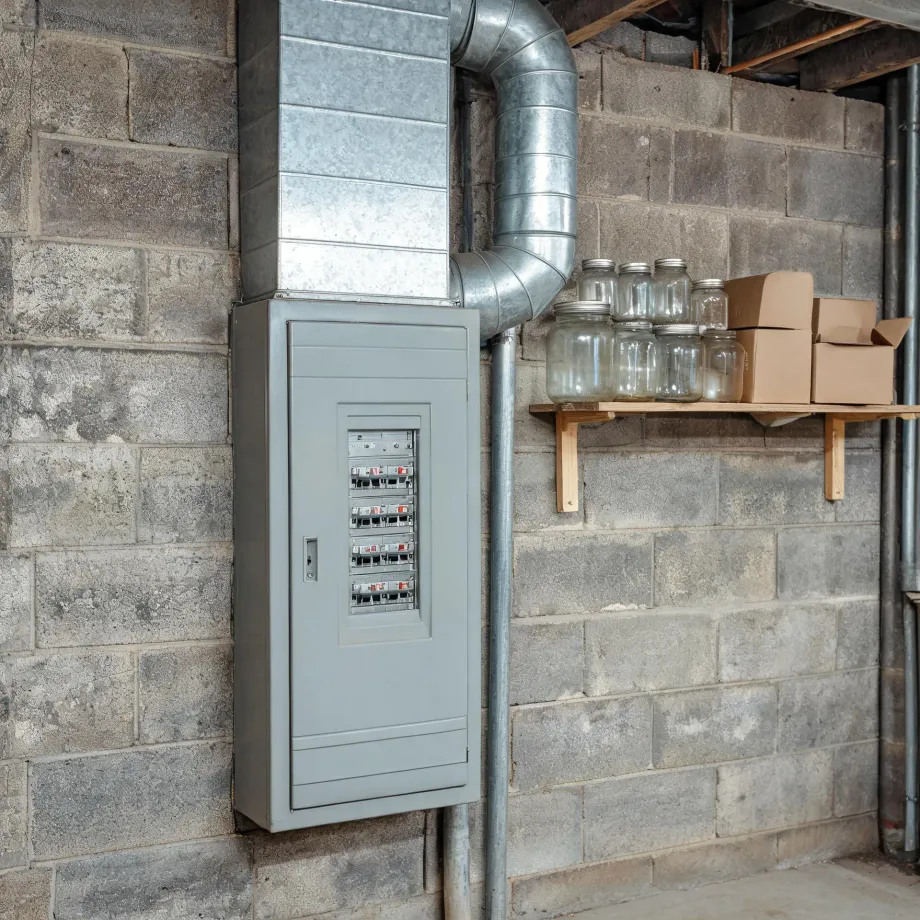
Ductwork sized for a previous generation of equipment is what a furnace installer runs into here, and whether it carries the new system without modification is the first question on the job. Half the homes in Haakon County, South Dakota were built in 1974 or earlier (2020-2024 ACS 5-year). That vintage of construction means the ducts were laid out around something different from what runs in houses now, so a contractor opening walls or crawlspace access is checking whether the existing runs can handle the new unit's airflow, not assuming they can. The electrical service gets the same look. What they find in both decides the scope before any equipment price matters.
What Gets Installed With a New Furnace
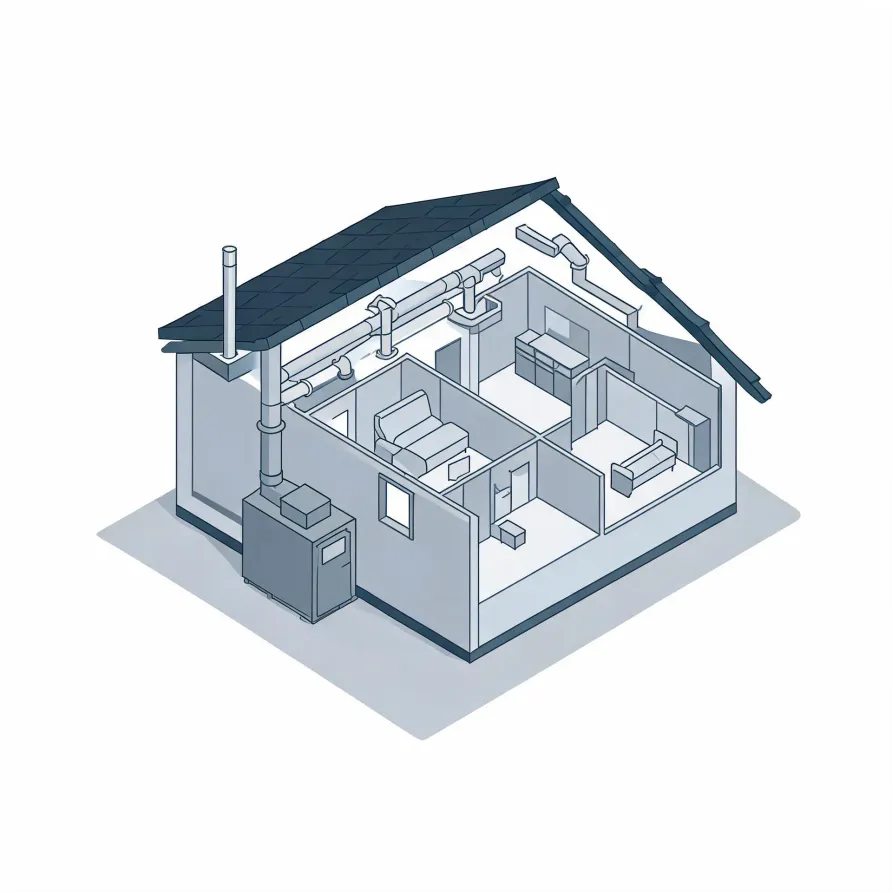
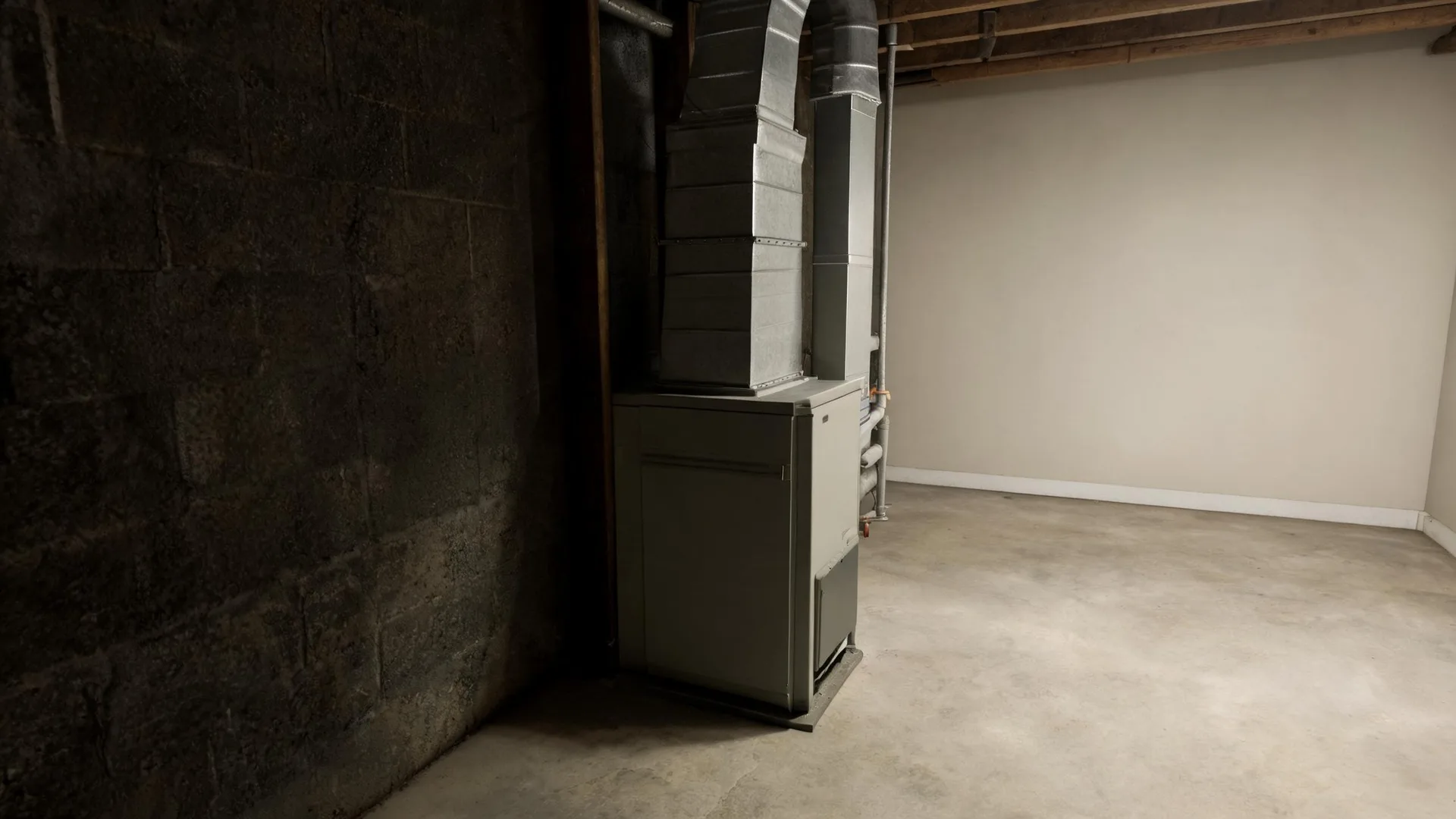
The furnace itself sits in a utility space, basement, or closet at the center of the system. It houses the burner, the heat exchanger, and the blower, and it is the unit a contractor physically sets in place and connects to fuel, air supply, and ductwork. That cabinet is what the homeowner sees once the job is done.
The flue or vent pipe runs from the furnace to an exterior wall or roofline and carries combustion gases out of the house. Alongside it, the thermostat mounts on an interior wall and gives the homeowner control over when and how hard the furnace runs. A new installation also brings a fresh filter housing and, where code requires it, a dedicated condensate drain line.
The drawing shows the general layout of these components, and a licensed contractor determines exactly what applies to your house and its existing setup.
Find a contractor in Haakon CountyHaakon County, by the numbers
267 severe weather events were recorded in Haakon County, South Dakota between 2015 and 2024.
NOAA National Centers for Environmental Information, Storm Events Database, bulk CSV export, events 2015-01-01 through 2024-12-31.Half the homes in Haakon County, South Dakota were built in 1974 or earlier (2020-2024 ACS 5-year).
U.S. Census Bureau, 2020-2024 American Community Survey 5-Year EstimatesHaakon County, South Dakota holds 895 housing units (2020-2024 ACS 5-year).
U.S. Census Bureau, 2020-2024 American Community Survey 5-Year EstimatesOwners occupy 79.2% of the occupied homes in Haakon County, South Dakota (2020-2024 ACS 5-year).
U.S. Census Bureau, 2020-2024 American Community Survey 5-Year EstimatesCodes & Standards Governing Furnace Installation in Haakon County, South Dakota4 sourced rules and standards
What happens once a contractor is on the job
Non-weatherized gas furnaces manufactured on or after November 19, 2015 must reach 80.0 percent AFUE.
Non-weatherized oil-fired furnaces manufactured on or after November 19, 2015 must reach 83.0 percent AFUE.
Mobile home gas furnaces manufactured on or after November 19, 2015 must reach 80.0 percent AFUE.
Non-weatherized gas furnaces manufactured on or after December 18, 2028 must reach 95.0 percent AFUE, up from the 80.0 percent minimum that applies to units manufactured before that date.
Severe Weather Events in Haakon County
Haakon County weather puts real demands on heating equipment, and those demands shape what a furnace needs to handle over its working life. A contractor sizing or installing equipment here works from local conditions, not averages.
267 severe weather events, 2015–2024. Source: NOAA National Centers for Environmental Information, Storm Events Database.