Tell us about the job
Takes about a minute. No obligation.
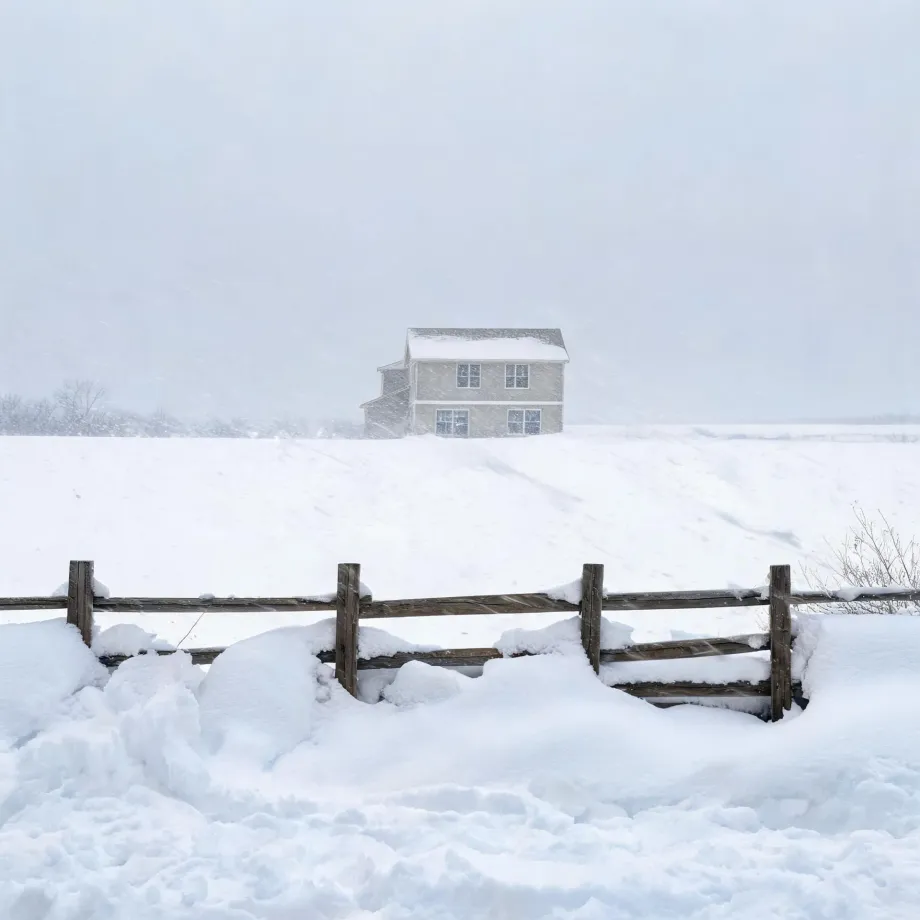
Sizing a furnace for this county starts with how long the burner is going to run. Homes in Stanley County, SD run heat about eight months a year, from October through May. A burner cycling through that kind of commitment stresses the heat exchanger and the ignition system far more than equipment sitting idle most of the year would. A contractor doing a load calculation here has to account for that sustained draw before settling on equipment or writing a quote, because an undersized unit will short-cycle and crack, and an oversized one will still wear unevenly if the install leaves airflow problems inside the duct system.
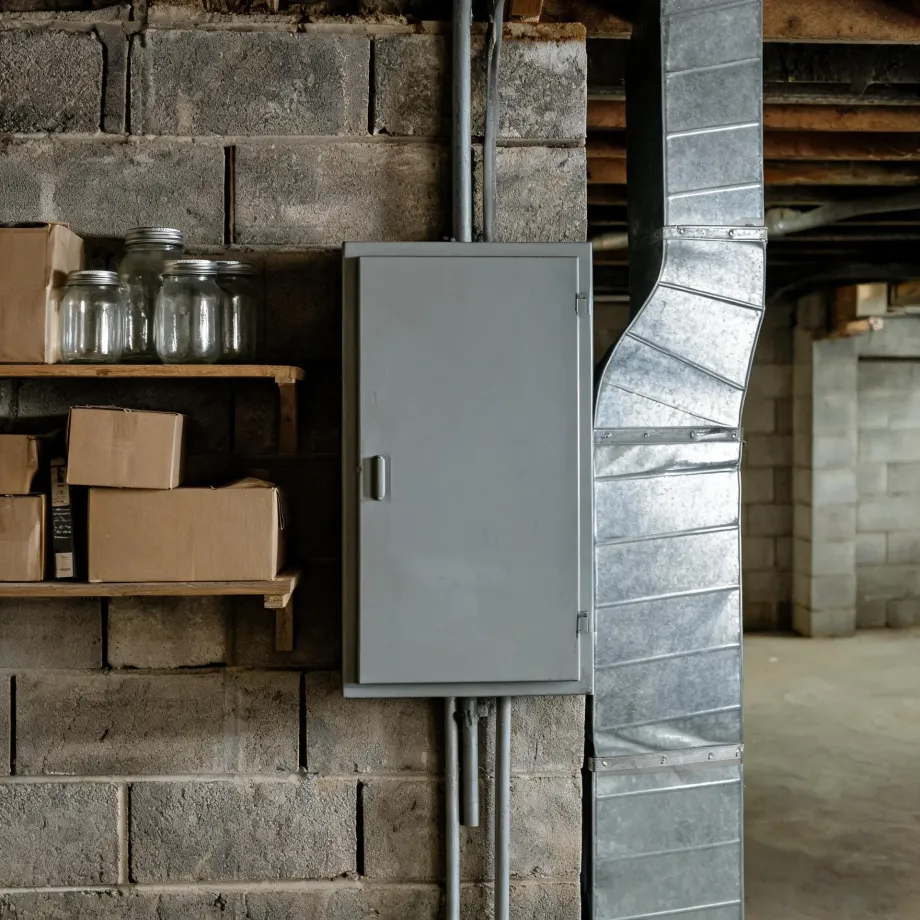
Ductwork in a house carries the history of every system that ran through it. Half the homes in Stanley County, South Dakota were built in 1993 or earlier (2020-2024 ACS 5-year). That matters for furnace installation because a contractor sizing a new unit has to assess what the existing trunk lines and branch runs were built for, and whether that geometry moves air the way a current furnace needs. A duct system laid for a different era of equipment may be undersized in some runs and oversized in others, and that mismatch shows up as uneven heat, not equipment failure. The furnace goes in after the ductwork is understood.
What Gets Installed With a New Furnace
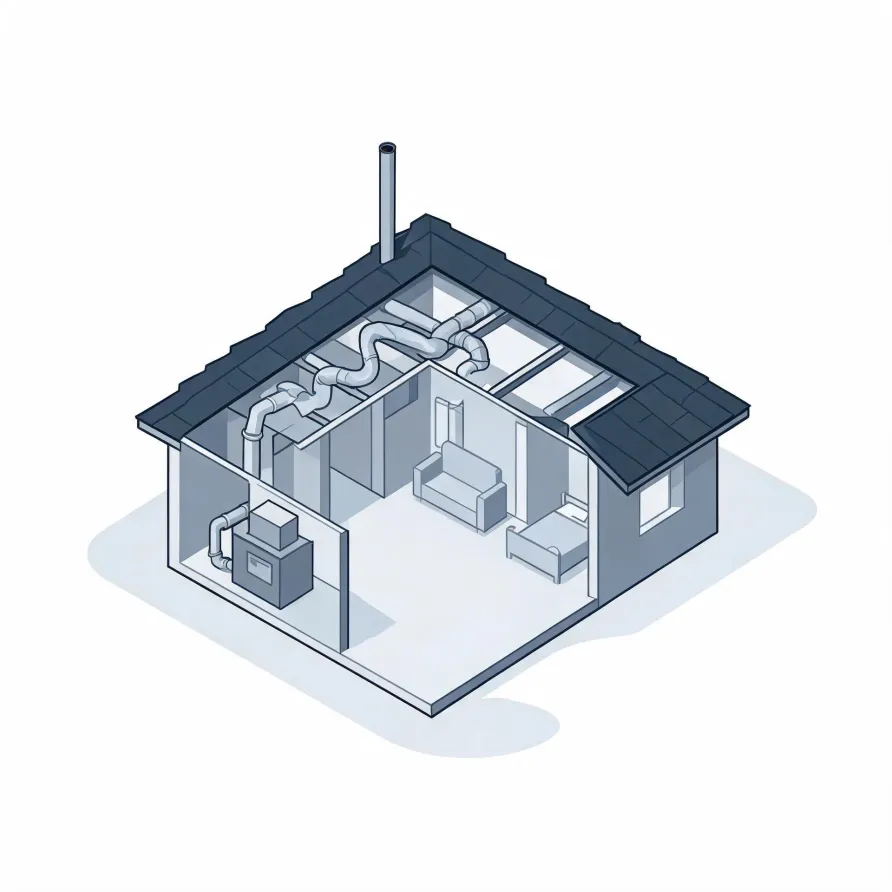
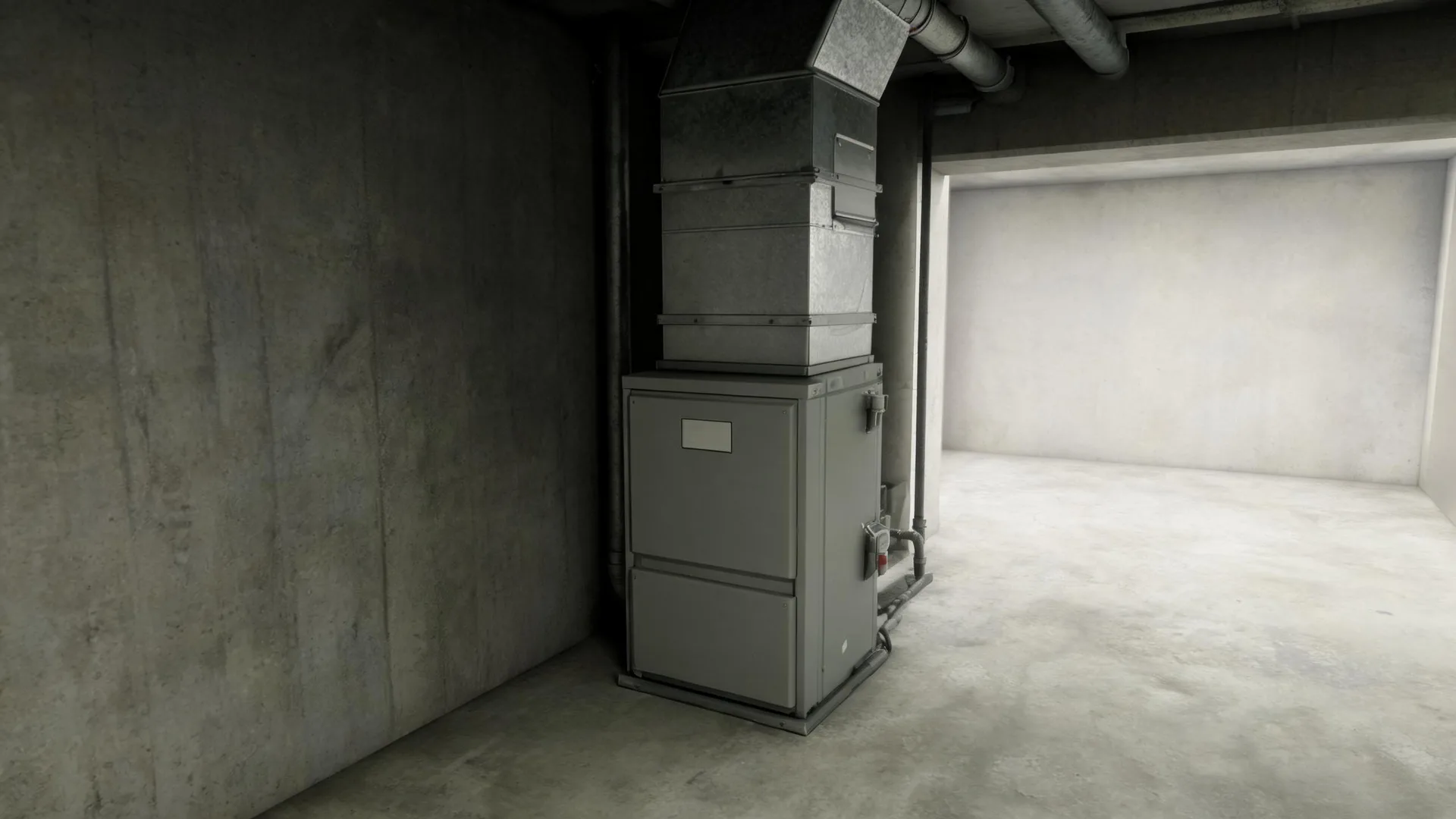
The furnace itself sits in a mechanical room, basement, or utility closet and is the unit that generates heat. Attached to it is the flue or exhaust pipe, which runs through the wall or roof and carries combustion gases out of the house. A gas supply line feeds the burner directly.
The air handler or blower compartment moves conditioned air out through the supply plenum, the metal box that sits directly above or beside the furnace and connects to the duct system. A filter housing mounts at the return air intake, and a thermostat goes on a main living-area wall to give the homeowner control over the whole system.
The drawing shows a representative layout, and a licensed contractor determines exactly what applies to this house.
Find a contractor in Stanley CountyStanley County, South Dakota, by the numbers
223 severe weather events were recorded in Stanley County, South Dakota between 2015 and 2024.
NOAA National Centers for Environmental Information, Storm Events Database, bulk CSV export, events 2015-01-01 through 2024-12-31.Half the homes in Stanley County, South Dakota were built in 1993 or earlier (2020-2024 ACS 5-year).
U.S. Census Bureau, 2020-2024 American Community Survey 5-Year EstimatesStanley County, South Dakota holds 1,542 housing units (2020-2024 ACS 5-year).
U.S. Census Bureau, 2020-2024 American Community Survey 5-Year EstimatesOwners occupy 83.1% of the occupied homes in Stanley County, South Dakota (2020-2024 ACS 5-year).
U.S. Census Bureau, 2020-2024 American Community Survey 5-Year EstimatesFurnace Installation Rules for Stanley County, South Dakota4 sourced codes and standards
What the installation actually looks like
Non-weatherized gas furnaces manufactured on or after November 19, 2015 must reach 80.0 percent AFUE.
Non-weatherized oil-fired furnaces manufactured on or after November 19, 2015 must reach 83.0 percent AFUE.
Mobile home gas furnaces manufactured on or after November 19, 2015 must reach 80.0 percent AFUE.
Non-weatherized gas furnaces manufactured on or after December 18, 2028 must reach 95.0 percent AFUE, up from the 80.0 percent minimum that applies to units manufactured before that date.
Severe Weather Events in Stanley County
Stanley County's weather puts real stress on heating equipment, and a furnace sized or installed without accounting for local conditions will work harder than it should. That workload is a local fact, and it shapes what a contractor here needs to plan for.
223 severe weather events, 2015–2024. Source: NOAA National Centers for Environmental Information, Storm Events Database.