Tell us about the job
Takes about a minute. No obligation.
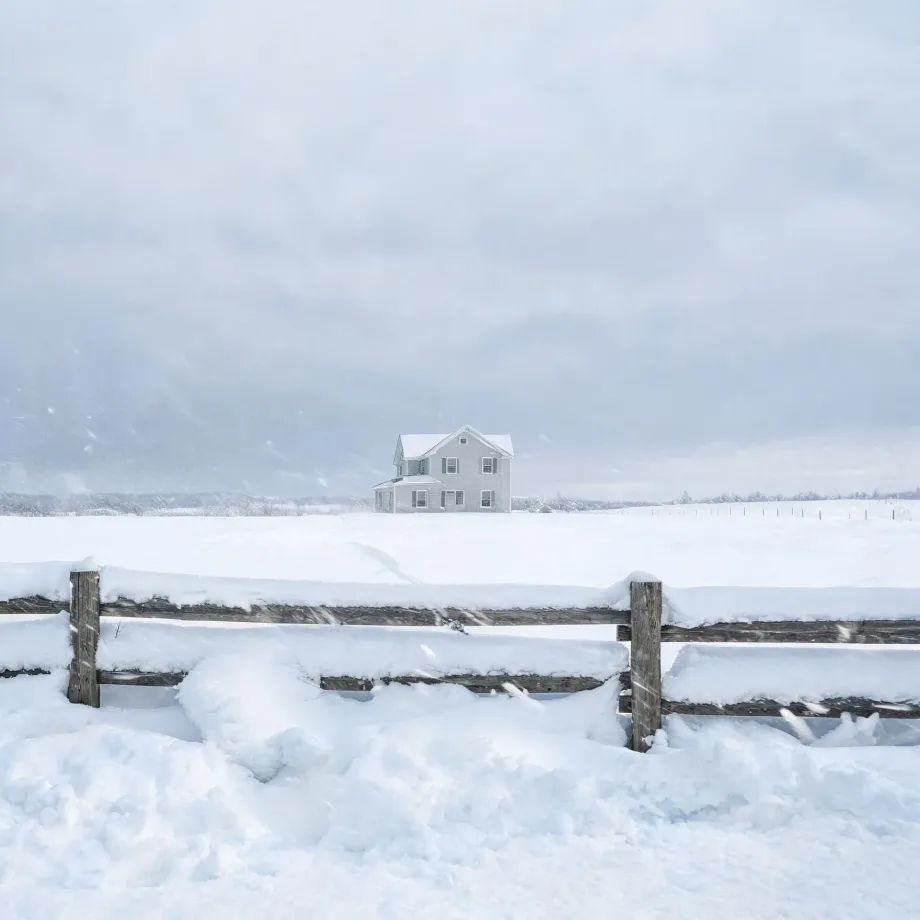
A furnace repair quote in Hughes County starts with the burner assembly and the heat exchanger, because those are the components that carry the full weight of a long heating season. Homes in Hughes County, SD run heat about eight months a year, from October through May. Cycling on and off across that many consecutive months stresses the igniter, the burner ports, and the heat exchanger welds in ways that show up as cracks, carbon buildup, or erratic ignition by the time a homeowner calls. A contractor pulling the panels on a system here expects to find documented wear on those parts, and that wear is what shapes both the diagnosis and the repair scope.
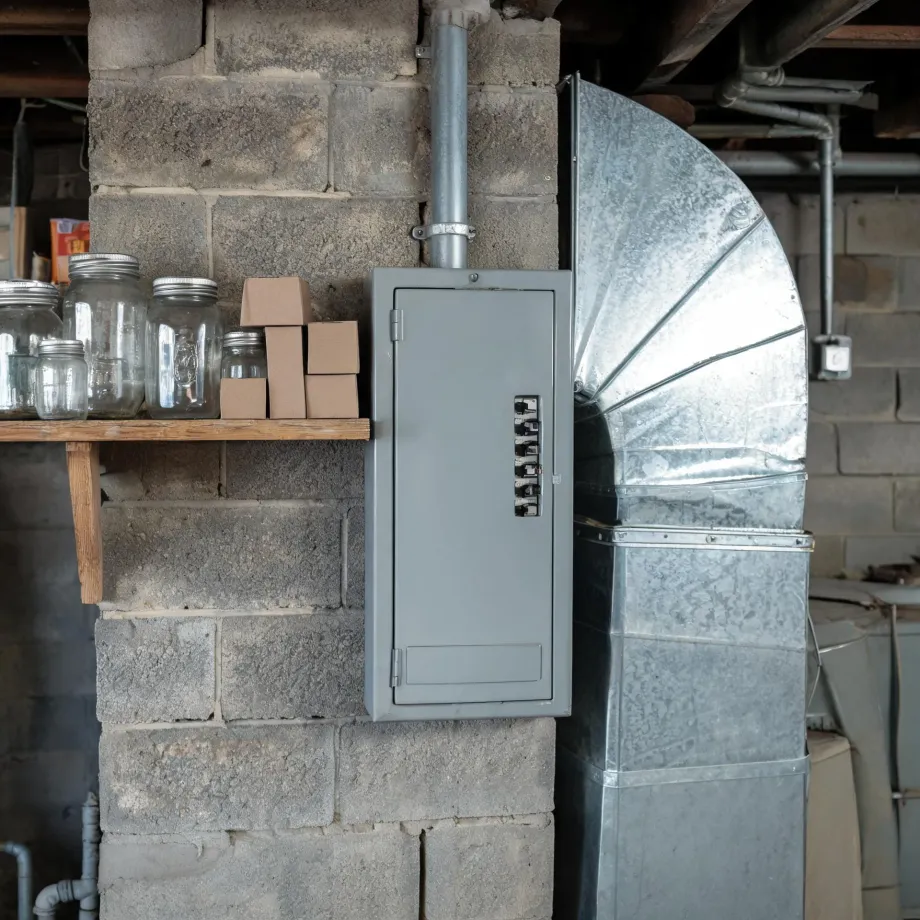
Furnace repair in housing this old is decided inside the unit, not by what the thermostat reads or what the homeowner reports. Half the homes in Hughes County, South Dakota were built in 1978 or earlier (2020-2024 ACS 5-year). A heat exchanger or burner assembly that has run through this many South Dakota winters shows its condition only once a contractor opens the cabinet: cracks that do not trip a sensor, scale that narrows a port, seals that have been cycling past their rated range for years. Whether the right part is still manufactured for a system of that vintage is a separate question the contractor answers before the quote is written.
The Parts of a Furnace a Contractor Checks First
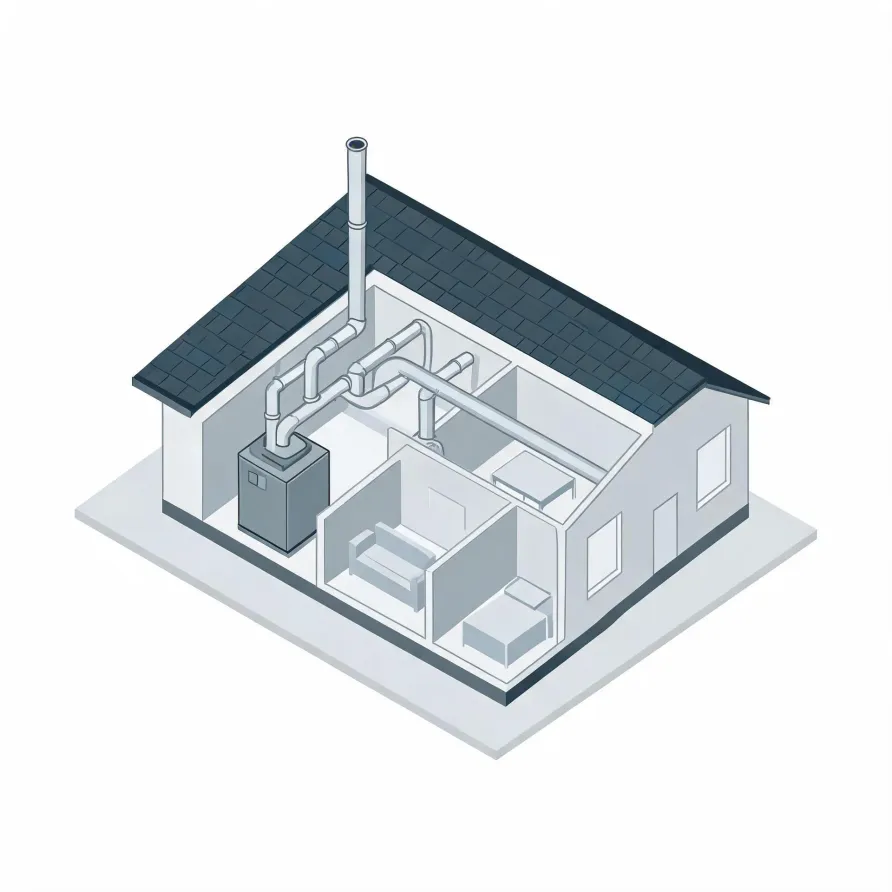
The furnace itself sits in a basement, utility closet, or crawl space and is the piece a contractor goes to first. Inside it, the heat exchanger is the part that warms the air, and a crack or failure there is one of the more serious findings. The burners and igniter sit just below it, and when a furnace fails to start, those are usually where the diagnosis begins.
The blower motor sits at the base of the furnace cabinet and pushes conditioned air out through the house. Alongside it, the flue pipe carries exhaust gases out through the roof or an exterior wall, and the gas valve controls the fuel feeding the burners. Each of these has a distinct failure pattern, which is why a contractor works through them in a set order.
The drawing shows a general layout of the system, and a licensed contractor determines what applies to your specific house and setup.
Find a contractor in Hughes CountyHughes County, by the numbers
224 severe weather events were recorded in Hughes County, South Dakota between 2015 and 2024.
NOAA National Centers for Environmental Information, Storm Events Database, bulk CSV export, events 2015-01-01 through 2024-12-31.Half the homes in Hughes County, South Dakota were built in 1978 or earlier (2020-2024 ACS 5-year).
U.S. Census Bureau, 2020-2024 American Community Survey 5-Year EstimatesHughes County, South Dakota holds 7,997 housing units (2020-2024 ACS 5-year).
U.S. Census Bureau, 2020-2024 American Community Survey 5-Year EstimatesOwners occupy 72.0% of the occupied homes in Hughes County, South Dakota (2020-2024 ACS 5-year).
U.S. Census Bureau, 2020-2024 American Community Survey 5-Year EstimatesCodes & Standards Governing Furnace and HVAC Repair in Hughes County, South Dakota4 sourced rules and standards
What happens when the contractor comes out
Non-weatherized gas furnaces manufactured on or after November 19, 2015 must reach 80.0 percent AFUE.
Non-weatherized oil-fired furnaces manufactured on or after November 19, 2015 must reach 83.0 percent AFUE.
Mobile home gas furnaces manufactured on or after November 19, 2015 must reach 80.0 percent AFUE.
Non-weatherized gas furnaces manufactured on or after December 18, 2028 must reach 95.0 percent AFUE, up from the 80.0 percent minimum that applies to units manufactured before that date.
Severe Weather Events in Hughes County
Extreme weather puts mechanical stress on heating equipment: hard freezes, high winds, and sudden pressure changes force furnaces to cycle harder and more often than they were sized to handle. How much of that load your furnace carries depends on what actually hits Hughes County, and that record shapes what repair needs look like here.
224 severe weather events, 2015–2024. Source: NOAA National Centers for Environmental Information, Storm Events Database.