
Signs your furnace won't last a South Dakota winter

Step 1 of 3: Equipment

A furnace that won't make it through a South Dakota winter usually tells you first. Listen for a burner that delays before it lights, or a flame that burns yellow instead of blue. Watch for short cycling, where it kicks on and off every few minutes instead of running a full stretch. A furnace working too hard shows it in the gas bill too, climbing even though you haven't changed the thermostat. Rooms that used to heat evenly start running cold, especially the ones farthest from the furnace. Rust around the burner compartment or a cracked heat exchanger are structural problems, not wear you can live with, because that's where carbon monoxide can get into the air you breathe. Any one of these on its own is worth a look. A few together, with temperatures below zero still ahead, means the furnace is telling you it may not hold through to spring.

A beige high-efficiency furnace with white PVC vent pipes stands beside galvanized sheet-metal ductwork in a basement with a concrete floor, exposed wood studs, and metal piping along the wall.

Running the way it should

A furnace like this lights on the first try, every time, and holds a steady flame until the thermostat is satisfied. The blower runs quiet. The exhaust pipe and intake pull air in and push it out without any smell of exhaust in the basement.


An older beige furnace with a louvered vent panel stands on a concrete basement floor beside galvanized sheet-metal ductwork, a metal flue pipe and vertical pipes along a concrete wall.

Showing its age

An older cabinet like this one can still run, but check the flue pipe where it meets the wall for rust or gaps. If the burner takes a few tries to catch, or the cabinet ticks and pops as it heats up, a contractor who services furnaces in your area can tell you if it's worth repairing before January.

Is your furnace telling you it's in trouble?

Stand near the furnace when it starts up. If you hear a bang or a hard knock before the flame catches, that's gas building up before ignition, not a quirk you should get used to. A burner flame that sits yellow or orange instead of steady blue means it isn't burning clean. If rooms that used to heat evenly now have cold spots, or the furnace runs long stretches without the house catching up, it's losing ground against a South Dakota cold snap. A furnace that can't keep pace in January isn't just a comfort problem. Left alone, the issues behind it, a cracked heat exchanger, a failing igniter, can leave you without heat on the night you need it most, and some of them put carbon monoxide in the house.

A gray-haired man in a dark long-sleeve shirt sits on a gray sofa in a living room, looking toward a sunlit window with sheer curtains.
A gray-haired man in a dark green sweatshirt sits on a sofa in a living room, looking toward a bright window, with a houseplant, lamp, fireplace and framed art behind him.
A gray-haired bearded man in a dark green collared sweater sits on a sofa in a living room with a window, houseplant, floor lamp and bookshelves, looking off to the side.
A gray-haired man in a dark green sweater sits on a sofa in a sunlit living room, looking off to the side, with a framed landscape painting, dining table and shelving behind him.

Why age alone doesn't tell you

A furnace that's old but was sized right for your house and serviced on schedule can still light clean and hold a steady flame. What wears a furnace out faster than years is a cracked heat exchanger, a clogged flue, or a blower motor straining because the filter never gets changed. Two furnaces built the same year can be in completely different shape by the time a cold snap hits negative double digits. The honest way to know is to have someone check the burner, the exchanger, and the draft, not to count birthdays on the nameplate.

What a hard winter asks of it

A South Dakota winter doesn't ask a furnace to run for an afternoon and shut off. It asks it to hold a steady flame for hours at a stretch, night after night, when it's well below zero outside. A unit that's already struggling in October, cycling short or taking longer to fire, has nothing left in reserve for January. The parts most likely to fail under that kind of sustained load are the ones already showing stress now: a weak inducer motor, a failing ignitor, or a heat exchanger with a hairline crack that widens under heat.

A middle-aged woman with shoulder-length dark hair, wearing a gray cardigan over a cream top, sits in an upholstered armchair and looks toward a sunlit window, with a shelf holding framed pictures and a plant behind her.
A woman and a child wrapped together in a thick knitted blanket on a sofa, both with eyes closed, with a lit table lamp and houseplant in the dim background.
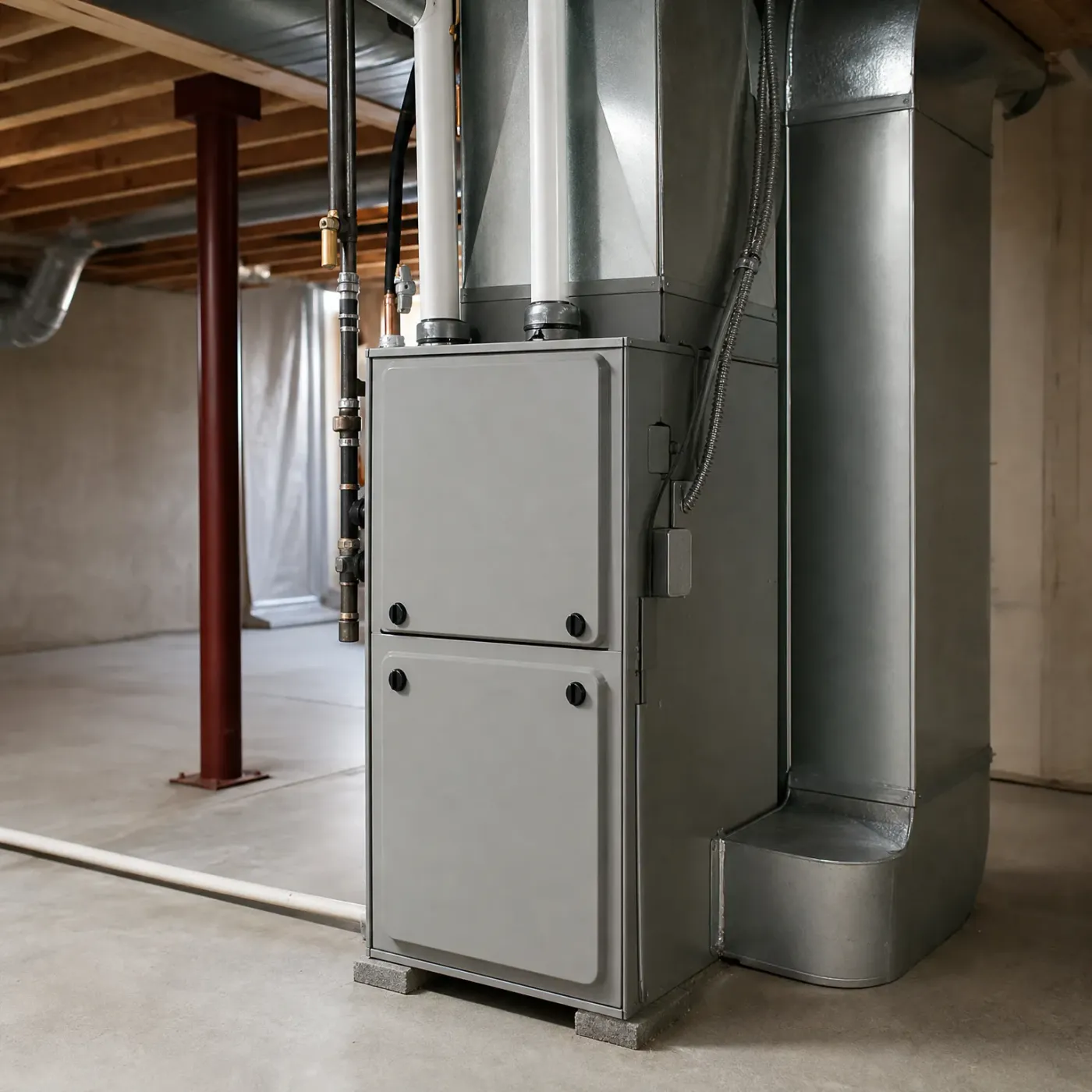
A gray high-efficiency furnace with two access panels stands on blocks in a basement, connected to sheet-metal ductwork, PVC vent pipes, flexible conduit, and gas and water piping, beside a red support column and exposed wood joists.

Skip the search

Only one pro gets your request, so you hear from one company.

Skip searching for a furnace pro and answer a few questions instead.

Fill out one form

No fee to send it, and nothing to sign.

A gray high-efficiency furnace with two PVC vent pipes stands in an unfinished basement beside sheet-metal ductwork, a framed and plastic-covered wall, and a bare concrete wall with vertical pipes.
A furnace set up on its base, running steady, with clean PVC flue pipe carrying exhaust out and no rust or soot on the burners.
A gray furnace cabinet in a basement, connected to galvanized sheet-metal ductwork and white PVC pipes, against a concrete wall with exposed metal piping and insulation overhead.
A furnace sitting on a wooden pallet, propped above a concrete floor that's taken on water before and may again.

Repair It or Replace It

Worth repairing

  • The heat exchanger is intact and the flue shows no rust or soot, so a cracked part isn't the cause of what's going wrong.
  • The problem traces to one part, like an igniter that's slow to glow or a flame sensor coated with residue.
  • It's held a steady blue flame and heated evenly until this one symptom showed up.
  • The blower motor still runs quiet and the furnace cycles on the schedule your thermostat sets, not every few minutes.
  • A tech who services furnaces in South Dakota winters every year can usually tell within a visit whether the fix is a single part.

Not worth repairing

  • The heat exchanger has a crack, which lets exhaust mix with the air moving through your house.
  • Short cycling keeps showing up after a repair, which points to a problem that keeps coming back rather than one part failing.
  • Soot or rust has built up around the burners or inside the flue pipe over more than one season.
  • It's sitting on a wood pallet over a floor that's taken on water, which puts the cabinet and controls at risk again.
  • The ignition delay or yellow flame hasn't gone away after the part behind it was already replaced once.
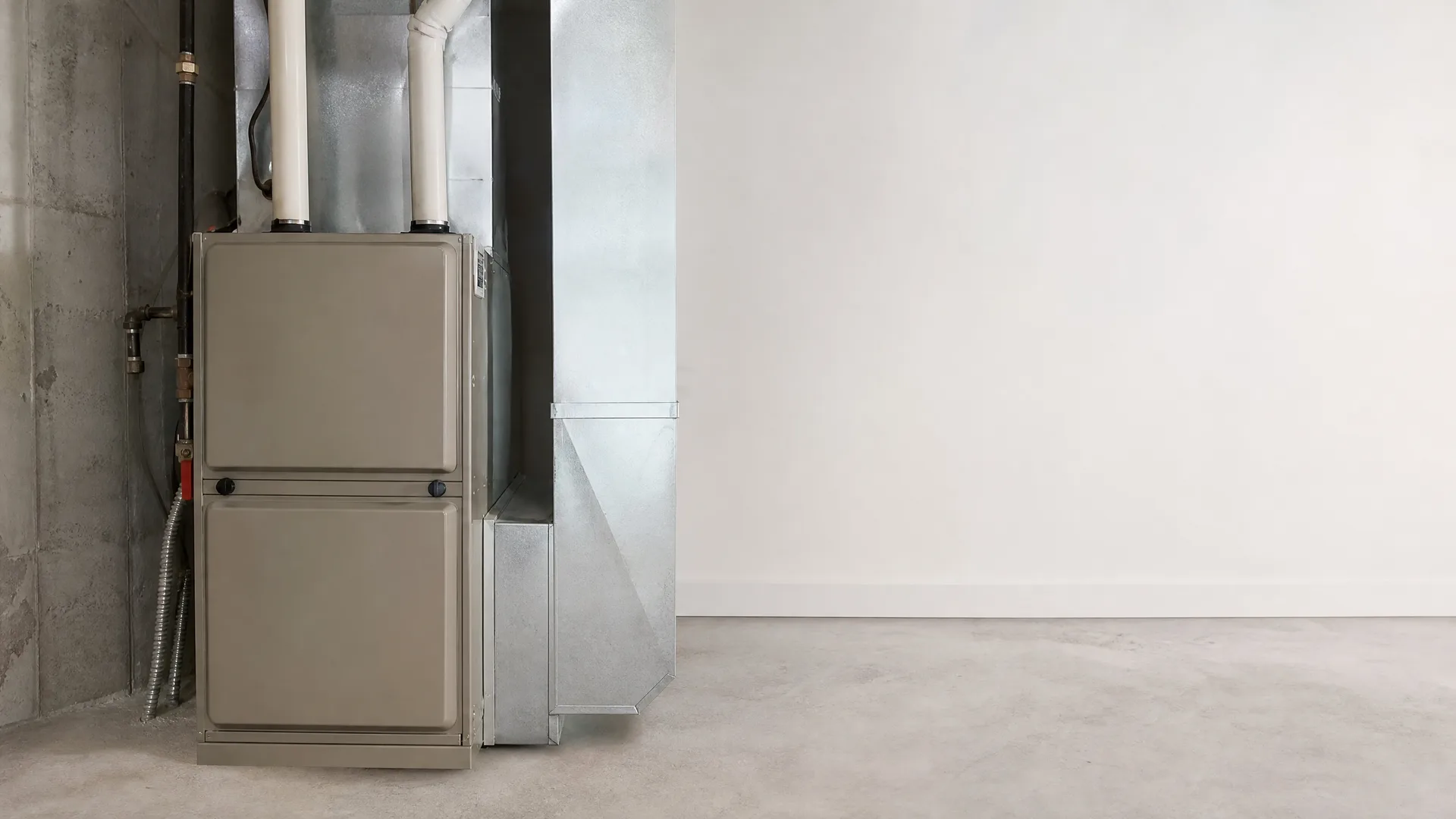
A beige high-efficiency furnace with two white PVC pipes stands beside sheet-metal ductwork and a concrete wall in an empty basement with a bare light-colored wall and concrete floor.

Getting through on its own

A furnace that can handle a stretch of twenty below without help will cycle on, run until the thermostat is satisfied, and shut off clean. No smell, no soot streak on the wall behind it, no need to go check on it at 2 a.m. If yours has done that every winter without a repair call, that's real evidence, not luck. It's earned the trust you're putting in it when the temperature drops and stays there for days.

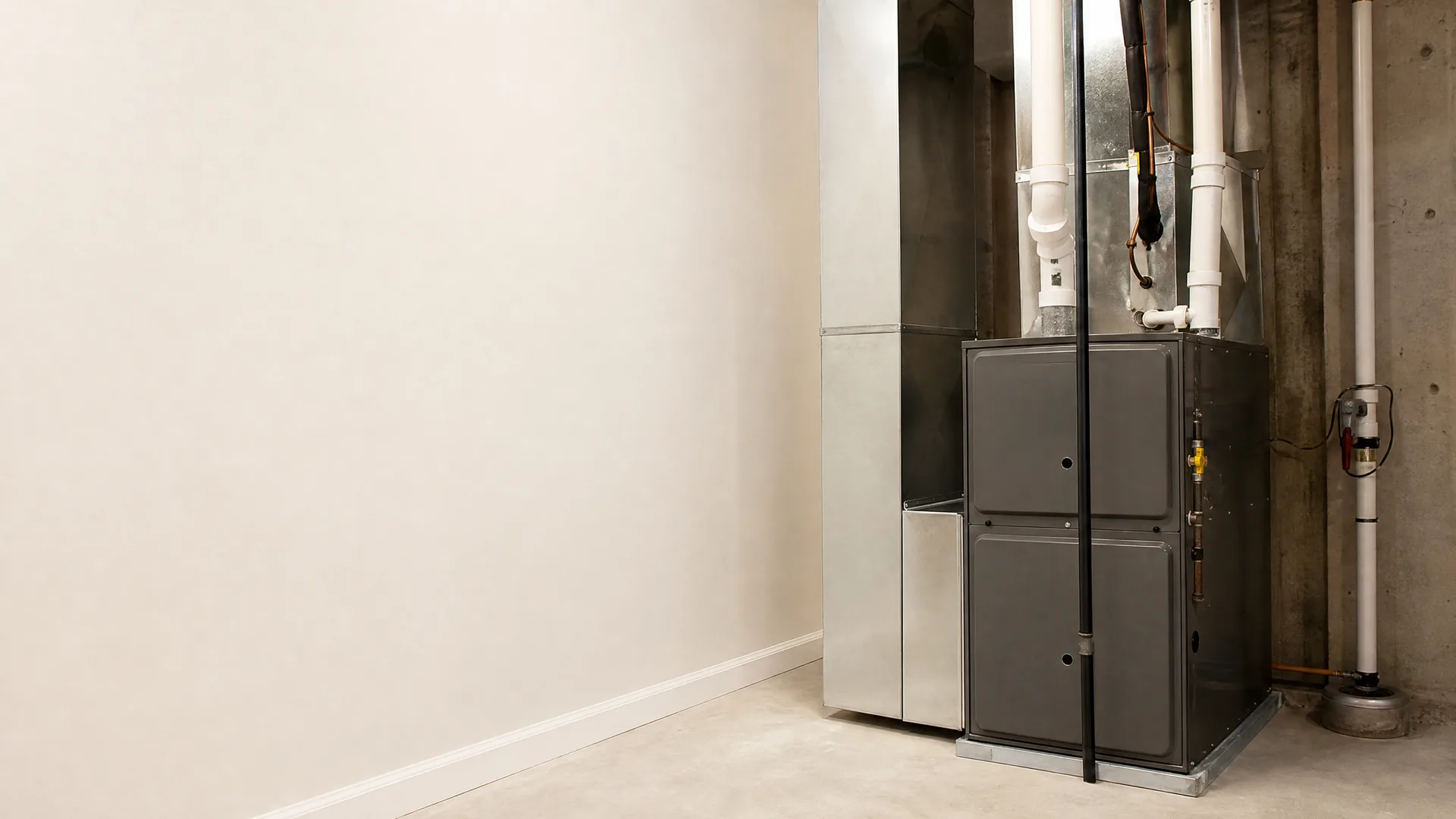
A gray furnace with sheet-metal ductwork and white PVC vent pipes stands in the corner of a finished basement room with a blank beige wall and concrete floor.

Needing a hand to make it

Some furnaces get through the winter, but only because someone keeps resetting the switch, or because you've learned to run the thermostat a few degrees warmer to make up for a blower that can't keep up. That's not the same as handling the cold. A furnace leaning on a repair every few weeks, or one you've started bracing for, is telling you the margin is gone, even on the days it still turns on.

Winter nights average 11°F statewide

At 11 below zero overnight, your furnace is running long stretches just to hold the thermostat setting, not short bursts here and there. That's hours of strain on the igniter, the blower motor and the heat exchanger every single night, all winter. A furnace that's already struggling shows it fastest on nights like these.

NOAA nClimDiv 1991-2020 county normals weighted by homes

A gray furnace cabinet in a basement with sheet-metal ductwork, white PVC vent pipes, and black gas piping against a concrete wall and wood-framed partition on a bare concrete floor.

Holding up fine

The duct connections are tight and the pipes running to it show no rust or white staining. The metal casing is clean, the framing around it is dry. A furnace sitting like this in a basement has nothing working against it, and whatever is wrong, if anything, is something small.

A gray metal furnace with two white PVC vent pipes stands on a concrete floor beside galvanized sheet-metal ductwork in a basement or utility space with wood framing.

Showing its age

Surface rust has spread across the cabinet and the galvanized plenum connecting to it. Rust on the outside doesn't prove the heat exchanger inside is cracked, but it means moisture has been getting to metal that should stay dry, and that's worth having someone check before January tells you the hard way.

A closed silver laptop and a glazed ceramic mug on a wooden table, with a blurred kitchen counter, potted plant, cutting board and window in the background.

Where that leaves you

A furnace that delays before it lights, burns yellow, short cycles, or smells like exhaust is telling you something is wrong now, not someday. A cracked heat exchanger or a blocked flue won't wait for a warmer week to get worse, and a January night at twenty below is not when you want to find out which one you have.

Getting a straight answer usually means calling around to a few companies, describing the same noise or smell three different times, and sorting through quotes that don't quite match. This connects you with one licensed contractor near you in South Dakota, someone who works on furnaces like yours every winter and knows which of these signs means a part needs replacing and which means the whole unit is done. No list of companies to sort through, no retelling the problem from scratch each time you pick up the phone.

A gray upholstered sofa with a beige cushion and knit blanket beside a curtained window, with a white mug and a book on a dark wooden table in the foreground and a lit lamp in the background.
Kitchen corner with cream upper cabinets, oak lower cabinets, white marble-look countertop, beige tile backsplash, a ceramic vase of greenery, a wooden cutting board and bowl, and a black-framed window at right.
Interior corner of a room with a white-framed window and wide sill, beige walls with panel molding, a wooden cabinet holding a ceramic vase with a green leafy plant, and blurred shrubs and trees outside.
A wood-framed armchair with beige cushions and a woven lumbar pillow sits in a corner beside a large window overlooking green trees, with a tall ceramic vase holding leafy branches on the left and plaster walls and wood flooring.
Interior corner with a white-framed window above a sill, beige walls with baseboard molding, a greige shaker-style cabinet with brass knobs and a potted plant on top, light wood flooring and a woven jute rug.
A dark-framed six-pane window with white trim and sill set in gray horizontal lap siding, with hydrangea shrubs below and a white column and shingled roof section at left.

Explain it one time

Your request stays with one local pro.

Skip the search

Sending the form costs nothing.