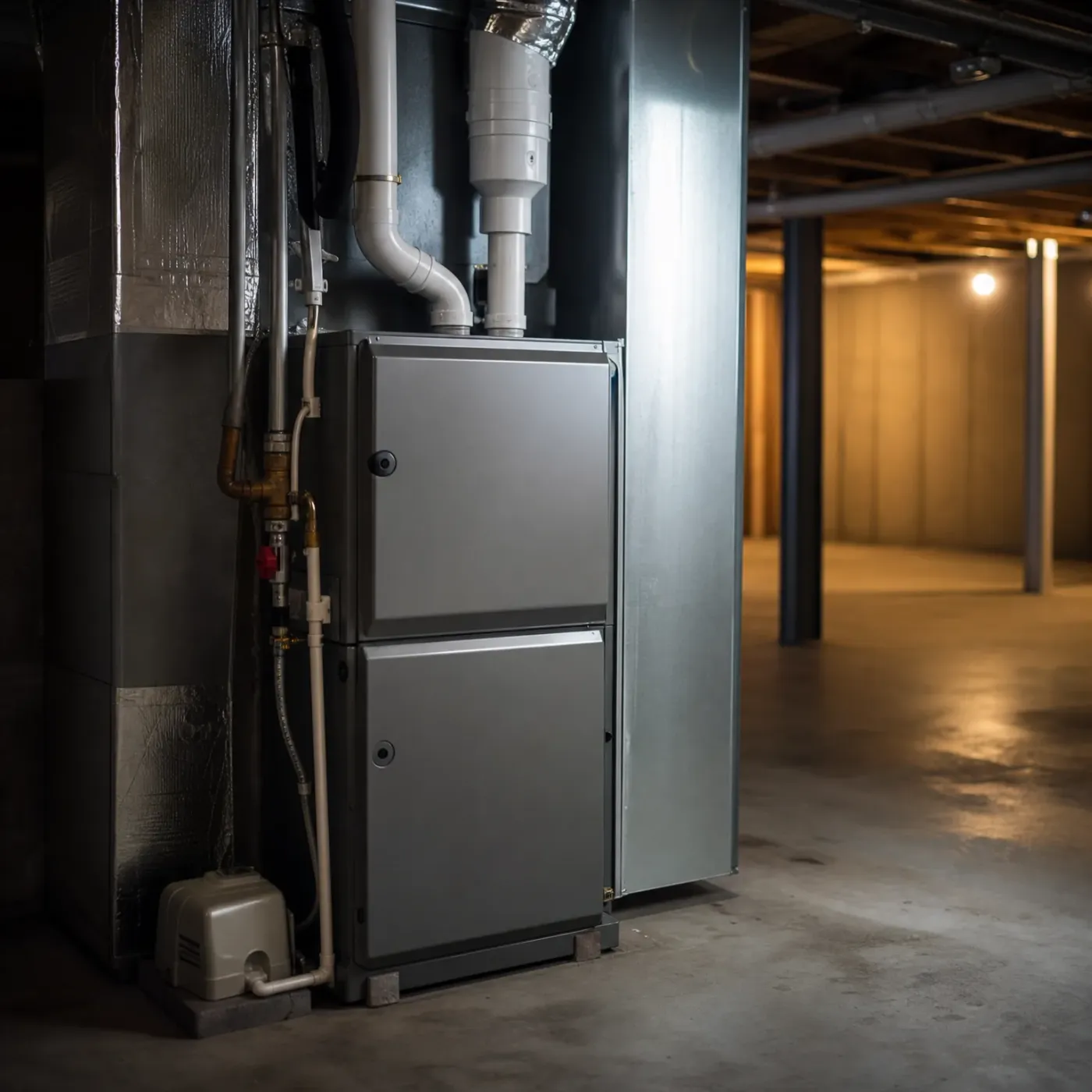





A gray high-efficiency furnace with PVC venting, copper and plastic piping, and a condensate pump sits beside sheet-metal ductwork in a concrete-floored basement.

Hand off the search today

Why your furnace is leaking water in South Dakota

Water pooling under your furnace, or dripping from it, usually traces back to the vent pipe, the condensate drain, or the heat exchanger. Some causes are simple fixes, others mean the furnace needs attention soon. This page walks through what's likely going on. When you're ready, send the form and a local furnace contractor takes it from there.

Let a pro reach out

A puddle under your furnace almost always comes from one of two places. If your furnace is a high-efficiency model, the kind with a PVC pipe running out the side of the house instead of a metal flue, it produces condensation as part of normal operation, and that water drains out through a condensate line. When that line clogs or the drain trap cracks, the water backs up and finds the floor instead. If your furnace vents through a metal flue, water showing up usually means the heat exchanger has cracked, and condensation or exhaust moisture is escaping where it shouldn't. That second case matters more. A cracked heat exchanger isn't a drainage nuisance, it's a safety problem, since it can let combustion gas into the air you breathe. Either way, a furnace that's leaking shouldn't keep running until someone's looked at it, especially with South Dakota winters ahead and the furnace about to carry the house for months.

A gas furnace with sheet-metal ductwork, PVC vent pipes and copper and black piping stands against a wall in a basement with a bare light-colored wall and concrete floor.

How a high-efficiency furnace drains water

A high-efficiency furnace cools the exhaust enough to pull extra heat out of it, and that process turns part of the exhaust into water. That water runs down through a drain line, usually plastic tubing, into a floor drain or a condensate pump nearby. If that line kinks, clogs with sludge, or the pump fails, the water backs up and comes out at the furnace instead of going where it should.

A gray furnace with attached sheet-metal ductwork, white PVC vent pipes, copper and yellow gas lines stands against a wall in a room with a plain white wall and concrete floor.

What a cracked heat exchanger means

The heat exchanger is the metal chamber that separates the burner flame from the air moving through your ducts. It can also sweat or crack with age, and a crack lets combustion byproducts leak into your home instead of venting outside. A furnace doing this needs a contractor to shut it down and inspect it, since this isn't a drain problem you can clear yourself.

Is this water doing damage somewhere you can't see?

You might find the puddle before you find the cause: a wet patch on the basement floor by the furnace, a drip that's left a stain on the cabinet, or standing water in the drain pan. Sometimes it's just a few drops after each cycle. Other times there's enough to run toward a floor drain or soak into the subfloor underneath. If the furnace sits near drywall, wood framing, or stored boxes, that water doesn't stay contained to the unit. Left alone, a slow drip can warp flooring, rust the cabinet from the inside, or grow mold in a spot you don't check often. None of that happens overnight, but it doesn't stop on its own either.

A smiling bearded man in a dark green hooded jacket and blue t-shirt sits on a couch in a living room with shelves, a potted plant, and a bowl of popcorn on a wooden table.
A smiling man in a green long-sleeved shirt sits on a beige sofa in a living room, with a bowl of popcorn in the foreground, a large potted plant and shelving behind him.
A smiling man in a dark blue T-shirt sits on a couch in a dimly lit living room with a bowl of popcorn and a remote on a wooden table, a lit floor lamp and bookshelves behind him, and windows showing greenery.
A smiling bearded man in a dark green long-sleeved shirt sits on a leather couch in a living room, with a bowl of popcorn and a remote control on a wooden table in the foreground.

Hand off the furnace problem

Your request goes to one pro, not a list of companies.

Asking costs nothing, and the choice to hire stays yours.

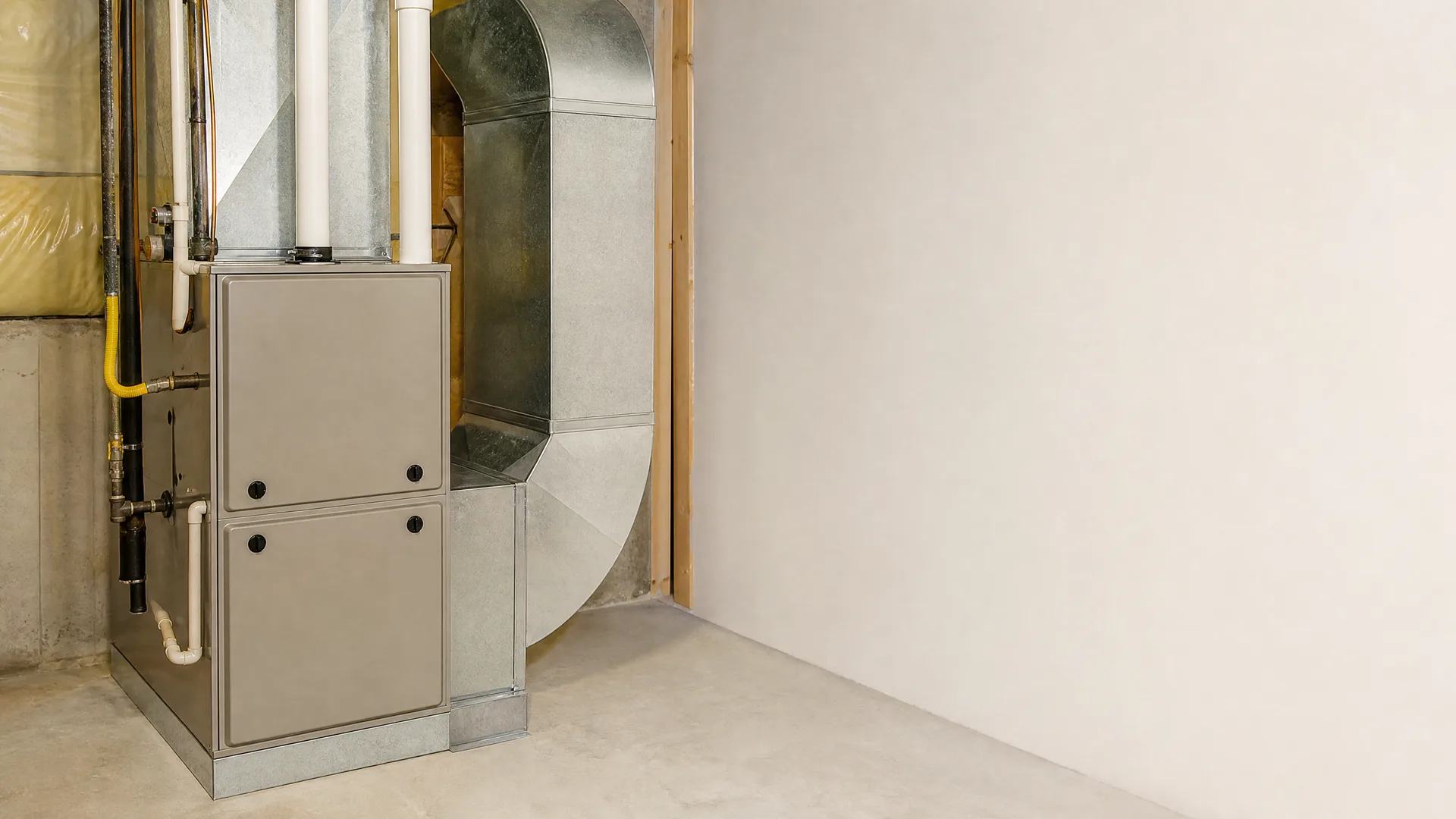
A beige high-efficiency furnace in an unfinished basement, with white PVC vent pipes, a yellow gas line, metal ductwork, and exposed wood framing on a concrete floor.

Condensate draining the way it should

A high-efficiency furnace like this one makes water on purpose. The PVC pipe you see carries it to a drain, and as long as that line stays clear, the water never touches the floor. That's a furnace doing its job.


An older beige furnace with two louvered vent panels stands on a concrete basement floor, connected to galvanized ductwork and a metal flue pipe, with gas piping and flexible conduit on the wall behind.

Water with nowhere to go

An older furnace like this one runs on a metal flue, not PVC, so it shouldn't be producing condensate at all. Water showing up around a unit like this often means the heat exchanger has cracked, or the flue itself is failing. That's not a drain line to clear. It's a furnace that needs a look before it runs again.

An older gas furnace with two louvered front panels stands on a concrete basement floor beside galvanized sheet-metal ductwork, pipes, and a weathered concrete wall.
Before you get your furnace repair
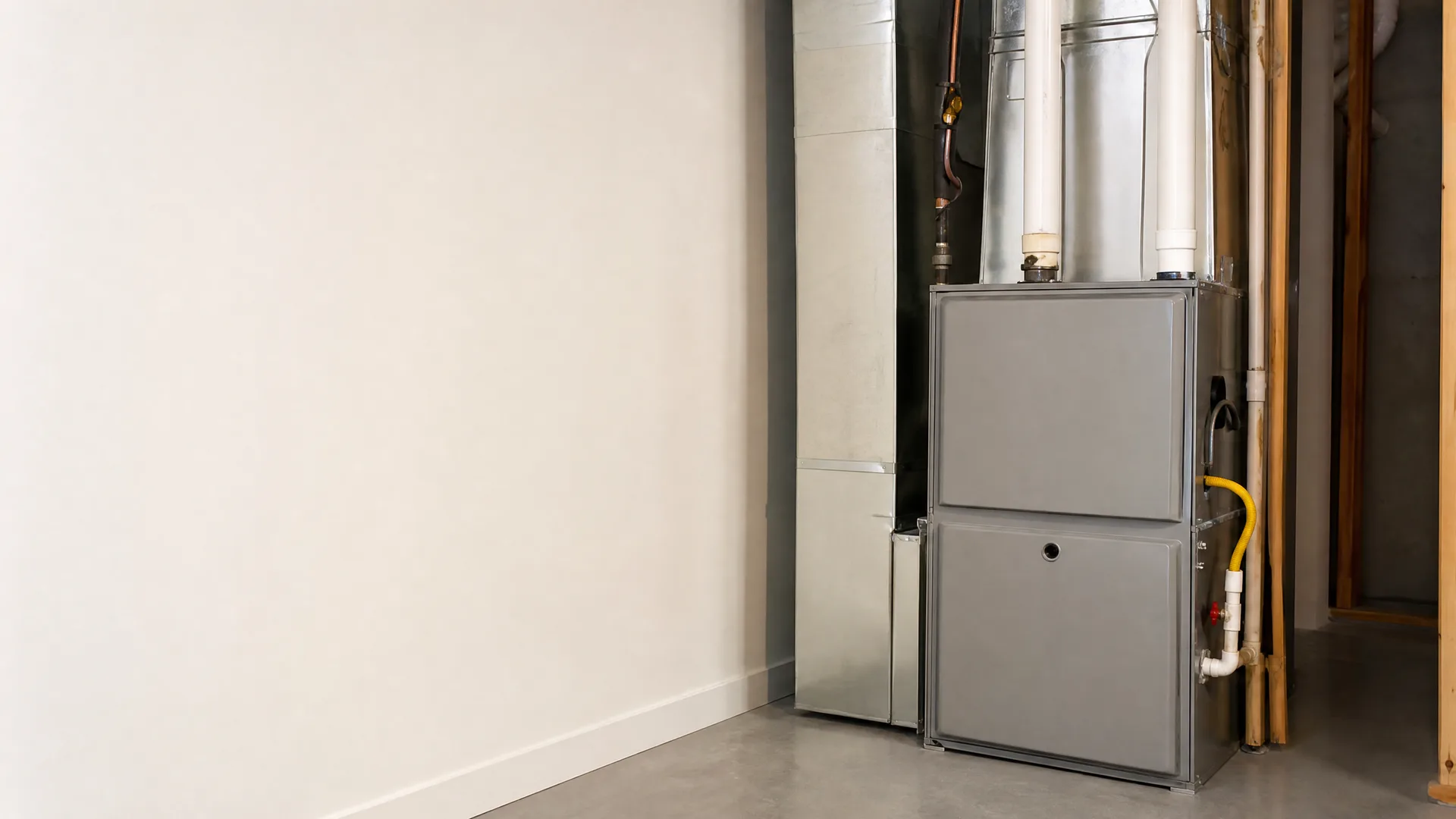
A gray high-efficiency furnace in a basement, connected to sheet-metal ductwork on the left and white PVC vent pipes above, with black gas and drain piping and an exposed wood-stud wall with OSB sheathing on the right.
After you get your furnace repair

A clogged drain versus a cracked exchanger

Most leaks trace back to the condensate drain line or trap getting clogged with the sludge that builds up over a winter of use. The water backs up, overflows the pan, and ends up on your basement floor. A contractor clears the line, checks the trap, and the furnace goes back to draining the way it should. That's an afternoon job, not a furnace problem that follows you into next winter.

What the drain can't explain

If the drain line is clear and water is still showing up, or if you're seeing rust on the burner compartment or hearing odd sounds when the furnace kicks on, the cause may be the heat exchanger itself. A cracked exchanger can let condensation collect inside the cabinet instead of running out through the pipe. That's not something to wait on. With gas heat running most homes in South Dakota through a long winter, a furnace that isn't venting or draining correctly needs a technician's eyes on it soon.

Winter nights average 11°F statewide

At 11°F on a winter night, your furnace is running long stretches to keep up. That means more hours making condensate, so a drain line that's only partly clogged has more water to handle and backs up sooner.

NOAA nClimDiv 1991-2020 county normals weighted by homes

Where the water is coming from

  • Water under your furnace comes from the condensate drain, the PVC vent pipe, or the heat exchanger, and each one means something different.
  • A clogged drain line backs up over a winter of use and is a straightforward fix once a contractor clears it.
  • A cracked heat exchanger is the leak that can't wait, and it's not something to confirm by guesswork.
  • A furnace running long stretches on a cold night makes more condensate, so a partly clogged line backs up sooner than you'd expect.
  • A local contractor who services furnaces all winter has likely seen this same leak in homes near yours.
  • Sending one request means one contractor who knows this equipment calls you back, not a string of strangers.

The leak under your furnace points to one of three places: the condensate drain, the vent pipe, or the heat exchanger. A clogged drain is the most common of the three, and it's the easiest to live with while you wait, since it's a mess, not a danger. A cracked heat exchanger is the one that matters, and it's not something you or a contractor should guess about from a puddle alone. On a cold night, your furnace runs longer to keep the house warm, and that longer runtime means more condensate moving through that drain line. A line that was only partly clogged can back up faster than it did earlier in the season, which is often why the puddle shows up now instead of in November.

Finding the source matters more than guessing at it, and that's where a contractor who works on furnaces all winter in South Dakota has an advantage. They've seen this leak before, in homes with the same kind of furnace, the same drain lines, the same vent setups. That familiarity means less time spent ruling things out and more time spent fixing the actual problem.

When you send a request through this page, it goes to one contractor, not several. That contractor is licensed to work in South Dakota and local to where you live, so you're not fielding calls from companies who don't know your area. You get someone who already knows what tends to fail on a furnace like yours, and who can start looking in the right place first.

An empty basement with bare concrete walls and floor, exposed wooden joists and pipes overhead, and a dark furnace with sheet-metal ductwork and vent pipes in the right corner.

Finding a pro stops being your job

The pro who reaches out is licensed in South Dakota.

Step 1 of 3: Equipment

