Tell us about the job
Takes about a minute. No obligation.
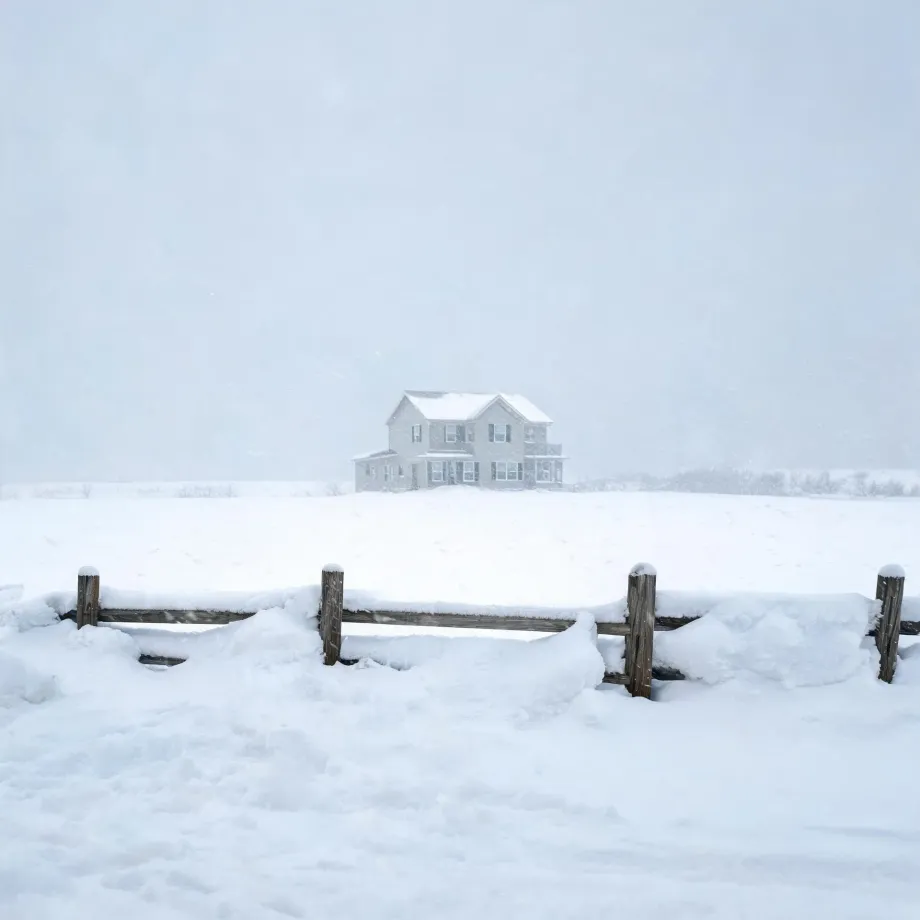
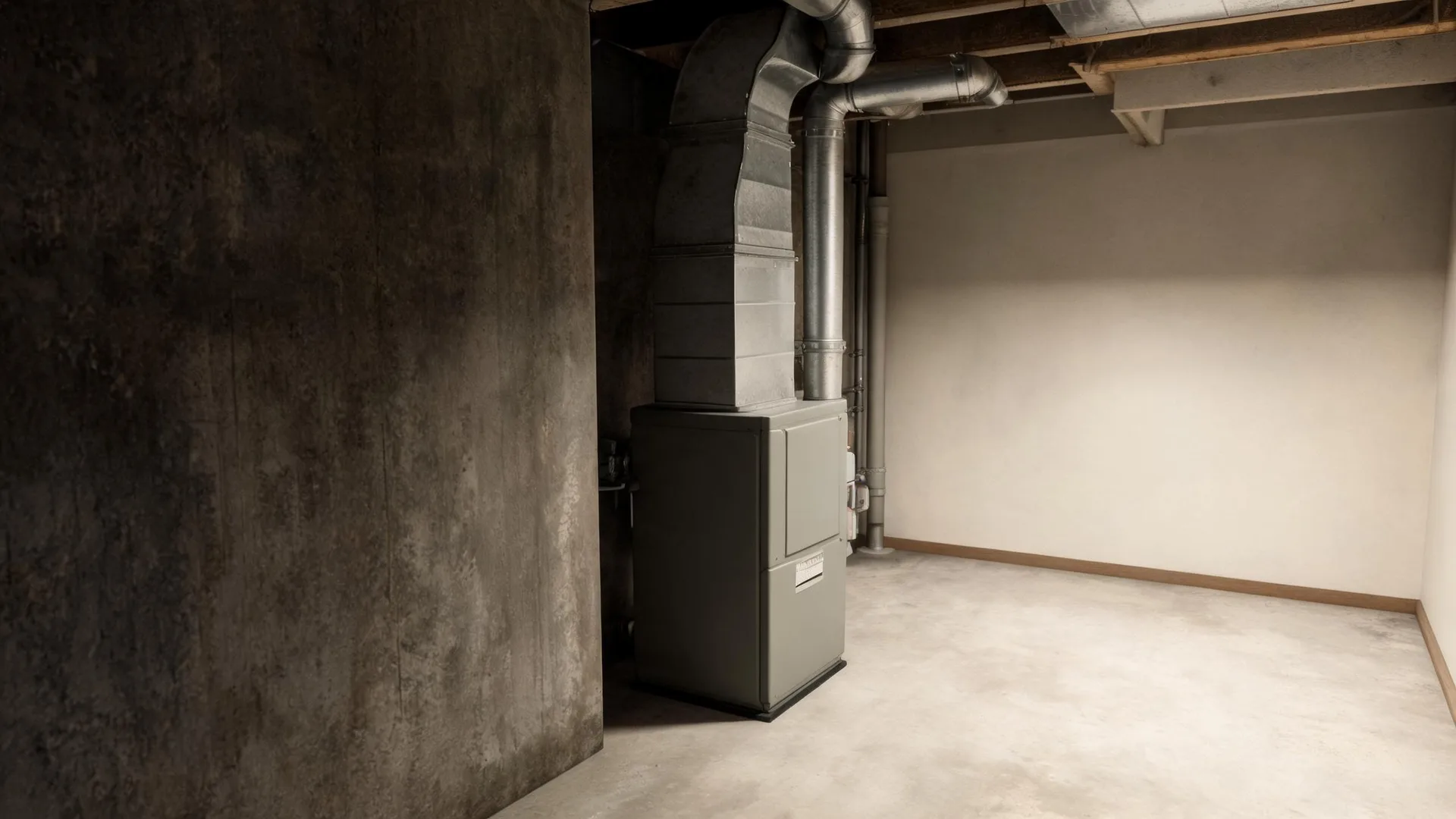
Furnace repair in Custer County starts with the parts that have been working hardest. Homes in Custer County, SD run heat about nine months a year, from September through May. The burner, the heat exchanger, and the ignition system cycle through that entire stretch, and the wear on them is cumulative. A cracked heat exchanger or a degraded igniter on a furnace here is the product of seasons of thermal cycling, and a contractor will check those components before drawing any conclusions about what the repair actually requires.
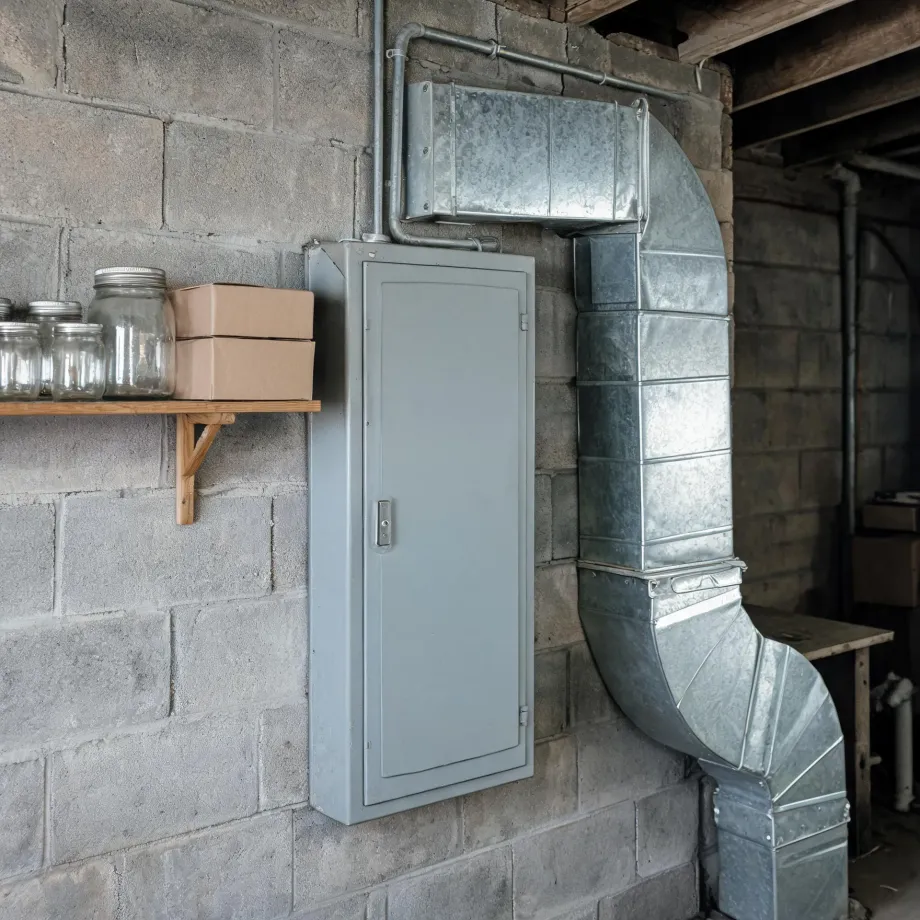
Furnace repair in housing this old runs into a specific problem once the unit is opened: the components inside are often from a generation of equipment that parts suppliers have largely moved past. Half the homes in Custer County, South Dakota were built in 1994 or earlier (2020-2024 ACS 5-year). A contractor who finds a cracked heat exchanger or a failed inducer motor in a system of that vintage has to establish whether a replacement part still exists in the supply chain before the repair scope means anything. If it does not, the job changes in ways that affect both what gets ordered and how long the work takes.
The Parts of a Furnace a Contractor Checks First
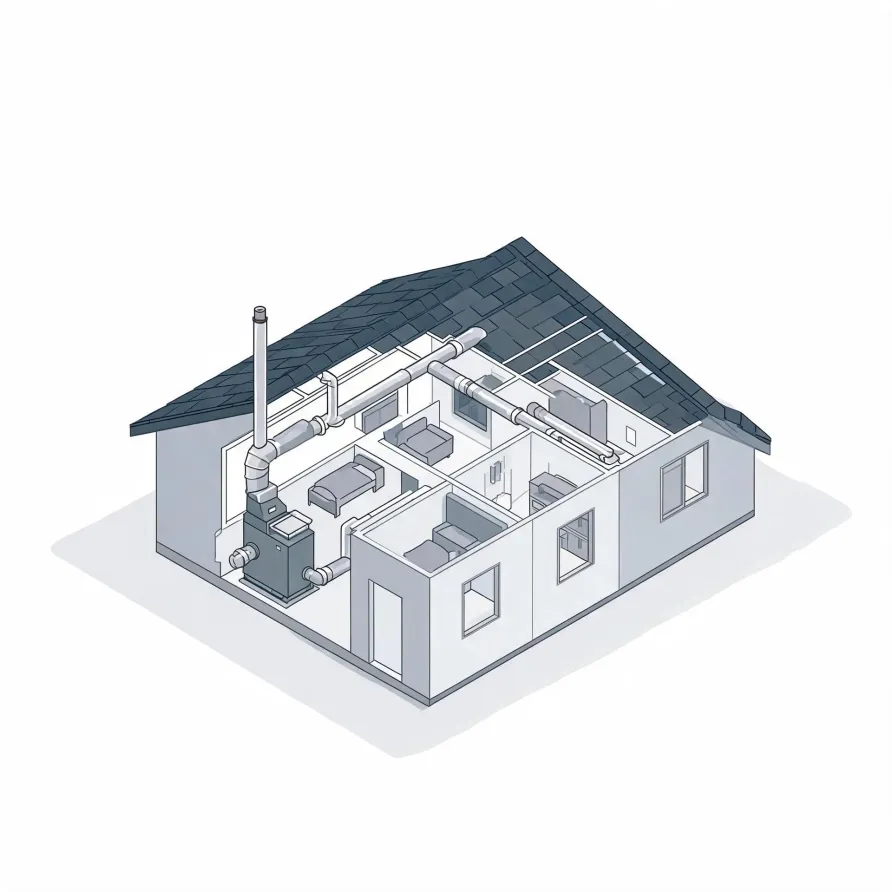
The heat exchanger sits at the core of the furnace cabinet and is the part a contractor reaches first when a furnace runs but heats poorly or cycles off without warning. The burner assembly sits just below it and is the source when the furnace fails to light or holds a flame badly. The blower motor sits at the base of the cabinet and is what a contractor looks at when air movement is weak or absent.
The igniter and flame sensor are small components mounted near the burner, and between them they account for a large share of no-heat calls. The flue pipe runs from the top of the furnace up and out of the house, and a contractor checks it when the unit shuts down on a safety fault or when combustion gases are suspected inside the living space.
The drawing shows a general layout of a furnace system, and a licensed contractor determines which components apply to your specific installation.
Find a contractor in Custer CountyCuster County, by the numbers
530 severe weather events were recorded in Custer County, South Dakota between 2015 and 2024.
NOAA National Centers for Environmental Information, Storm Events Database, bulk CSV export, events 2015-01-01 through 2024-12-31.Half the homes in Custer County, South Dakota were built in 1994 or earlier (2020-2024 ACS 5-year).
U.S. Census Bureau, 2020-2024 American Community Survey 5-Year EstimatesCuster County, South Dakota holds 5,291 housing units (2020-2024 ACS 5-year).
U.S. Census Bureau, 2020-2024 American Community Survey 5-Year EstimatesOwners occupy 85.6% of the occupied homes in Custer County, South Dakota (2020-2024 ACS 5-year).
U.S. Census Bureau, 2020-2024 American Community Survey 5-Year EstimatesCodes & Standards Governing Furnace and HVAC Repair in Custer County, South Dakota4 sourced rules and standards
What happens when a contractor comes out
Non-weatherized gas furnaces manufactured on or after November 19, 2015 must reach 80.0 percent AFUE.
Non-weatherized oil-fired furnaces manufactured on or after November 19, 2015 must reach 83.0 percent AFUE.
Mobile home gas furnaces manufactured on or after November 19, 2015 must reach 80.0 percent AFUE.
Non-weatherized gas furnaces manufactured on or after December 18, 2028 must reach 95.0 percent AFUE, up from the 80.0 percent minimum that applies to units manufactured before that date.
Severe Weather Events in Custer County
Extreme weather puts direct stress on furnace components, from heat exchangers to ignition systems, shortening the intervals between repairs. How often that stress lands on a home in Custer County is a local fact, and it shapes what contractors here see regularly on the job.
530 severe weather events, 2015–2024. Source: NOAA National Centers for Environmental Information, Storm Events Database.