Tell us about the job
Takes about a minute. No obligation.

A furnace repair call in Pennington County starts with the parts that do the most work: the burner, the heat exchanger, and the ignition system. Homes in Pennington County, SD run heat about nine months a year, from September through May. Each cycling season loads those components with thermal stress, and cracks in a heat exchanger or a worn igniter do not announce themselves until the system fails to fire on a cold morning. A contractor pricing a repair here checks those parts first, because that is where the accumulated wear lands.
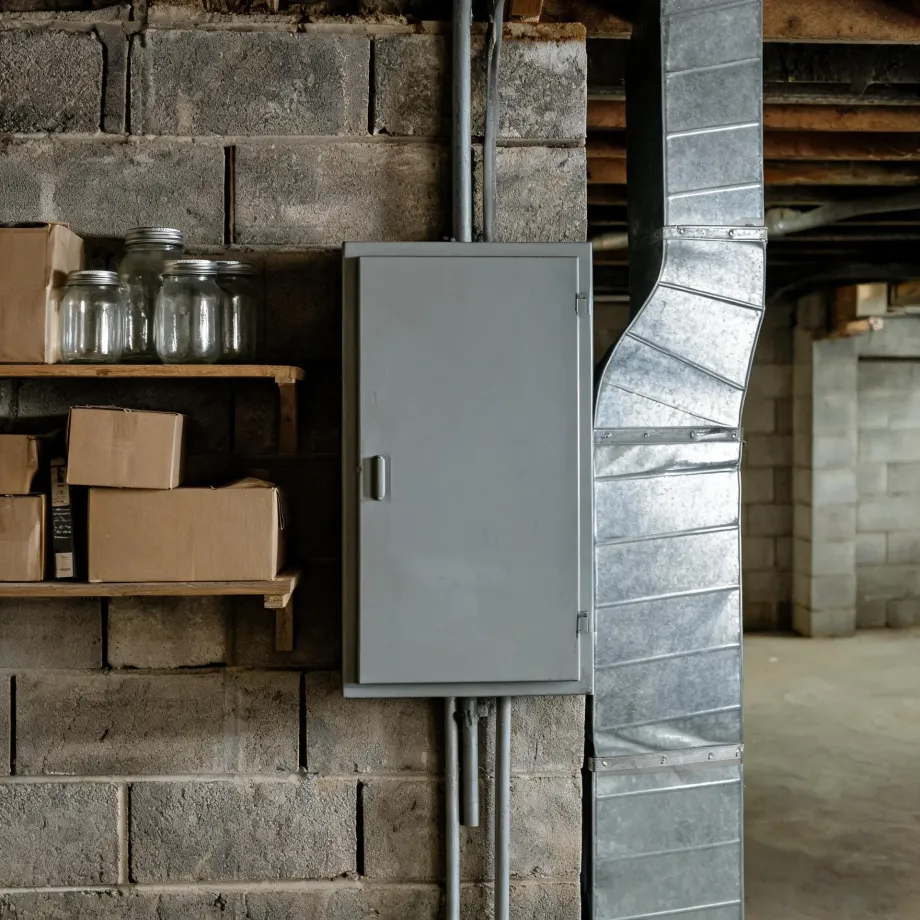
Ductwork and wiring put in for heating equipment that no longer exists in the house shape what a furnace contractor finds on every job here. Half the homes in Pennington County, South Dakota were built in 1982 or earlier (2020-2024 ACS 5-year). That depth of housing history means the path a repair takes is often decided by what is wrapped around the furnace, not just what is wrong with it. A heat exchanger or a failed control board has a part number a contractor can track down, but if the return plenum or the flue connection was sized for something else, that is what sets the scope of the work.
The Parts of a Furnace a Contractor Checks First
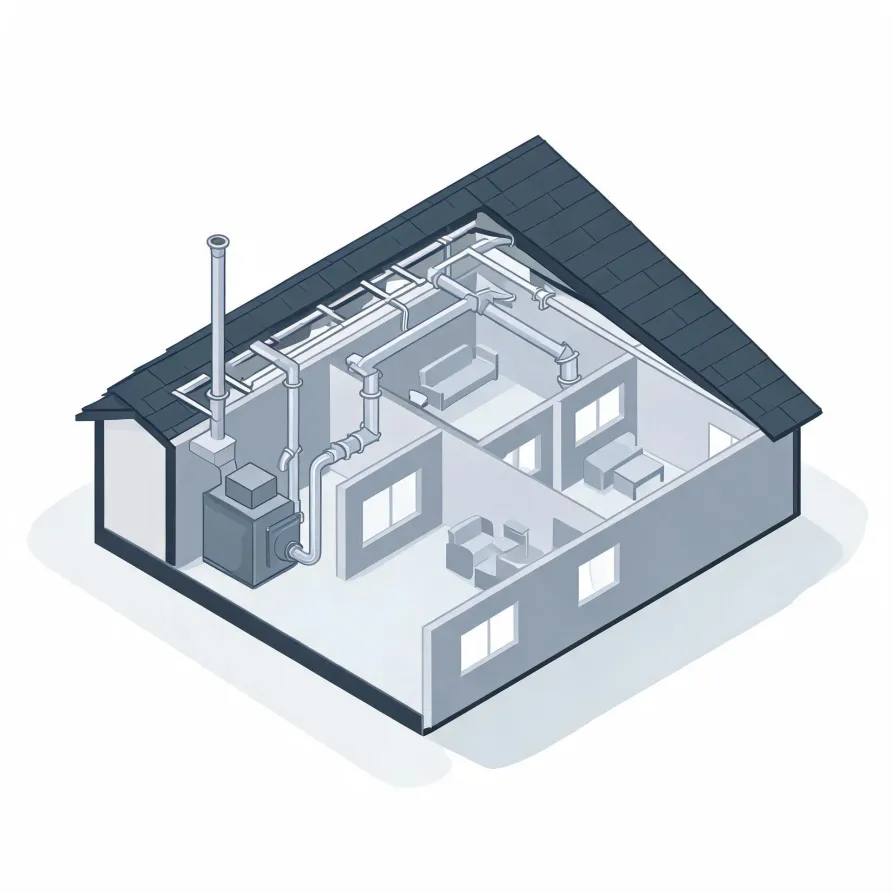
The furnace itself sits in the basement, utility room, or closet and is the piece a contractor goes to first. Inside it, the heat exchanger does the work of warming air, and a cracked or corroded exchanger is one of the more serious faults a contractor diagnoses. The burner assembly, which produces the flame, and the igniter, which starts it, are both common failure points when a furnace stops heating.
The blower motor sits inside the furnace cabinet and pushes conditioned air through the house. The flue pipe runs from the furnace to an exterior wall or roof and carries combustion gases out. A contractor also checks the control board, which coordinates every component, because a fault there can mimic failures elsewhere in the system.
The drawing shows a typical furnace layout, and a licensed contractor determines what applies to your specific installation.
Find a contractor in Pennington CountyPennington County, by the numbers
1,271 severe weather events were recorded in Pennington County, South Dakota between 2015 and 2024.
NOAA National Centers for Environmental Information, Storm Events Database, bulk CSV export, events 2015-01-01 through 2024-12-31.Half the homes in Pennington County, South Dakota were built in 1982 or earlier (2020-2024 ACS 5-year).
U.S. Census Bureau, 2020-2024 American Community Survey 5-Year EstimatesPennington County, South Dakota holds 51,681 housing units (2020-2024 ACS 5-year).
U.S. Census Bureau, 2020-2024 American Community Survey 5-Year EstimatesOwners occupy 69.3% of the occupied homes in Pennington County, South Dakota (2020-2024 ACS 5-year).
U.S. Census Bureau, 2020-2024 American Community Survey 5-Year EstimatesCodes & Standards Behind Furnace Repair in Pennington County, South Dakota4 sourced rules & standards
What the repair visit looks like
Non-weatherized gas furnaces manufactured on or after November 19, 2015 must reach 80.0 percent AFUE.
Non-weatherized oil-fired furnaces manufactured on or after November 19, 2015 must reach 83.0 percent AFUE.
Mobile home gas furnaces manufactured on or after November 19, 2015 must reach 80.0 percent AFUE.
Non-weatherized gas furnaces manufactured on or after December 18, 2028 must reach 95.0 percent AFUE, up from the 80.0 percent minimum that applies to units manufactured before that date.
Severe Weather Events in Pennington County
Hard weather puts real stress on furnace equipment, and how often that stress hits depends on where you are. A contractor working in Pennington County sees what the local pattern demands.
1,271 severe weather events, 2015–2022. Source: NOAA National Centers for Environmental Information, Storm Events Database.