
A local pro for your furnace installation
How long a furnace lasts in South Dakota
A furnace running 15 to 20 years is doing its job. Past that, the question is whether yours still has a few winters left or whether this is the one where it quits on a cold morning. If you're not sure where yours stands, a contractor who knows South Dakota furnaces can look at yours and tell you straight. Send the details and let someone come to you.
Get matchedA furnace in South Dakota typically lasts 15 to 20 years. Most homes here heat with gas, and a gas furnace that gets a yearly checkup tends to reach the far end of that range, while one that's been ignored falls short of it. What wears a furnace down is how hard it works and how long each stretch of cold runs it. Winters here are hard, and the furnace can be running for months at a stretch without much of a break. That kind of steady demand adds up faster than mild weather would. By year 15, it's worth paying attention to how the furnace is running, how often it needs a repair, and whether it still heats the house evenly. A furnace that's struggling in its late teens isn't a sign of neglect. It's a sign that the clock most furnaces run on is catching up with yours.




What actually wears out inside a furnace after 15 or 20 years?
You've heard the 15 to 20 year number, but that doesn't tell you what's actually failing inside the cabinet. A furnace doesn't just stop one day for no reason. Certain parts take the brunt of every heating cycle for two decades, and knowing which ones gives you a better sense of whether your furnace is nearing the end or just getting broken in.
The heat exchanger and igniter take the most abuse over time
Every time your furnace fires up, the heat exchanger goes through a heating and cooling cycle, and metal that expands and contracts thousands of times over 15 or 20 winters eventually develops cracks. That's the part that ends a furnace's life more than any other. The igniter wears out too, since it heats up to light the gas every single cycle, and most get replaced at least once before the furnace itself is done. Blower motor bearings wear down from years of spinning. None of this happens on a fixed schedule. A furnace that ran every winter in a South Dakota home has put in more cycles than one that sat idle half the year, and that adds up.

Cold air makes it run longer
A furnace sized for a Sioux Falls winter runs more hours per year than one in a milder state, and more hours add up to more cycles on the igniter and the blower motor. Cheap power here doesn't change that math. Gas is what heats the air, and electricity just moves it, so a furnace in South Dakota earns its wear honestly, one cold morning at a time, across a heating stretch that runs from October into April.

The heat exchanger sets the limit
Every other part in a furnace can be replaced without touching the cabinet. The heat exchanger can't, not economically, and it's the part that cracks from years of heating and cooling every time the burner cycles on and off. Once it goes, a contractor will usually tell you the furnace is done rather than fixed. That's the part that decides whether a furnace makes it to 20 years or stops short at 12 or 15.
Is your furnace telling you something right now
Walk past it and listen. A furnace on its way out doesn't fail quietly. It bangs or rattles when it kicks on, or it takes a few tries to light at all. The air coming out of your vents feels cooler than it used to, or some rooms stay cold while others are fine. You notice the burner flame is yellow instead of blue, or there's a faint smell when it runs. Your gas bill has crept up even though you haven't changed how you use it, which usually means it's working harder to put out the same heat. None of this is nothing. A furnace that's struggling and still gets ignored is a furnace that can quit on the coldest morning of the year, with nothing to catch the house until someone gets out to it.


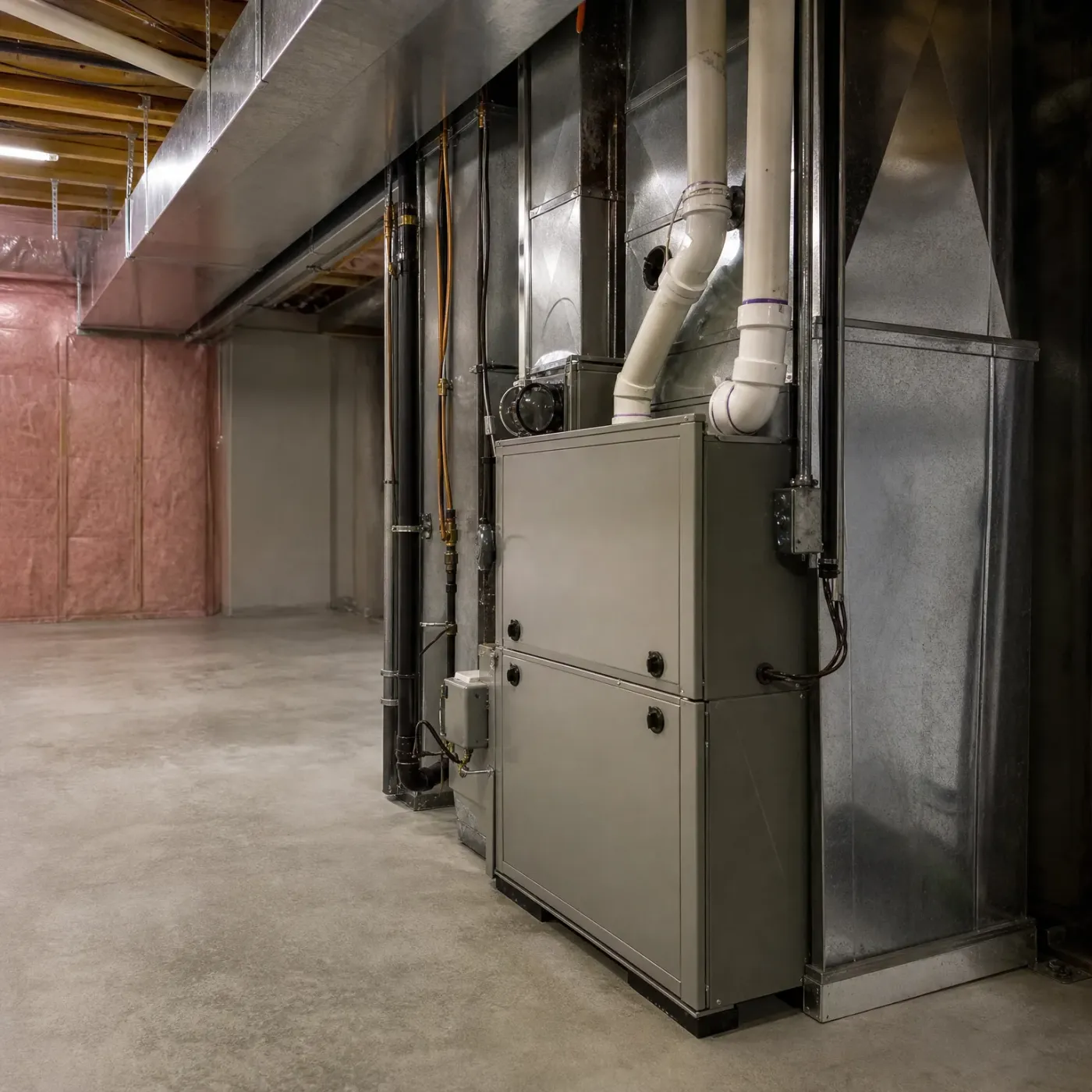
Get the right pro for your furnace
Send the form and the search for an installer is over.
A local installer who puts in furnaces gets your project.
You only hire the pro if you want to.
Fix the furnace you have, or replace it
Keep it going
- A furnace at 15 years with a clean burner and a steady flame sensor can still make it through another South Dakota winter without trouble.
- Replacing one part, like an igniter or a flame sensor, costs a lot less than a new unit and buys you more heating seasons.
- If the heat exchanger hasn't cracked and the blower motor still runs quiet, there's no mechanical reason to pull a furnace that's doing its job.
- A furnace that's had a checkup every year is a better bet to patch than one that's been skipped for a decade.
- Keeping the furnace you have means no install work, no new ductwork questions, no decisions about sizing for your house.
Replace it
- Past 20 years, a furnace is working on borrowed parts, and the next failure might be the heat exchanger, which isn't worth repairing.
- A furnace that won't light on the first or second try, or short cycles through a cold snap, is telling you it's closer to done than not.
- New furnaces rated for cold climates hold a tighter, steadier flame than a furnace built two decades ago.
- Gas is what heats most homes in South Dakota, and a furnace that's losing efficiency is burning more of it to put out the same heat.
- Replacing before the furnace quits outright means you're not without heat on the morning it finally fails.
- A new furnace comes with a full warranty again, instead of parts that are harder to find for an older model.
Thermostat calls for heat and opens the gas valve.
Igniter glows hot enough to light the burners.
Burners fire and heat the air in the heat exchanger.
Blower motor pushes warm air through the ducts.
Winter nights average 11°F statewide
An 11°F overnight low means your furnace is holding a 60 or 70 degree swing most nights of the winter. It runs long and it runs often, and that steady load is what ages a burner and a blower motor faster than the calendar does.
NOAA nClimDiv 1991-2020 county normals weighted by homes
Where your furnace stands now
- A furnace that's had yearly checkups and still runs smooth at 15 years can keep going; one that rattles or struggles to light is closer to done than the calendar suggests.
- The parts that fail first, the igniter, the flame sensor, the blower motor, are the same parts a contractor checks first when you call one in.
- South Dakota winters push more cycles through a furnace each year, so the number that matters most is condition, not just age.
- Once you send the form, a contractor who works on furnaces in South Dakota takes it from there and reaches out to you.
- You don't have to figure out whether it's a repair or a replacement before you call; that's the part someone else can sort out.
- Whatever your furnace is telling you right now, a quiet bang, a weak flame, a cooler draft, is worth having someone look at before the next cold snap.
A furnace in South Dakota lasts 15 to 20 years, and where yours falls in that range comes down to condition more than age. Cold winters here mean long runs and frequent cycles, and that wears on the igniter, the flame sensor and the blower motor before anything else gives out. A furnace that's been checked every year and still lights clean and runs quiet at 15 years has earned the benefit of the doubt. One that bangs on startup, struggles to light or blows cooler air than it used to is telling you something, regardless of what year it was installed. You don't need to work out whether that points to a repair or a replacement before doing anything about it. That's a judgment call for someone who can look at the burner, the heat exchanger and the rest of it in person, and it's not one you have to make alone or in advance. Send the form and a contractor who works on furnaces in South Dakota takes it from there. They reach out to you. You're not the one tracking down who's available or whether they handle your type of unit. That part is off your plate the moment you send it. Whatever's going on with your furnace right now, a rough start, a weak flame, air that doesn't feel as warm as it should, it's worth having someone look before the next cold snap turns a small problem into a cold house.

A pro who works on furnaces
Send it once and finding someone is no longer on you.