Two-stage vs. single-stage
A two-stage furnace sized right for your home runs its low setting most of the winter, using less gas than a single-stage furnace that only knows on or off.
 Connect with a pro
Get in touch with a local installer about a new furnace.
A furnace that is too big for your South Dakota home cycles on and off fast, never runs long enough to heat evenly, and wears out its parts faster from all the starting and stopping. One that is too small runs almost nonstop on the coldest days and still can't keep up. The right size depends on your house, not a chart you find online.
Square footage is a starting point, but it is not the answer. The size of your furnace should account for how your home holds heat: the insulation in the walls and attic, how many windows you have and what kind, the layout, even which way the house faces. Two houses the same size a few miles apart can need different furnaces.
This matters more here than in a lot of places. Winters in South Dakota are hard, and a furnace that is guessing at its size either runs up your bill trying to keep pace with the cold or cycles so often it never gets comfortable. Since most homes here heat with gas, getting the size right also means the gas line and venting are matched to the unit, not just the BTU output on a spec sheet.
Figuring this out for your specific house takes someone who can look at it in person: the square footage, the insulation, the windows, the ductwork if you're keeping it. That is not something a general rule can do for you.
When you send your information through this page, it goes to a contractor who works on homes in your area and can size a furnace for your house specifically, not a generic one. They will reach out to you directly. From there, the job of figuring out the right size is off your plate. You will not be left comparing BTU charts or guessing at what your house needs. That part becomes someone else's work, and it starts as soon as you send the form.
There's no single furnace size for a South Dakota home. The right size comes from a heat load calculation, which weighs your square footage against your insulation, your windows, and how low temperatures actually drop where you live in a hard winter. A rough rule like "40 to 60 BTUs per square foot" can get you in the neighborhood, but it ignores whether your attic is well insulated or your windows are original single-pane glass, and that's exactly what moves the number up or down for a specific house. A contractor doing this right measures your home room by room rather than guessing from its square footage alone. Get the size wrong and you feel it every winter: a furnace too big short-cycles and heats unevenly, one too small runs constantly on the coldest nights and still leaves rooms cold. The only way to know your number is to have someone calculate it for your house.


A contractor doing this right walks your house first. They measure each exterior wall, every window, every door, because a patio door loses heat at a different rate than a stud wall, and a Manual J adds all of it up room by room rather than guessing from your square footage. Insulation levels in your attic and walls move the number more than the size of the house does. So does ceiling height, since a room with 9-foot ceilings holds more air than the same floor space under an 8-foot ceiling, and all of it has to get heated. The calculation also pulls in the winter design temperature for your part of South Dakota, which is not the same as the single coldest night anyone remembers. It's a number built for how often the cold actually sits in. Once all that's added up, the result is a BTU output the new furnace needs to match. Not round up from, match. A furnace sized a notch bigger than the number on paper is still the wrong furnace.


A two-stage furnace sized right for your home runs its low setting most of the winter, using less gas than a single-stage furnace that only knows on or off.
A furnace sized too big for your home cycles on and off all day. Every start and stop wears the igniter and blower a little more.




Send the form and stop researching installers for the new furnace.
Describe your furnace job, and a local pro who handles it gets in touch.
You only hire the pro if you want to.
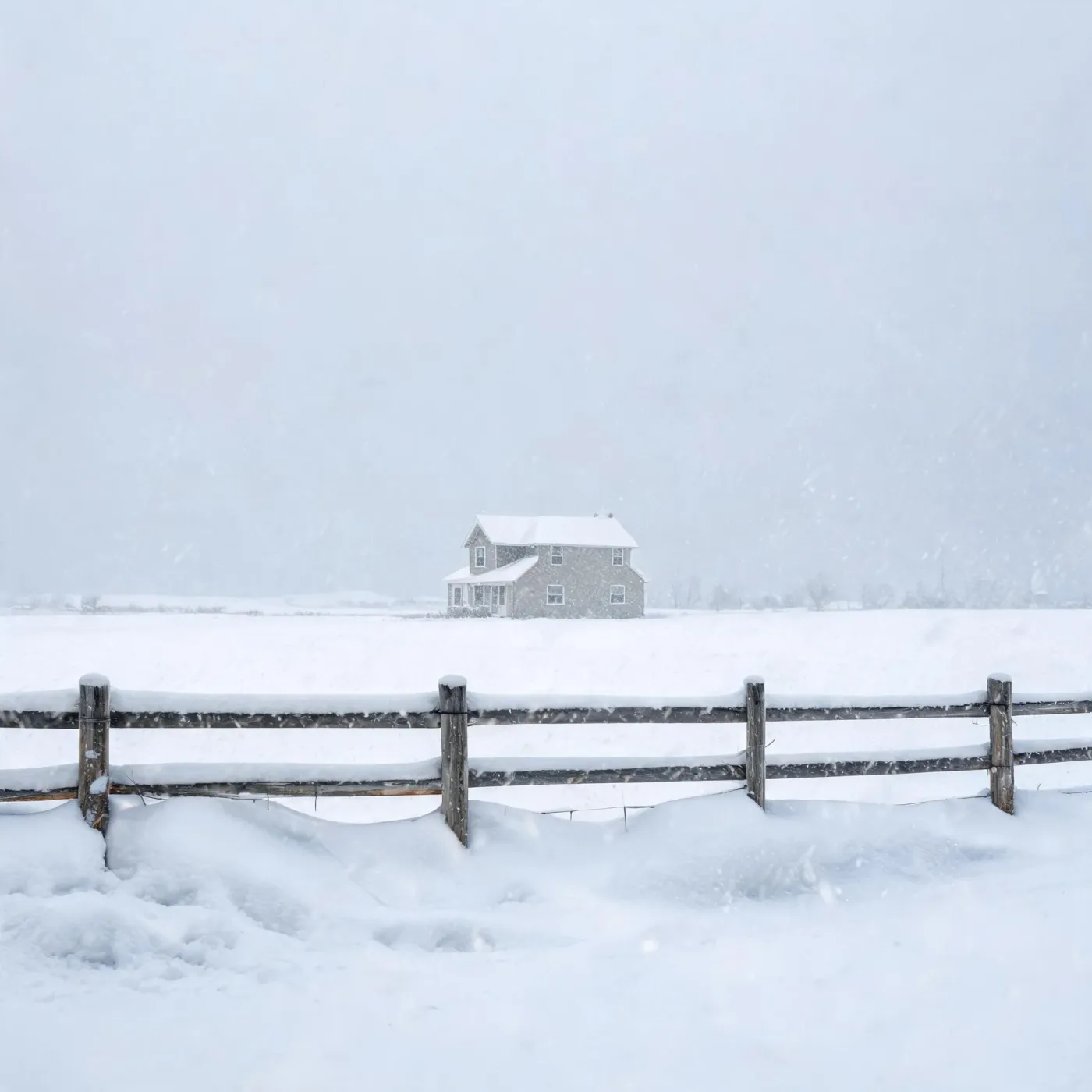
Winter nights here average 11°F across the state, and that's the number a heat load calculation has to answer for. On a night that cold, an undersized furnace can't keep up. It runs almost the whole night through and the rooms farthest from the furnace still feel cool by morning. A furnace sized right for your house runs long steady stretches on nights like that, not frantic short bursts, and the heat actually reaches every room before the next cycle starts. That's the difference proper sizing makes when it's 11 below outside and everyone at home needs the house to hold its heat until morning. Source: NOAA climate normals
NOAA nClimDiv 1991-2020 county normals weighted by homes
You've got a room, maybe two, that stays cold no matter what the thermostat says. Or the furnace clicks on, off, on, off, every few minutes, all evening. Maybe it runs for an hour straight on a night that isn't even that cold outside. These aren't quirks of the house. They're what a wrong-sized furnace does. Short cycling wears out the igniter and the blower motor faster than they should wear, since those parts take the most stress at startup. A furnace running nonstop and still losing ground means the rooms farthest from it go without heat on the nights your household needs it most. Either way, the furnace is working against your house instead of for it.

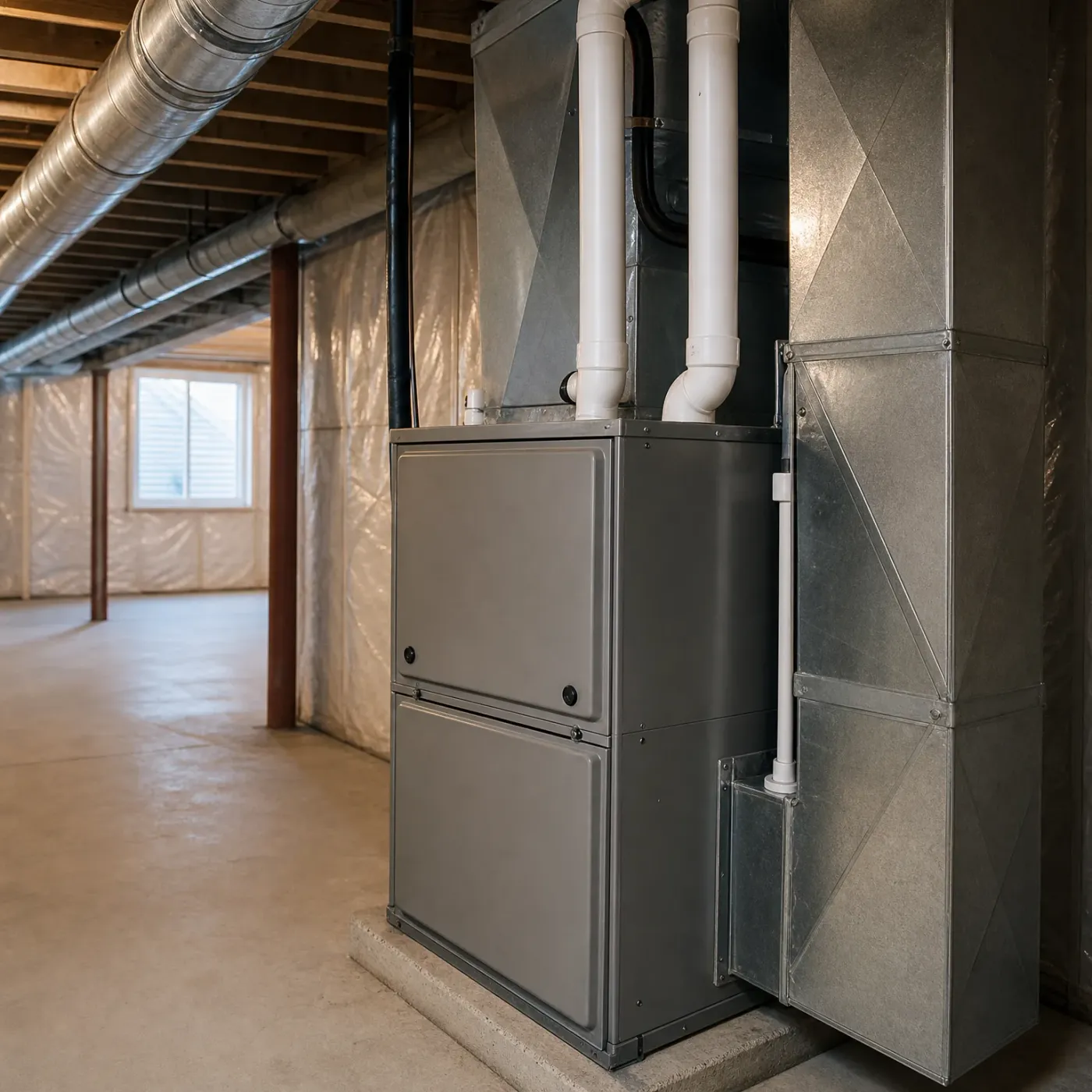
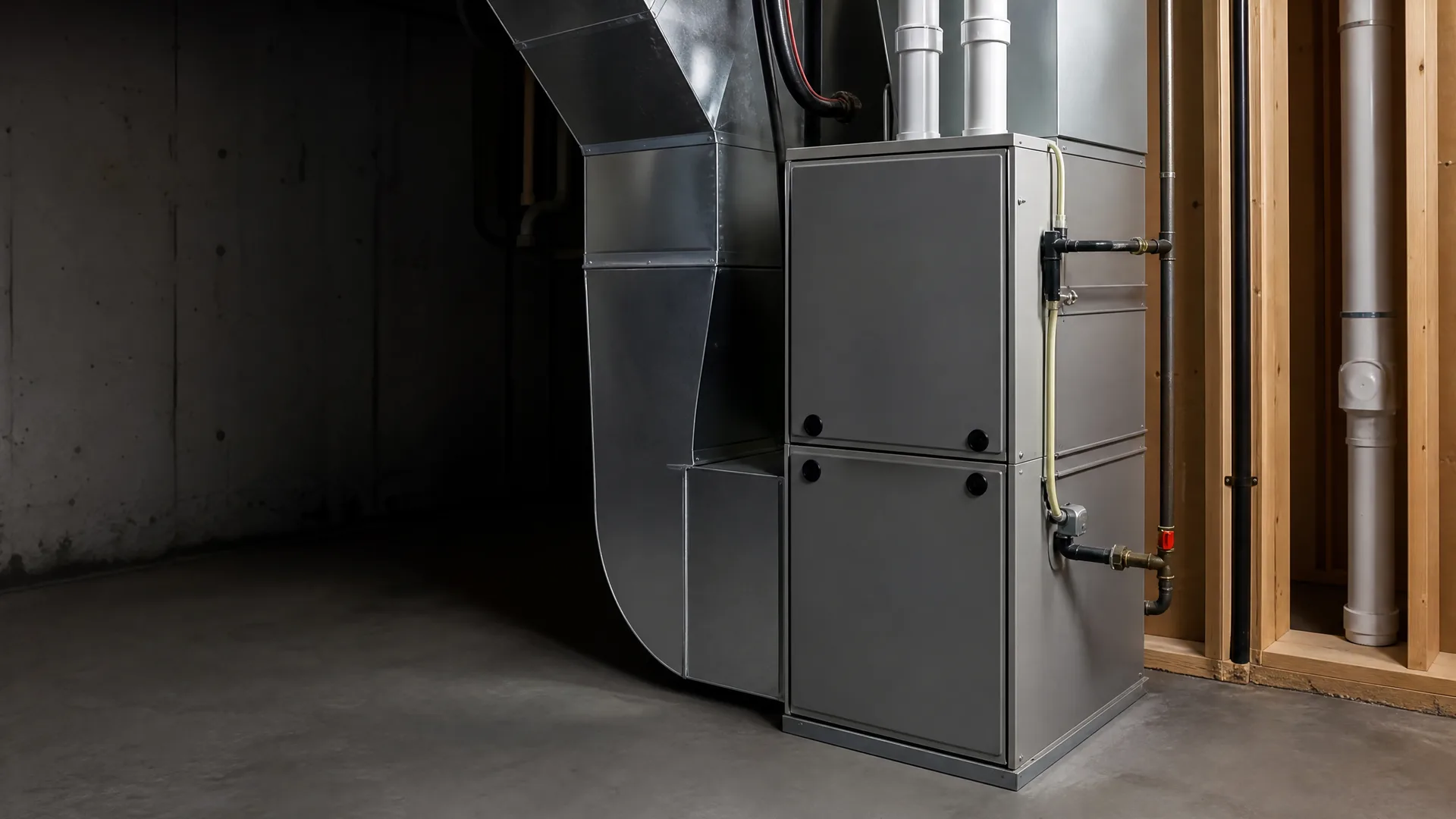
This furnace sits on its pad with the ductwork, exhaust pipe, and gas line all doing their job quietly. A furnace sized right for your house cycles on, heats the place through, and shuts off without a fight.

This one's older, and the strain shows. A furnace fighting a load it can't match runs long and hard on a cold night, and the rooms at the far end of the ductwork still don't catch up.
You want to know what actually happens when a contractor comes out to figure out your furnace size, not just the name of the calculation. Maybe you've heard the term Manual J already from the page above, but that doesn't tell you what the contractor does with a tape measure, a notepad, and your house to land on a number.
The contractor starts at your front door and works through every room, not just the square footage on your listing. Each exterior wall gets measured, each window and door gets noted, because a double-pane window loses heat differently than a solid wall. Your attic insulation gets checked, sometimes from inside the attic itself. All of that gets weighed against the cold your part of South Dakota actually sees in a hard winter. The output is a BTU number for your whole house, and often a breakdown by room, which is what tells the contractor whether your ductwork can even deliver what a new furnace would produce. Skip this walk-through and the size is a guess.


The contractor measures every room and adds up heat loss.
Square footage, insulation, windows, and doors each get a number.
That total gets checked against South Dakota's coldest winter nights.
The calculation points to one furnace size, not a guess.
At 11°F, your furnace has to make up every degree between that and your thermostat setting, all night, for months. Size it right and it keeps up without strain. Size it wrong and either the cold rooms stay cold or the furnace wears out trying.
NOAA nClimDiv 1991-2020 county normals weighted by homes

A furnace sized to your square footage, your insulation, and South Dakota's coldest nights keeps every room warm without straining. That's the whole answer. Skip the calculation and you end up with a furnace that short-cycles or one that runs all night on the nights you need it most.
If you're not sure what your current furnace is rated for, or whether it was ever sized for your house in the first place, a contractor can walk through that with you and tell you where you actually stand. You'll be matched with someone who handles installations like this and can look at your specific home, your ductwork, and your walls before recommending a size. Once that's underway, you're not the one tracking down who does this kind of work anymore.

A pro who works on furnaces